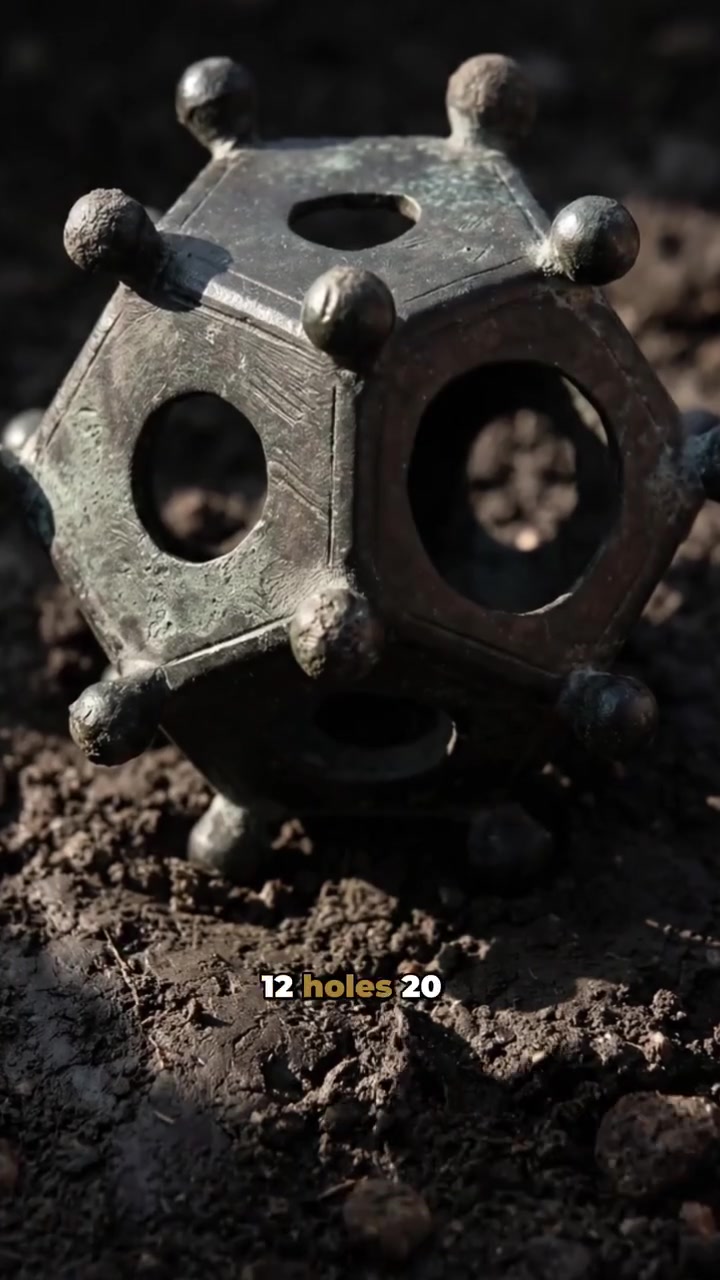
In 1739, a mysterious object was unearthed in England. A hollow ball of bronze, the artifact was covered with 12 holes and 20 knobs, in a design geometry found nowhere else in the Roman Empire. Over the centuries, vessels like this have ignited debate among historians, archaeologists, and enthusiasts, curious for a definitive answer. Whether they were "drum beaters for ceremonies", "sometimes found with some other unknown item", or a tool for something far more mundane — no one could agree on the function of the artefact.
The Roman Dodecahedron Puzzle
The Roman dodecahedron is what experts call this artifact. Made from bronze, these are small, hollow objects defined by twelve flat faces, each with a round hole, and a knob at every corner of the twenty that make up the sphere. Official records and archaeological evidence from Roman times do not mention these objects. The Roman Empire stretched from England and France to Germany, but not once have they been found in Italy, where the heart of the empire sat. Finally, in 2023, a team of volunteers unearthed the 33rd specimen ever found in England, reigniting curiosity as to the true use of these mysterious artifacts. More than 130 such objects have been discovered since their discovery in 1739. Unearthed in a surprising array of settings — army camps, coin hoards, theaters, rivers — their location varies widely in size, from as small as a golf ball to as large as a grapefruit. The holes on the objects are not uniform, and each object is unique. Some theories on the function of these intriguing objects are:
- Measuring tools
- Candlestick holders
- Dice
- Ritual objects With the latest discovery in the English countryside, the debate has only grown more heated.
Where Objects Go, Mysteries Follow
The existence of these objects is peculiar in itself, but what makes them truly intriguing is the lack of Roman documentation or art that includes them. The success of the Roman Empire lay in the efficiency of its administration, which was backed by meticulous records and documentation. The Roman infrastructure and artifacts were highly functional and utilitarian, often designed for military purposes. In contrast, the Roman dodecahedron is a mystery, a riddle found in dispersed pieces across the northern regions of the empire. Objects such as these are often unearthed near military camps, coin hoards, and theaters. This implies that they may have had a functional or ceremonial role in Roman society, perhaps linked to the army, wealth, or entertainment. However, their absence in Roman texts and art is perplexing, making it difficult to determine their actual purpose. A unique discovery in 2023 suggests a familiar pattern in the world of archaeology. The power of mystery lies in its ability to captivate the human mind, stirring curiosity and the urge to solve the unknown. This makes these objects a fascinating addition to the rich tapestry of Roman history.
Understanding the Mystique
The Shape and Design
The dodecahedron’s shape hints at a deliberate design and engineering prowess. However, the lack of textual evidence would suggest that the object is either too ordinary or too specialized for documentation. The 12 holes and 20 knobs set it apart from the mundane, inviting endless theories on its intended use. Some experts believe the dodecahedron's design could have been inspired by a particular cultural or religious significance.
Possible Uses
One of the theories suggested by archaeologists is the idea of the Roman dodecahedron as a surveying instrument. The object’s geometric design could have been useful for measuring distances, especially in the Roman military campaigns. This theory, however, remains speculative. Another theory is that the object was used as a ritual artifact. The mysterious nature of the dodecahedron and its appearance in certain contexts like theaters and rivers lend credence to this theory; witnesses linking it to. It could have been used in religious ceremonies or as part of some secretive ritual, aiding in the communication with the divine. Some have proposed that it could have been a candle holder due to its hollow structure and varying holes. However, this theory does not explain the unique shape and the absence of any evidence supporting this idea. Their uses are varied and contested, from drum beaters to a surveying instrument — all these theories only heighten the allure. The mystery will continue to remain unsolved.
The Role of Mystery in Archaeology
Such enigmatic artifacts feed into the public imagination, driving interest in history and archaeology. The Roman dodecahedron, with its unique design and mysterious purpose, is a testament to the enduring allure of the unknown. It underscores the fact that much of history remains undocumented and that the world is yet to be fully explored. The dotehecahedron is a significant reminder of the importance of preserving archaeological finds, no matter how perplexing. These objects can provide valuable insights into the past and challenge our understanding of history. The discovery of the 33rd Roman dodecahedron in England in 2023 is a perfect example of how a new discovery can reignite old debates and inspire new theories.
What Would I Do If I Saw One?
Until its purpose is finally revealed, the Roman dodecahedron remains a fascinating puzzle, a glimpse into a world of secrets and unknowns. If you ever come across one, keep these tips in mind: _ If you spot a Roman dodecahedron:_* Report it to local archaeological authorities. Do not attempt to remove or disturb the artifact yourself. _ Handle with care:_* If you handle the artifact, wear gloves to avoid damaging it with oils from your skin. _ Document everything:_* Take photos and notes about the location and the condition of the artifact. This information can be crucial for archaeologists. *_ Don't guess the purpose:_ The mystery remains exactly that: a mystery until proven. *_ Stay tuned for future findings:_ Every new discovery is a step closer to understanding these enigmatic objects._
The Debate Continues
The debate surrounding the Roman dodecahedron continues to this day, with no definitive answers in sight. Yet, the mystery only adds to its allure, drawing the public into the fascinating world of archaeology. It is a symbol of the vast unknown that still exists in our world, waiting to be discovered and understood. The Roman dodecahedron joins a myriad of archaeological mysteries that leave us eager and curious, from the ancient world to the present, continuously telling the story of a past so close yet ever elusive.
Questions readers ask
What exactly is a Roman dodecahedron and why is it so mysterious?
A Roman dodecahedron is a small, hollow bronze object with 12 flat faces, each featuring a round hole, and 20 knobs at the corners. It's mysterious because, despite being discovered over 300 years ago, no one knows its exact use or purpose. It's not mentioned in any Roman records or art, and it's only found in the northern regions of the Roman Empire, adding to its allure.
How many of these objects have been found and where are they typically discovered?
Over 130 Roman dodecahedrons have been found since 1739. They turn up in a variety of places, including army camps, coin hoards, theaters, and rivers. The latest discovery, the 33rd in England, was unearthed in the countryside in 2023.
Why haven't Roman texts or art provided any clues about these objects?
The Roman Empire was known for its meticulous record-keeping, but there's no mention of these objects in any known texts or art. This absence is perplexing, especially considering that the Romans documented even mundane items. It suggests that these objects might have been too ordinary or too special to be widely documented.
What are some of the theories about the function of these Roman dodecahedrons?
Theories range from practical to ceremonial. Some suggest they were measuring tools, candlestick holders, or even dice. Others propose they were used in rituals, perhaps related to the army, wealth, or entertainment. However, none of these theories have been definitively proven.
Why are these objects only found in the northern regions of the Roman Empire and not in Italy?
This is one of the mysteries surrounding these objects. The Roman dodecahedrons have been found in places like England, France, and Germany, but not in Italy, the heart of the empire. This regional disparity adds to the intrigue and makes their purpose even more elusive.
How does the latest discovery in 2023 contribute to our understanding of these artifacts?
The latest discovery, the 33rd specimen found in England, has reignited interest and debate among experts. While it doesn't provide a definitive answer, it adds to the growing body of evidence and keeps the mystery alive, encouraging further investigation and speculation.
Related deep dives
Similar reads based on topic and creator.




Recent articles
Fresh deep dives from the latest Reels we unpacked.




Comments
Be the first to comment.