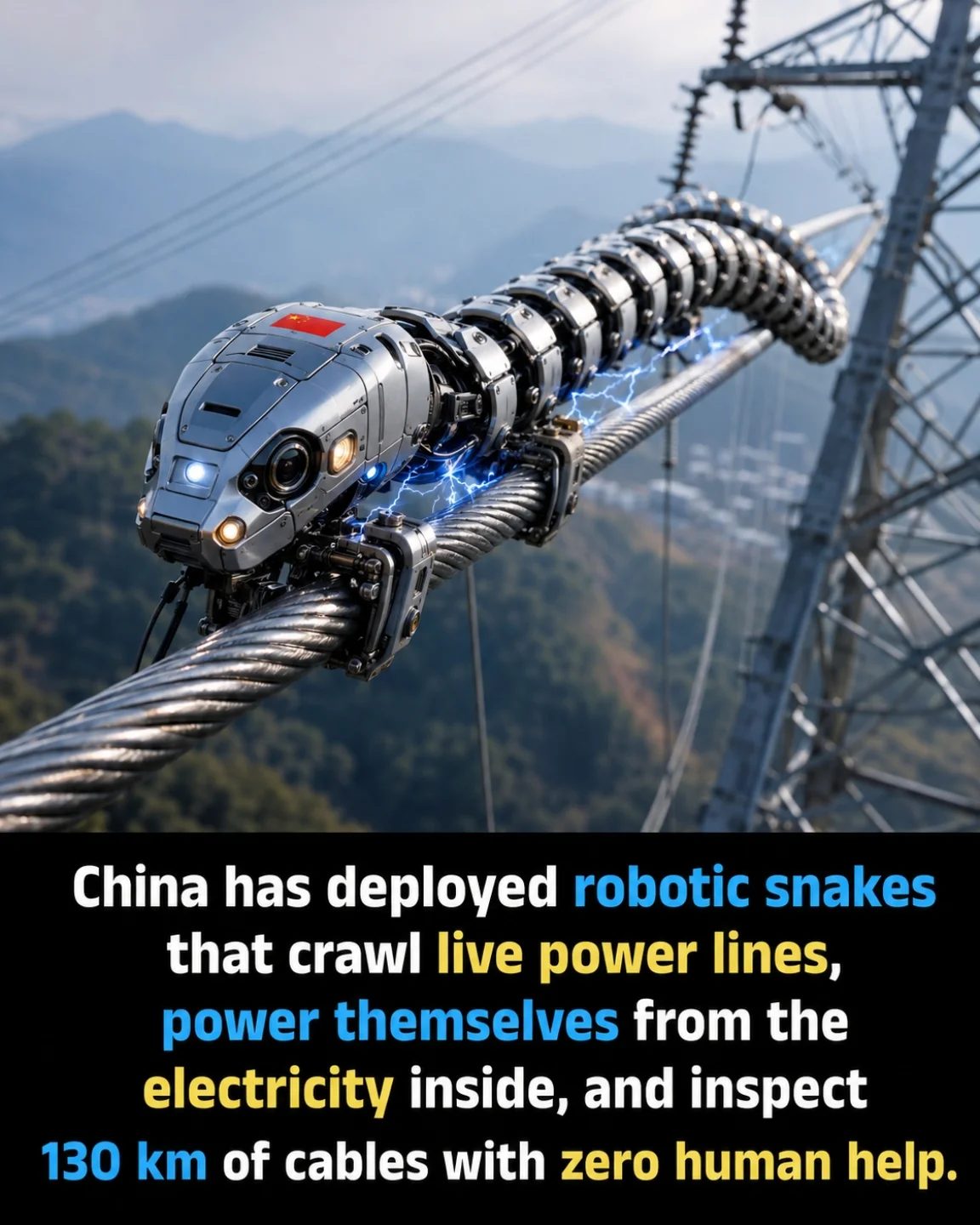
Robotic Snakes Inspect Power Lines
Power line maintenance is a critical aspect of ensuring reliable energy distribution. Traditionally, this task has been labor-intensive and often dangerous, requiring human workers to climb poles and traverse live wires. However, recent advancements in robotics have introduced a groundbreaking solution: robotic snakes designed to inspect and maintain power lines.
These robotic snakes, deployed in China, are engineered to crawl along high-voltage power lines. Unlike their human counterparts, these robots do not require physical contact with the ground, eliminating the need for cumbersome scaffolding or climbing equipment. They harness the electricity flowing through the power lines to power themselves, ensuring an uninterrupted inspection process without the need for external power sources. This self-sustaining feature is a significant advancement, as it reduces the operational costs and minimizes logistical challenges.
Why This Matters
Power line maintenance is not just about preventing outages; it's about ensuring the safety and efficiency of the entire power distribution network. The ability to inspect and maintain these lines without human intervention is a game-changer. Not only does it reduce the risk to human workers, but it also enhances the efficiency and reliability of the power supply. In regions with extensive power line networks, such as China, this technology can significantly cut down on maintenance downtime and operational costs.
Inspecting Power Lines with Robotic Snakes
How Robotic Snakes Operate
These robotic snakes are designed with a unique ability to draw power from the electricity within the power lines, enabling them to operate continuously without the need for human intervention. They are equipped with advanced sensors and cameras that can detect any issues in the lines, from minor defects to major faults.
Benefits of Using Robotic Snakes
The key benefit of using robotic snakes for power line inspection is safety. Traditional methods of inspection involve human workers climbing poles and traversing live wires, which comes with inherent risks. By replacing humans with robots, the safety of the inspection process is significantly enhanced.
The efficiency of these robots is another major advantage. They can inspect up to 130 kilometers of power lines without any breaks. This means they can cover extensive areas quickly, ensuring that issues are identified and addressed promptly.
Technological Features
These robotic snakes are equipped with a range of advanced features designed to enhance their effectiveness:
- Advanced Sensors: They use a combination of sensors, including infrared and acoustic sensors, to detect defects and anomalies in the power lines.
- High-Resolution Cameras: Equipped with high-resolution cameras, these robots can capture detailed images and videos of the power lines, providing a comprehensive view of their condition.
- AI and Machine Learning: These robots often utilize artificial intelligence and machine learning algorithms to analyze the data captured. This allows for more accurate and efficient identification of issues, ensuring timely maintenance.
Applications and Future Prospects
Robotic snakes are particularly useful in regions with challenging terrain or remote areas where human access is difficult. By deploying these robots, maintenance teams can ensure that power lines are inspected regularly, even in hard-to-reach locations, thus maintaining the power supply more effectively.
Future advancements in this technology could see even more sophisticated robots capable of performing a wider range of maintenance tasks. For example, future models may be equipped with tools to repair minor defects in the lines, further reducing the need for human intervention.
Practical Tips for Implementing Robotic Snakes
For organizations interested in implementing this technology, there are several practical tips to consider:
Planning and Preparation
Before deploying robotic snakes, it's essential to conduct a thorough assessment of the power line network. Identify areas that require frequent inspections and ensure that the robotic snakes are equipped with the necessary sensors and tools to handle these specific challenges.
Training and Maintenance
While these robots are designed to operate autonomously, they still require regular maintenance and updates. It's crucial to have a dedicated team trained to handle any technical issues and to ensure that the robots are up-to-date with the latest software and hardware upgrades.
Integration with Existing Systems
Robotic snakes should be integrated with existing power line management systems. This integration ensures that the data captured by the robots is easily accessible and can be used to make informed maintenance decisions.
Safety Protocols
Even though these robots operate autonomously, it's essential to have safety protocols in place. This includes procedures for handling any potential malfunctions and ensuring that the robots are operating within safe parameters.
Important Takeaways
Robotic snakes represent a significant advancement in power line inspection and maintenance. Their ability to operate autonomously, draw power from the lines, and cover extensive distances makes them an invaluable tool for ensuring the reliability and safety of power distribution networks.
The technology offers numerous benefits, including enhanced safety, increased efficiency, and reduced operational costs. By leveraging this technology, organizations can ensure that their power lines are inspected regularly, even in challenging and remote locations.
Conclusion
The deployment of robotic snakes for power line inspection is a testament to the advancements in robotics and engineering. By harnessing the power of these innovative technologies, we can enhance the safety, efficiency, and reliability of our power distribution networks. The future of power line maintenance is here, and it's safer, more efficient, and more reliable than ever before.
Questions readers ask
How do robotic snakes improve power line inspections in China?
Robotic snakes enhance power line inspections by eliminating the need for human workers to climb poles and traverse live wires. They crawl along high-voltage power lines, using the electricity to power themselves, thereby minimizing risks and increasing efficiency. This innovation allows for uninterrupted inspection processes, ensuring the reliability of the power distribution network.
What advantages do robotic snakes offer over traditional power line maintenance methods?
Robotic snakes offer several advantages, including enhanced safety for workers, as they eliminate the need for humans to climb poles and traverse live wires. They reduce the reliance on cumbersome scaffolding and climbing equipment, and their ability to harness power directly from the lines ensures efficient and uninterrupted inspections.
How do robotic snakes power themselves during inspections?
Robotic snakes are designed to harness the electricity flowing through the high-voltage power lines they inspect. This innovative feature allows them to operate continuously without the need for external power sources, ensuring a seamless and efficient inspection process.
Are robotic snakes used in other countries for power line inspections?
While the article focuses on China, the technology of robotic snakes for power line inspections is a global innovation. The concept of using robots for power line inspections is also being explored in other countries, although the specific deployment and integration of these robots may vary. China is certainly a leader in the deployment of robotic snakes for power line inspections.
What types of issues can robotic snakes detect during power line inspections?
Robotic snakes are equipped to detect a variety of issues, including physical damage, corrosion, and other anomalies that could compromise the integrity of the power lines. By identifying these issues early, the robots help prevent potential outages and ensure the safety and reliability of the power distribution network.
What role do robotic snakes play in ensuring the reliability of power distribution networks?
Robotic snakes play a crucial role by continuously monitoring power lines, detecting issues early, and ensuring timely maintenance. Their ability to operate autonomously and efficiently enhances the reliability of the power distribution network, minimizing downtime and potential disruptions to essential services.
What makes robotic snakes a safer alternative for power line inspections?
Robotic snakes are a safer alternative because they eliminate the need for human workers to directly engage with high-voltage power lines. By performing inspections autonomously, these robots reduce the risk of accidents and injuries, making the process safer for workers and more efficient for the power grid.
Related deep dives
Similar reads based on topic and creator.




Recent articles
Fresh deep dives from the latest Reels we unpacked.




Comments
Be the first to comment.