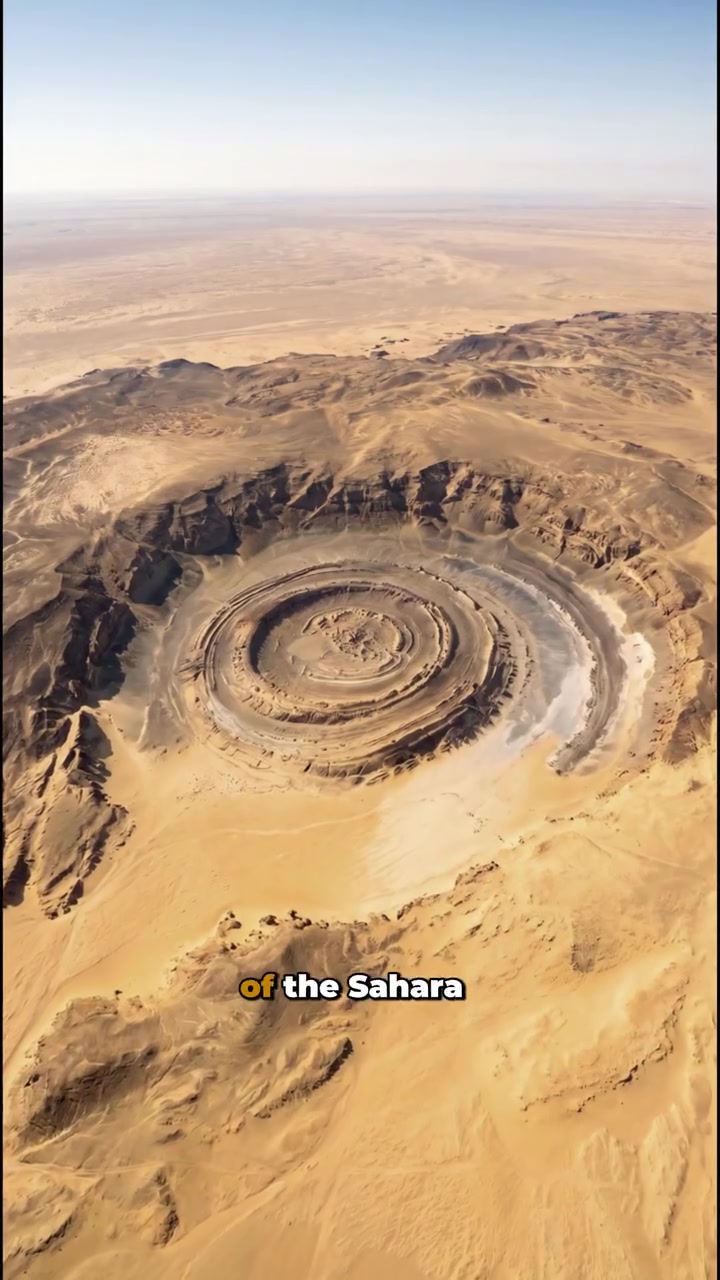
The Richat Structure is a natural artistry found in the Sahara Desert. But if you were to stare up at the sky in the heart of the desert, you wouldn't see what astronauts see from space. It's 40 kilometers wide and looks like a giant eye.
A Bullseye in the Sahara
The Richat Structure, also known as the Eye of the Sahara, is a massive geological phenomenon with a near-perfect bullseye pattern — concentric rings shaped up over 100 million years. The structure is a geological wonder, formed from a dome of rock pushed up from the Earth's interior and carved by wind and sand. This unique geological feature extends over 40 kilometers and becomes visible only from a high vantage point. From orbit, the Richat Structure appears as a giant, nearly perfect circle. Geologists who notice it from hundreds of kilometers in space say its formation and identity are still matters of debate. The structure's distinctive concentric rings are one of the most puzzling yet captivating features. Every ring made of different ancient stones like limestone, quartzite, and sandstone. Each layer erodes at its own pace, contributing to the overall symmetry and complexity of the Richat Structure. This intricate design, reminiscent of a bullseye, has led people to draw comparisons to human-made structures.
A Natural Illusion in the Desert
The Richat Structure's striking appearance and natural formation blur the lines between human construction and natural wonders. It challenges our perceptions of what nature can achieve. The structure's formation, over 100 million years ago, was misinterpreted as a meteorite impact crater in the 1950s. Others even suggested it might be the lost city of Atlantis. As geologists and scientists continue to study the Richat Structure, the topic remains controversial. One theory is that it is a geological doming, wherein a layer of hard rock was pushed up from the Earth's core, leaving a circular dome with different geological layers exposed to wind erosion. However, some geologists argue with this based on the level of symmetry and suggest instead that the Ring Structure might have formed through a complex interplay of geological forces and erosion. This phenomenon highlights the vast capabilities of natural forces to shape the Earth's surface.
The Divergent Theories Of Formation
The Richat Structure’s formation has been a topic of intense debate among geologists. The most widely accepted theory suggests that the structure originated from a geological doming process. This process involved a hard layer of rock being pushed up from the Earth's core, leaving a circular dome with distinct geological layers exposed to the elements. Yet, another theory proposes that the Richat Structure could be the result of a combination of geological forces and erosion. This alternative explanation emphasizes the intricate interplay of various factors that contributed to the structure's unique appearance. Each theory offers a different perspective on how such a vast and symmetrical feature could have been naturally formed.
Within The Geological Circles
The Ring Structure consists of different layers of ancient stones like limestone, quartzite, and sandstone. The varying hardness of these materials means they erode at different rates, creating the perfectly concentric rings that are a signature of the Richat Structure. Each layer is a testament to the geological timeline, telling a story of millions of years of natural processes.
Meteorite Or Spirit
After the discovery, scientists first thought it was a meteorite crater made by a giant meteor that slammed into the desert. However, as geological surveys were conducted, it was revealed that no meteorite impact had occurred. This revelation led to further research and the understanding that the structure was a natural formation.
Half a Century Old
The mystery of the Richat Structure began in the 1950s when it was first noticed from orbit. Its near-perfect symmetry and massive size made it a subject of extensive study and debate. One of the earliest theories suggested it was an impact crater, but further investigation revealed that it was a natural formation. Today, the Richat Structure continues to be a source of curiosity and wonder, drawing the attention of scientists and explorers alike.
Decoding the Mystery
For many years, scientists believed it was a meteorite crater until closer examinations revealed that no meteorite had impacted the spot. Its origins were revisited after new findings that showed the Richat Structure to be a dome pushed up from under the earth. If anyone walked through this vast 40-kilometer feature, they would likely miss its existence. But if you could see it from above, you'd understand why it’s no ordinary feature.
Approaching Richat Structure
In the Sahara Desert, the Richat Structure is a natural phenomenon that offers a unique and challenging experience for travelers. While the structure is not accessible via traditional tourism routes, those who are adventurous and well-equipped can embark on a guided expedition to explore this geological wonder.
- Preparation: First and foremost, it's important to note that visiting the Richat Structure requires significant preparation. The journey involves navigating one of the harshest environments on Earth, and only those with a good level of physical fitness and the right equipment are advised to attempt it.
- Guide: It's strongly recommended to hire a local guide who knows the desert landscape and can lead you safely through the terrain. The guide must be experienced in navigating the Sahara and familiar with the specific challenges of approaching the Richat Structure.
- Weather and Timing: The best time to visit the Richat Structure is during the cooler months, from October to March. During this period, temperatures are more manageable, and the risk of extreme weather conditions is lower.
- Supplies: Ensure you have sufficient water, food, and medical supplies for the journey. Camel rides are the preferred mode of transportation in the region, providing a more sustainable and culturally authentic experience.
Questions readers ask
What exactly is the Richat Structure and why is it called the Eye of the Sahara?
The Richat Structure is a massive, 40-kilometer-wide geological formation in the Sahara Desert. It's called the Eye of the Sahara because, from space, it looks like a giant, nearly perfect circle, with a bullseye pattern of concentric rings. It’s a natural wonder visible only from a high vantage point, not from the ground.
How did the Richat Structure form and why does it have such a distinctive pattern?
The Richat Structure formed over 100 million years through a process called geological doming, where a hard layer of rock was pushed up from the Earth's core, creating a circular dome. The distinctive concentric rings are made of different ancient stones like limestone, quartzite, and sandstone, each eroding at its own pace, contributing to the overall symmetry and complexity of the structure.
Why was the Richat Structure initially misunderstood as a meteorite impact crater or the lost city of Atlantis?
The Richat Structure's unique appearance and symmetry led to some intriguing theories about its origin. In the 1950s, it was initially misinterpreted as a meteorite impact crater due to its circular shape. Others even speculated that it might be the lost city of Atlantis, highlighting how its striking appearance can blur the lines between natural and human-made structures.
What are the main theories about how the Richat Structure was formed?
The most widely accepted theory suggests the Richat Structure originated from a geological doming process, where a hard layer of rock was pushed up from the Earth's core, leaving a circular dome with distinct geological layers. Another theory proposes that it could be the result of a combination of geological forces and erosion, emphasizing the intricate interplay of various factors that contributed to its unique appearance.
Can I visit the Richat Structure in person, and if so, what would I see from the ground?
While the Richat Structure is a remarkable sight from space, it's not a typical tourist destination. Visiting it in person would not reveal the bullseye pattern visible from orbit. From the ground, you would see a vast, rocky outcrop that might not look significantly different from other geological formations in the Sahara.
Is the Richat Structure unique, or are there similar formations elsewhere in the world?
The Richat Structure is unique in its size and symmetry. While there are other geological formations with concentric rings, such as the Arizona Crater in the U.S., the Richat Structure's sheer scale and perfect circular appearance make it stand out. Its combination of geological layers and erosion patterns is particularly striking and rare.
Why is the Richat Structure still a topic of debate among geologists?
The Richat Structure remains a topic of debate because its formation is not fully understood. While the geological doming theory is widely accepted, some geologists argue that the level of symmetry and the intricate interplay of geological forces suggest a more complex formation process. This ongoing debate highlights the mysteries still surrounding natural wonders like the Richat Structure.
Related deep dives
Similar reads based on topic and creator.



Recent articles
Fresh deep dives from the latest Reels we unpacked.




Comments
Be the first to comment.