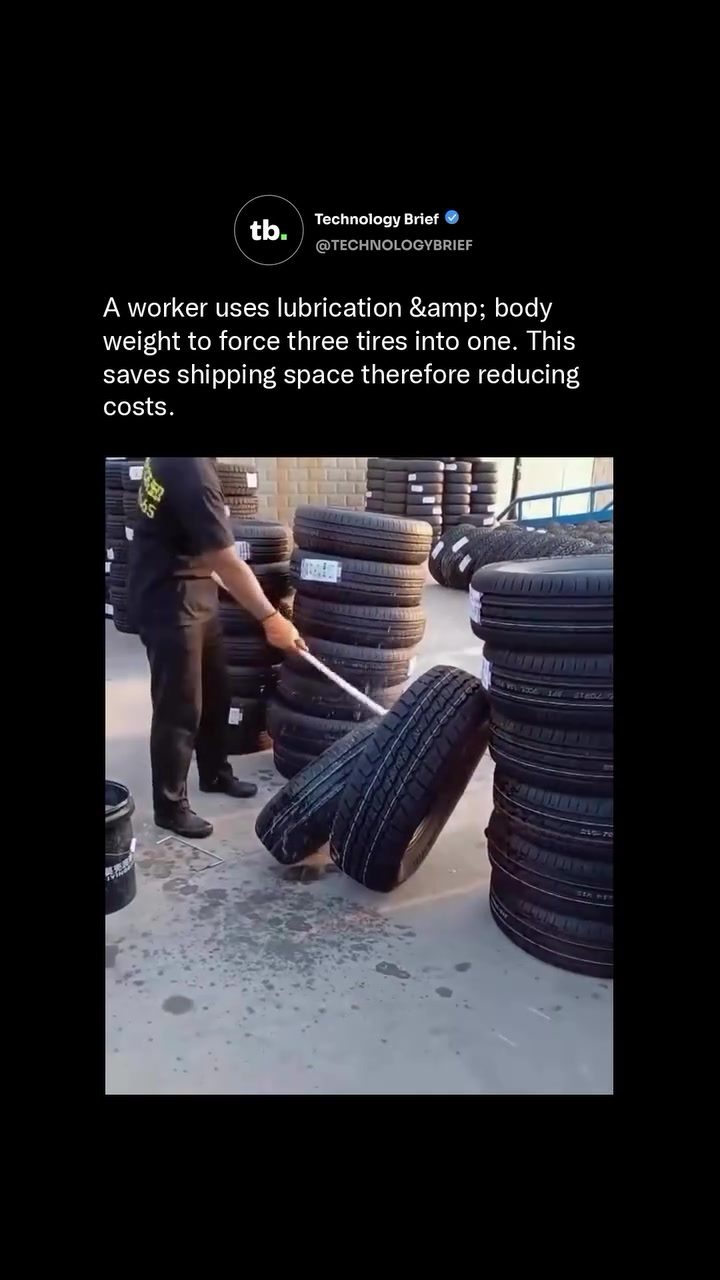
Tire Tripling: The Logistics Technique That's Transforming the Industry
Tire tripling is a innovative logistics technique used to optimize shipping space and reduce costs. This method involves nesting smaller tires inside larger ones, significantly increasing the number of tires that can fit into a standard shipping container. This technique is particularly prevalent among Chinese tire wholesalers, who ship budget tires to developing markets where freight costs can be prohibitively high.
Why Tire Tripling Matters
In the tire industry, space is a critical factor in logistics and shipping. Tire tripling addresses this challenge by dramatically increasing the number of tires that can be shipped in a single container. A standard shipping container typically fits around 1,600 regular tires. However, by tripling the tires, that number can jump to roughly 3,500, more than doubling the load per shipment. This technique not only saves space but also significantly reduces shipping costs, making it an economically viable solution for budget tire wholesalers.
Understanding the Technique
How Tire Tripling Works
The process of tire tripling involves several key steps. Workers first coat the tires with soapy water, which acts as a lubricant. This lubrication is essential for the tires to fit together smoothly. The worker then uses their hands, feet, and body weight to compress and push the inner tire down into place. The rubber beads of the tires must deform enough to squeeze past each other, which requires real physical effort and multiple attempts.
The Role of Lubrication
Lubrication plays a crucial role in the tire tripling process. Soapy water is commonly used to reduce friction between the tires, making it easier to force them into the desired configuration. Without lubrication, the tires would not deform sufficiently to fit inside each other, making the process much more difficult and time-consuming.
The Physical Effort Involved
The physical effort required to triple tires is significant. Workers need to use their entire body weight to compress the tires and push them into place. This process can take multiple attempts and requires a good deal of strength and endurance. The technique is particularly challenging for larger tires, which require even more force to deform.
Manual vs. Automated Techniques
While many facilities still rely on manual labor to triple tires, automated machinery is becoming more prevalent. These machines can triple a tire every 30 seconds, significantly increasing efficiency. However, many workers still prefer the manual method, as it allows for greater control and precision.
Practical Tips for Tire Tripling
Choosing the Right Lubricant
The type of lubricant used can greatly affect the ease and efficiency of the tire tripling process. Soapy water is a common choice, but other lubricants may also be effective. It's important to experiment with different options to find the one that works best for your needs.
Proper Body Mechanics
Using the correct body mechanics is essential for successful tire tripling. Workers should use their entire body weight to compress the tires, and distribute the force evenly to avoid injury. Proper technique not only makes the process more efficient but also reduces the risk of strain or injury.
Training and Experience
Tire tripling requires a good deal of skill and experience. New workers should be properly trained in the technique to ensure they can perform it safely and efficiently. Experienced workers can also benefit from ongoing training to refine their skills and stay up-to-date with the latest techniques and best practices.
Important Takeaways
Space and Cost Savings
One of the most significant benefits of tire tripling is the space and cost savings it provides. By increasing the number of tires that can fit into a single container, the technique dramatically reduces shipping costs, making it an attractive option for budget tire wholesalers.
Challenges and Considerations
While tire tripling offers many benefits, it also presents several challenges. The physical effort required can be significant, and the process can be time-consuming. Additionally, the technique requires a good deal of skill and experience, which can make it difficult for new workers to master.
The Future of Tire Tripling
As the demand for budget tires continues to grow, tire tripling is likely to become even more prevalent. Automated machinery is making the process more efficient, and new techniques and best practices are continually being developed. However, manual labor will likely remain an important part of the process for the foreseeable future.
Conclusion
Tire tripling is a valuable logistics technique that offers significant benefits for tire wholesalers. By nesting smaller tires inside larger ones, the technique dramatically increases the number of tires that can be shipped in a single container, saving space and reducing costs. While the process requires a good deal of skill and effort, it is an attractive option for budget tire wholesalers looking to optimize their shipping operations.
Questions readers ask
What exactly is tire tripling and how does it work?
Tire tripling is a shipping method where smaller tires are nested inside larger ones. This technique allows for more efficient use of space within a shipping container, as the smaller tires fit snugly inside the larger ones, reducing wasted space.
Why is tire tripling particularly beneficial for Chinese tire wholesalers?
Chinese tire wholesalers often ship to markets where freight costs can be high. By using tire tripling, they can fit more tires into a single container, reducing the overall cost per tire and making shipping more affordable. This is especially useful for budget tire wholesalers.
Can tire tripling be used for all types of tires?
Tire tripling is most effective with tires of different, but compatible, sizes. The technique relies on the ability to nest smaller tires inside larger ones, so it is essential to have a mix of tire sizes that fit well together. It may not be suitable for shipping identical tire sizes.
How does tire tripling impact the logistics and shipping process?
Tire tripling optimizes shipping space, allowing more tires to be transported in a single container. This leads to improved efficiency in the supply chain, reduced transportation costs, and faster delivery times, benefiting both wholesalers and retailers.
What are the potential challenges or drawbacks of tire tripling?
While tire tripling offers many benefits, it may require specialized knowledge and equipment for proper implementation. Incorrect nesting can lead to damage or reduced tire quality, and it is important to ensure that the tires are compatible and properly secured during transport.
How does tire tripling compare to other tire shipping methods?
Tire tripling is unique in its ability to maximize shipping space by nesting tires. Traditional methods may involve stacking tires, which can result in significant wasted space. Tire tripling, on the other hand, allows for a more compact and efficient use of container space, leading to cost savings and improved shipping efficiency.
What is the impact of tire tripling on the tire industry?
Tire tripling is transforming the tire industry by making shipping more cost-effective and efficient. This innovative technique is particularly beneficial for wholesalers shipping to markets where freight costs are high, allowing them to reduce costs and increase profitability. Additionally, it encourages advancements in tire shipping technology and logistics.
Recent articles
Fresh deep dives from the latest Reels we unpacked.




Comments
Be the first to comment.