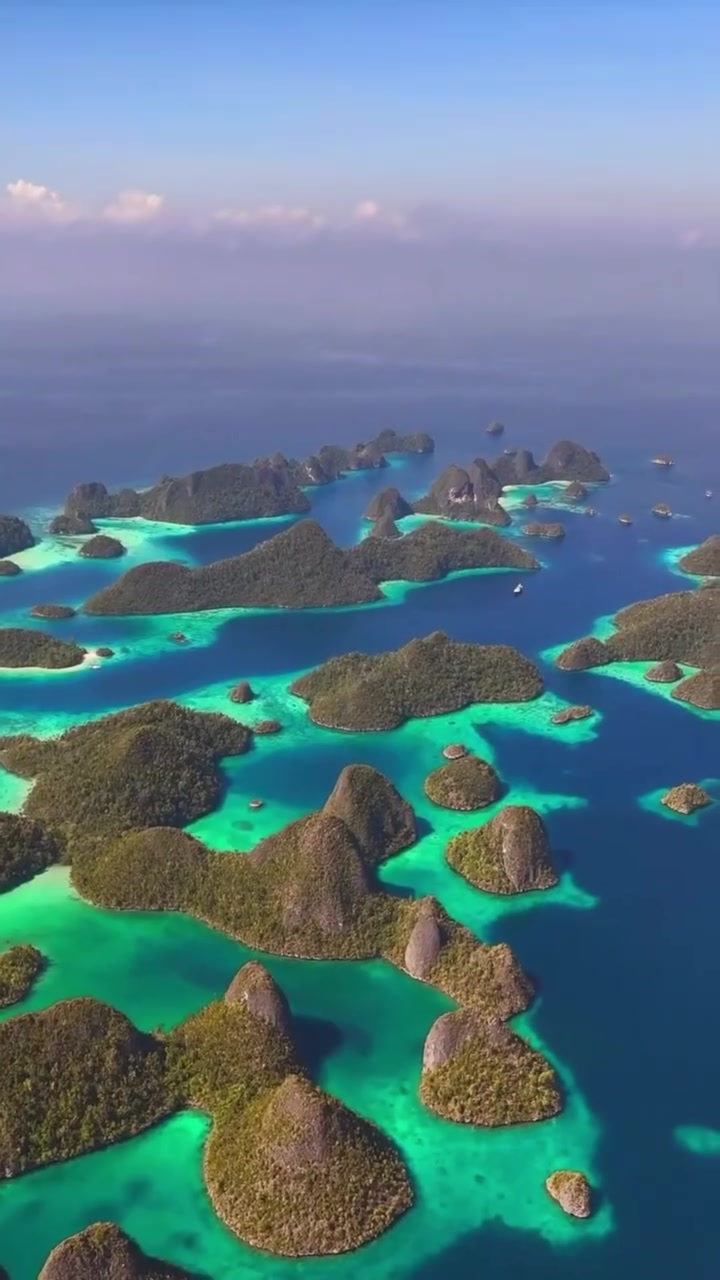
A vast ocean landscape glows a vibrant turquoise, with hundreds of tiny islands dotting the surface. This is not a computer-generated back drop or a scene from a Hollywood film. It is the real-world archipelago of Raja Ampat in Indonesia. The country encompasses some of the most spectacular marine ecosystems known to humanity, where a visitor can get up close to the wildest, most remote islands in the world.
Well Wondering in Raja Ampat
Marked by its archipelago made up of almost 1,500 small islands, cays, and shoals, Raja Ampat's marine diversity is a mystery — with 75 percent of the world's fish species. Yet, it's not simply the abundance of marine life. The archipelago is a geological marvel. When you stand at these oceanic viewpoints, it feels as if you are peering over the edge of Earth into the vast ocean. And these islands have truly distinct forms; they range from costly islands to exceedingly huge limestone formations, from tiny round islets to larger, jagged peaks. The archipelago is a natural wonder, revealed only through aerial perspective. Each island is a unique standout in the sea. Limestone formations rise in white pillars from the dark blue waters, and some islands' tips are covered in greenery.
Why Every Traveler Should Consider Raja Ampat
Indonesia is a vacation destination known for Bali and Jakarta — but Raja Ampat is a new vision of this country. It's an opportunity to see a vastly less-traveled Indonesia. The archipelago's raw seclusion is a gift for the naturalist and adventurer alike. It provides an utterly different experience from other more famous Asian destinations, where the emphasis is on the bustling urban environment or the party scene. The archipelago integrates the best of both worlds; travel between islands on a boat, take a swim in hidden lagoons or snorkel in crystalline water. For those who want to squeeze more into their travels, it carries a warning: visitors cannot stay long. Raja Ampat is remote, and it’s only possible to spend a few days here as part of a bigger Indonesian itinerary. However, this earlier scene of the video highlights its extreme value: the islands, the water, and the viewpoints feel like looking at an entire universe. And what makes the archipelago so unique is only available through its aerial landscape.
What You See from the Sky
Raja Ampat's aerial landscapes are nothing short of jaw-dropping. The blue water contrasts sharply with the white pillars of the limestone formations. The particular formation and color of each island makes it a distinct landmark. The video plays with its aerial shots. Many are taken from a high angle, presenting the viewer with the perspective of flying — or perhaps floating — above the water. The islands are seen as little more than speckles of green scattered throughout the water. This isn't simply a conglomeration of green — rather, each island has its own unique shape, which combines with the stunning azure water to create a beautiful and unforgettable image.
The Scenic Experience
The scene of Raja Ampat engages on many levels. This video promotes Raja Ampat not just as a landscape. It sells the experience. It doesn't rely solely on aerial shots. The experience of Raja Ampat is captured. White pillars of limestone formation rise from the sea. When visiting, one should take a boat between islands, swim in hidden lagoons, and even hike to viewpoints like those seen in the video. Tourists have the opportunity to access viewpoints like this one and marvel at the vastness of the ocean.
The Unique Land
Unlike the many small islands in the middle of the sea that resemble miniature replicas of bigger verdant islands in a tropical jungle, some are covered in jungle, while others feature white-sand beaches and turquoise lagoons. The islands are partly distinguished by their shape and color. Sometimes, the islands are composed of limestone, which rises out of the water in white pillars. Other ones are completely covered in greenery and mangroves. The video shows this variety of islands moving from one frame to another.
Let Raja Ampat Dream Drive Your Next Adventure
While you can't visit Raja Ampat easily, some things are particularly to consider. First, experience the place, then explore the map of Raja Ampat. If you have the time and resources, you can fly over by helicopter, stay in eco-resorts, or even stay on a cruise. This aerial video is an as-first pass. However, it is also a clue to a journey — a chance to sit on top of a world. Every traveler should consider exploring it: Fly over the islands, eat local food, and capture the scenes on camera. When you visit Raja Ampat, you'll find that the experience is truly something out of this world — but it is only on Earth.
Questions readers ask
What makes Raja Ampat's aerial views so unique compared to other island destinations?
Raja Ampat's aerial views are unique due to the vast number of islands—1,500 in total—and the distinct shapes and colors of each one. The vibrant turquoise waters contrasting with the white limestone formations create a stunning visual spectacle that's hard to find elsewhere. Additionally, the remote and pristine nature of the archipelago adds to its allure, making it feel like a hidden gem.
Can I visit Raja Ampat as part of a larger Indonesian trip?
Yes, you can visit Raja Ampat as part of a larger Indonesian trip. However, it's important to note that due to its remote location, you can only spend a few days here. It's best to include it in a broader itinerary that covers other parts of Indonesia, such as Bali or Jakarta, where you can spend more time.
What kinds of activities can I do in Raja Ampat besides enjoying the aerial views?
Raja Ampat offers a variety of activities beyond just aerial views. You can travel between islands by boat, take a swim in hidden lagoons, or snorkel in the crystalline waters. The archipelago is also a paradise for naturalists and adventurers, offering a raw and secluded experience unlike any other destination in Indonesia.
What makes the marine diversity of Raja Ampat so remarkable?
Raja Ampat is home to an astonishing 75% of the world's fish species, making it one of the most biodiverse marine ecosystems on the planet. The archipelago's remote location and pristine conditions have allowed it to remain untouched, preserving its natural beauty and marine life. This makes it a must-visit destination for anyone interested in marine biology or wildlife.
How do the different islands in Raja Ampat vary in appearance?
The islands in Raja Ampat vary significantly in appearance, ranging from small, round islets to larger, jagged peaks. Some islands feature towering limestone formations that rise from the dark blue waters, while others are covered in lush greenery. This diversity in landscape adds to the archipelago's unique charm and makes each island a distinct landmark.
Is Raja Ampat a good destination for those who want to escape the typical tourist hotspots in Asia?
Yes, Raja Ampat is an excellent destination for those looking to escape the typical tourist hotspots in Asia. Unlike more famous destinations like Bali or Jakarta, Raja Ampat offers a raw and secluded experience. It provides a unique blend of natural beauty and adventure, making it an ideal choice for naturalists, adventurers, and anyone looking for an off-the-beaten-path experience. Its remote and pristine location adds to its appeal, offering a truly wild and untouched landscape.
What is the best way to experience the aerial views of Raja Ampat?
The best way to experience the aerial views of Raja Ampat is through a scenic flight or a boat tour that offers a high vantage point. This allows you to see the unique shapes and colors of the islands as well as the stunning contrast between the turquoise waters and the white limestone formations. The aerial perspective truly reveals the beauty and diversity of the archipelago.
Related deep dives
Similar reads based on topic and creator.



Recent articles
Fresh deep dives from the latest Reels we unpacked.



Comments
Be the first to comment.