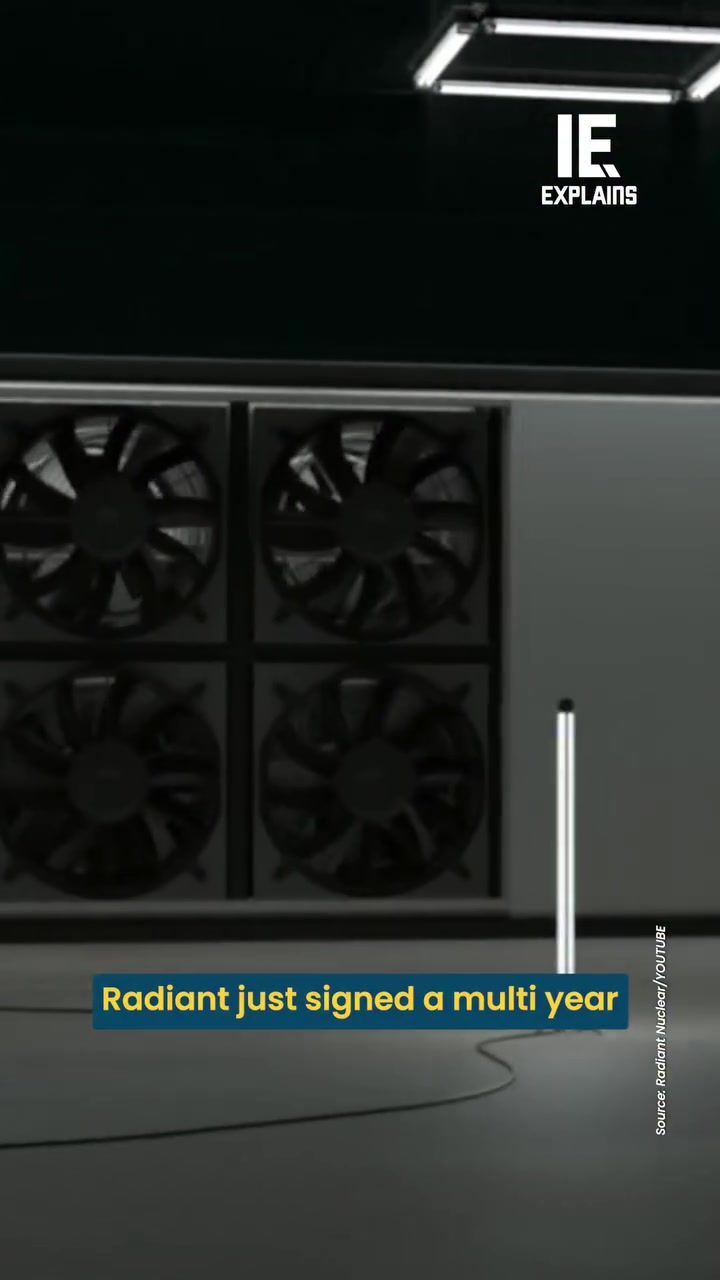
Radiant Energy has made a bold move in the nuclear fuel industry. The company recently signed a significant multi-year deal with Centris Energy, securing a steady uranium supply. This agreement is not just about securing a resource; it’s about ensuring a critical advancement in America’s nuclear energy capabilities.
A Milestone in American Uranium Enrichment
Centris Energy recently restarted its uranium enrichment facilities in Piketon, Ohio. The plant processes uranium in a way that makes it highly desirable for use in reactors. Centris's new facilities produce high-assay, low-enriched uranium (HALEU). HLUE is enriched between 5% and 20%. This is not just about quantity. Radiant is investing in Centrus's growth by prepaying for uranium. This kind of business arrangement is designed to accelerate production. Centris's focus on American-made centrifuges makes its uranium "uncommitted," to use the industry term. This characteristic is key because it allows Radiant more flexibility in distribution and sales. This is more than an industrial transaction; it's a strategic play in American energy policy. Before this, Russia was the sole commercial supplier of HALEU. While increasing American production is vital for energy independence, it also drives economic growth for the region, employs local workers, and strengthens America's energy security.
The Kaleidos Reactor: A Game-Changer
Radiant’s reactor, the Kaleidos, is a groundbreaking design that distinguishes itself from conventional nuclear reactors. The unit generates one megawatt of power using triso fuel (tiny uranium particles coated in artificial graphite). The fuel is packed inside a compact shipping container. This makes transporting the reactor more flexible, as it can travel by road, sea, or air. With its helium-cooled design, the Kaleidos is particularly efficient. It is designed to run for approximately five years before needing refueling. This reduces operational downtime and maintenance costs significantly. But the fuel itself is critical to the reactor’s efficiency. That’s why Radiant’s deal with Centris and its agreement with the US Army matter.
Powering Military Sites
Radiant has secured a $750 million contract to deploy 15 of these reactors on US military bases by 2030. The flexibility of the fuel's origin is crucial for this deal. This kind of fuel is not subject to the usual restrictions on its use because it is produced domestically. These reactors will support mobile bases, labs, and other critical infrastructure. This contract represents a major advancement in military energy resilience.
Streamlining Production
Radiant is counting on Centrus's ability to scale up production. Centris's engineers have crafted the American-designed AC100 centrifuges. This equipment will enable Centris to increase its output significantly. The Energy Department has already received 1,900 kilograms of uranium, and larger-scale production is set to commence around 2029. The new facilities aim to produce 12 metric tons of uranium annually, providing a reliable and secure fuel source for the Kaleidos reactors.
A Different Kind of Fuel Cycle
At the heart of this arrangement is the very design of the Kaleidos reactor. It was engineered to maximize efficiency and minimize operational downtime. And it needs fuel to do so. This fuel isn’t just any uranium pellets. HALEU is the kind of fuel that can power a military base. That’s why Centris’s centrifuges - which use American technology and design - are so critical. The fuel they make ensures that the reactors on military bases are truly independent. Radiant's pivot towards HALEU underscores an important shift in the nuclear energy sector. Energy security is no longer just about having the power to generate electricity - it also means using modern facilities and fuel that fits the military's needs, allowing the reactors to power the bases without the restrictions of foreign fuel.
Testing At The Idaho National Laboratory
Testing is slated to begin at the Idaho National Laboratory. The first Kaleidos reactor will undergo rigorous trials before being deployed to military installations. The goal is to ensure that the reactors are not only efficient but also reliable and secure. This step is crucial for validating the design and ensuring it will meet the specific needs of military applications.
The Key Difference
The real difference here is the nature of the fuel. Uranium enriched to HALEU standards can deliver more power, and the power is uninterrupted for years at a time. This makes it ideal for military bases, which often operate in remote or harsh environments. For a long time, military bases have relied on fuel shipments that are subject to disruption, whether by weather or geopolitical tensions. With this fuel, those bases can run autonomously for years. The contract itself is a vote of confidence from the Department of Defense.
Powering the Future Securely
For anyone following American nuclear technology, the timing of this deal is just as meaningful. Radiant's partnership with Centris is part of a broader trend in the nuclear energy sector. The industry is seeing a renewed focus on developing and deploying advanced nuclear reactors. These reactors offer significant advantages in terms of efficiency and safety. But they require a stable and secure fuel supply. Radiant's multi-year deal with Centrus ensures that the company has the fuel it needs to deliver on its promises to the US military and other potential clients.
Questions readers ask
What exactly is high-assay, low-enriched uranium (HALEU) and why is it important for Radiant's reactors?
HALEU is uranium enriched between 5% and 20%. It's crucial for Radiant's reactors because it provides a more efficient fuel source, enhancing the performance of their innovative reactor designs. The deal with Centris ensures a steady supply of this specialized fuel, supporting both operational efficiency and energy security.
How does the deal between Radiant Energy and Centris Energy benefit American energy policy?
The deal supports American energy independence by reducing reliance on foreign suppliers, particularly Russia. It also boosts local economic growth and job creation in Ohio, where Centris's enrichment facilities are located. This strategic move strengthens America's energy security and reduces vulnerabilities associated with foreign supply chains.
What makes the Kaleidos reactor different from traditional nuclear reactors?
The Kaleidos reactor stands out due to its compact design and efficient use of triso fuel, which allows it to generate one megawatt of power. Unlike traditional reactors, it can be transported easily and is helium-cooled, reducing operational downtime and maintenance costs. It runs for approximately five years before needing refueling.
How does the partnership with Centris Energy help Radiant Energy meet its goals?
The partnership secures a reliable supply of HALEU, which is essential for the Kaleidos reactors. Additionally, Centris's ability to scale up production with its AC100 centrifuges ensures that Radiant can meet its future energy demands, particularly for the 15 reactors it plans to deploy on US military bases by 2030.
What role does the US Army play in Radiant's nuclear energy strategy?
The US Army has awarded Radiant a $750 million contract to supply 15 Kaleidos reactors to military bases by 2030. This deal not only validates the reactor's design but also ensures that the military has a reliable, flexible energy source for critical infrastructure, enhancing overall energy resilience and security.
Can Centris Energy's new facilities produce enough HALEU to meet Radiant's needs?
Centris's new facilities are designed to produce 12 metric tons of uranium annually. This capacity is expected to meet Radiant's demands, especially as larger-scale production commences around 2029. The agreement includes prepayment, which accelerates production and ensures a steady supply for Radiant's reactors.
What are the implications of using domestically produced uranium for military applications?
Using domestically produced uranium eliminates the usual restrictions on fuel use, making it highly flexible for military applications. This ensures that the reactors can be deployed in various settings, from mobile bases to labs, without the complications of international supply chains.
Related deep dives
Similar reads based on topic and creator.

Recent articles
Fresh deep dives from the latest Reels we unpacked.



Comments
Be the first to comment.