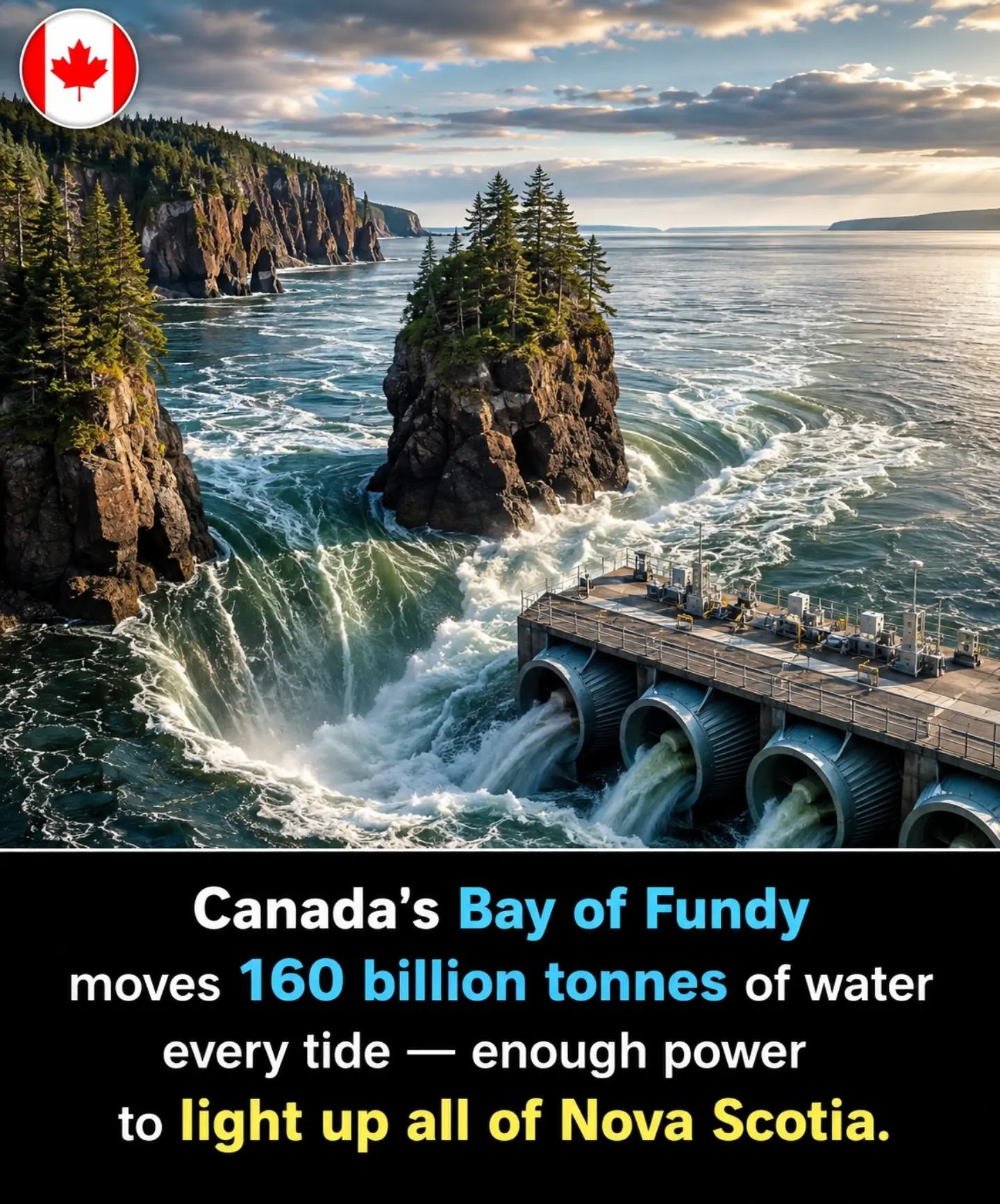
Bay of Fundy: Harnessing the Power of Tides
The Bay of Fundy, located on the Atlantic coast of Canada, is renowned for its dramatic tidal changes. The bay's tidal range is the highest in the world, making it a significant source of tidal power. This power potential has sparked interest in harnessing the energy for various purposes, including lighting up entire provinces. Understanding the dynamics and potential of tidal power in the Bay of Fundy offers insights into sustainable energy sources.
Context / Why This Matters
The Bay of Fundy is a unique natural phenomenon that provides an opportunity to explore renewable energy sources. The bay's tidal range is among the highest in the world, reaching up to 16 meters (53 feet) in some areas. This extreme tidal range results from the bay's funnel shape, which amplifies the tidal forces. The movement of water in and out of the bay is a massive natural event that can be harnessed to generate electricity.
The tidal power generated by the Bay of Fundy exceeds the energy needs of the entire province of Nova Scotia.
The Mechanics of Tidal Power
Tidal power is generated by the rise and fall of ocean tides. In the Bay of Fundy, the massive volume of water moving in and out during each tidal cycle can be harnessed to produce electricity. There are two primary methods for capturing tidal energy: tidal stream generators and tidal barrage systems.
Tidal Stream Generators
Tidal stream generators operate similarly to wind turbines. They are placed underwater in areas with strong tidal currents. As the tide flows in and out, the water turns the turbine blades, generating electricity. These turbines are designed to be environmentally friendly, as they do not disrupt marine life or the seabed. The Bay of Fundy's strong currents make it an ideal location for tidal stream generators.
Tidal Barrage Systems
Tidal barrage systems involve the construction of a dam or barrage across an estuary, which captures the water during the high tide. When the tide goes out, the water is released through turbines, generating electricity. The Annapolis Royal Generating Station in Nova Scotia is a well-known example of a tidal barrage system. It has been operational since 1984 and generates enough power to supply about 4000 homes.
Practical Tips for Exploring Tidal Power
Exploring tidal power in the Bay of Fundy offers a unique opportunity to understand renewable energy sources. If you are planning a visit or interested in learning more about tidal power, consider the following tips:
- Visit the Annapolis Royal Generating Station: This historic site provides a firsthand look at how tidal power is harnessed. The station offers tours and educational programs that explain the technology and its benefits.
- Observe the Tides: The Bay of Fundy's extreme tidal range is a spectacle to behold. Visiting during high and low tide times can give you a sense of the power and magnitude of the tidal movements.
- Learn About Environmental Impact: While tidal power is a renewable energy source, it is essential to understand its environmental impact. Tidal power generation can affect marine ecosystems, so it is crucial to explore responsible and sustainable practices.
- Engage with Local Communities: Local communities in the Bay of Fundy area have a deep understanding of the bay's tidal forces and their impact on daily life. Engaging with these communities provides valuable insights into the cultural and economic significance of tidal power.
Important Takeaways
Harnessing the power of tides in the Bay of Fundy offers a promising avenue for sustainable energy. The bay's extreme tidal range and the technology available for capturing tidal energy make it a unique resource. Understanding the mechanics and practical applications of tidal power provides valuable insights into renewable energy sources and their potential impact on the environment and communities.
- Renewable Energy Potential: The Bay of Fundy's tidal power potential is significant, offering a renewable energy source that can power entire provinces.
- Environmental Considerations: While tidal power is renewable, it is essential to consider its environmental impact and explore sustainable practices.
- Economic and Cultural Significance: Tidal power has both economic and cultural significance for local communities, providing opportunities for research, education, and tourism.
Conclusion
The Bay of Fundy's tidal power potential offers a unique opportunity to explore renewable energy sources. By understanding the mechanics of tidal power and its practical applications, we can harness this natural resource to generate electricity sustainably. Whether through tidal stream generators or tidal barrage systems, the Bay of Fundy's tidal energy can play a crucial role in meeting the energy needs of the future. Visiting the bay, observing the tides, and engaging with local communities provides a rich and rewarding experience, offering insights into the power of nature and the potential for a sustainable future.
Questions readers ask
What makes the Bay of Fundy unique for tidal power generation?
The Bay of Fundy is unique due to its record-breaking tidal range, which is the highest in the world. This extreme tidal range, reaching up to 16 meters in some areas, creates a vast and powerful energy source that can be harnessed for electricity generation.
How does tidal energy generation in the Bay of Fundy work?
Tidal energy generation in the Bay of Fundy typically involves the use of tidal barrages or turbines. These structures capture the energy from the incoming and outgoing tides, which drive turbines to generate electricity. The process is predictable and consistent, unlike some other renewable energy sources.
What are the benefits of using tidal power as a sustainable energy source?
Tidal power offers several benefits, including reliability and consistency. Unlike wind or solar, tidal energy is predictable and not dependent on weather conditions. Additionally, it produces no greenhouse gas emissions, making it an environmentally friendly option for generating electricity.
Are there any tidal power projects currently operating in the Bay of Fundy?
As of now, there are no large-scale tidal power projects operating in the Bay of Fundy, but there have been significant studies and proposals. The Annapolis Royal Generating Station, located in Nova Scotia, is one of the few tidal power plants in operation, demonstrating the potential for larger projects in the future.
What are the environmental considerations for tidal power in the Bay of Fundy?
While tidal power is a clean energy source, the installation of tidal barrages or turbines can have environmental impacts. These include changes to sediment flows, potential disruption to marine life, and alterations to the bay's ecosystems. Proper planning and mitigation strategies are essential to minimize these effects.
How does Nova Scotia benefit from tidal energy potential in the Bay of Fundy?
Nova Scotia can significantly benefit from the tidal energy potential in the Bay of Fundy by diversifying its energy portfolio and reducing reliance on fossil fuels. Harnessing tidal power can contribute to the province's energy needs, reduce greenhouse gas emissions, and support local economic development through job creation in the renewable energy sector.
Related deep dives
Similar reads based on topic and creator.




Recent articles
Fresh deep dives from the latest Reels we unpacked.



Comments
Be the first to comment.