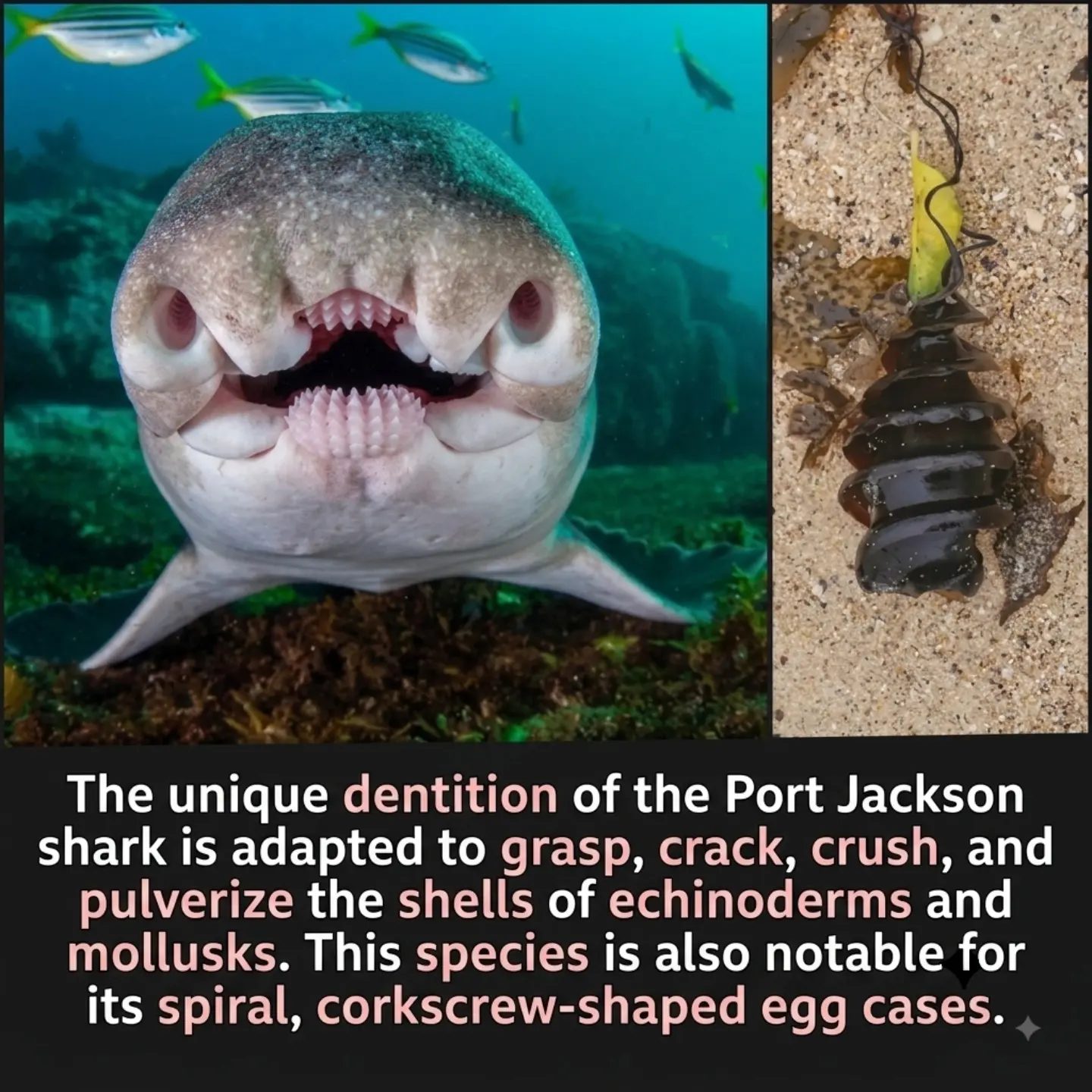
Port Jackson Shark
The Port Jackson shark is a captivating marine species native to the southern coasts of Australia. Unlike many of its ocean relatives, this shark has a specialized diet and unique adaptations that make it a standout member of the shark family.
Context / Why this matters
These sharks are fascinating for several reasons. They are bottom-dwellers, preferring the ocean floor to the open sea. Their unique dentition and spiral egg cases set them apart from other sharks, making them a subject of interest for marine biologists and ocean enthusiasts alike. Understanding these adaptations provides insight into the diverse strategies marine life has evolved to thrive in the ocean.
Main discussion
Unique Dentition
One of the most striking features of the Port Jackson shark is its dentition. These sharks possess a combination of small, pointed front teeth and flat, blunt back teeth. The front teeth are designed for grasping prey, while the back teeth are adapted for cracking, crushing, and grinding through tough shells. This specialized dentition allows the Port Jackson shark to efficiently feed on hard-shelled sea creatures like sea urchins, crabs, and mollusks. This adaptation is not just about eating; it is also about survival in an environment where food sources can be hard to come by and challenging to penetrate.
Egg Cases: Spiral and Secure
Another remarkable aspect of the Port Jackson shark is its reproduction method. Female sharks lay distinctive, corkscrew-shaped egg cases. These spiral egg cases are wedged into rock crevices by the mother shark, who uses her mouth to anchor them securely against strong ocean currents. This unique method of laying eggs ensures the protection of the developing embryos, giving them a better chance of survival in the harsh marine environment. The spiral shape of the egg cases is not just a curiosity; it serves a practical purpose in keeping the eggs from floating away.
Nocturnal and Docile
Port Jackson sharks are nocturnal creatures, meaning they are most active during the night. During the day, they often rest together in caves or on sandy sea floors. This behavior helps them conserve energy and avoid potential predators. Despite their intimidating appearance, these sharks are completely harmless to humans. Their docile nature makes them a low-risk species for divers and marine researchers, providing an opportunity to observe these fascinating creatures in their natural habitat.
Diet and Feeding Habits
The Port Jackson shark's diet is highly specialized, focusing on hard-shelled sea creatures. This diet necessitates a unique set of teeth that can efficiently crush and pulverize shells. Their diet includes echinoderms and mollusks, which are abundant in their ocean floor habitat. The ability to crush through tough shells is a testament to the shark's evolutionary adaptations, allowing it to thrive in an otherwise challenging environment.
Conservation and Habitat
Port Jackson shark habitats are typically found in the southern regions of Australia, where the waters are cooler and the ocean floor is rich with the creatures they feed on. Conservation efforts for these sharks are important, as their specific habitat and diet make them vulnerable to environmental changes. Protecting their habitat ensures that these sharks can continue to flourish, providing valuable insights into marine ecosystems.
Behavior and Social Structure
These sharks are often seen resting in groups, which suggests a degree of social structure. Their nocturnal behavior and day-long resting periods are likely driven by the need to conserve energy and avoid potential threats. This behavior can also be seen as a way to stay safe in numbers, as predators are less likely to target a group of sharks than an individual.
Practical tips
For those interested in observing Port Jackson sharks, knowing their behavior and preferred habitats is crucial. Divers and marine enthusiasts should look for these sharks in caves or on sandy sea floors, especially during the day when they are most likely to be resting. Night dives can provide a unique opportunity to see these sharks in action, as they forage for food. Always remember to approach with caution and respect for the animals and their environment.
Important takeaways
- Port Jackson sharks are unique for their specialized dentition, which allows them to feed on hard-shelled sea creatures.
- Their spiral, corkscrew-shaped egg cases are anchored in rock crevices to protect the developing embryos.
- These sharks are nocturnal and docile, making them a fascinating and safe subject for marine observation.
- Understanding the Port Jackson shark's habitat and behavior is crucial for conservation efforts and for those interested in observing these creatures in their natural environment.
Conclusion
The Port Jackson shark is a testament to the incredible diversity and adaptability of marine life. From its specialized dentition to its unique egg cases, this shark has evolved in remarkable ways to thrive in its ocean floor habitat. Whether you're a marine biologist, a diver, or simply an ocean enthusiast, the Port Jackson shark offers a wealth of insights into the wonders of the underwater world.
Questions readers ask
Why do Port Jackson Sharks have such unique teeth?
Port Jackson Sharks have unique teeth designed to crush and crack the shells of their prey, which primarily consists of mollusks. Their dentition features strong, flat teeth that are perfectly adapted for this task, unlike the serrated teeth seen in many other shark species.
What makes the egg cases of Port Jackson Sharks distinct?
Port Jackson Sharks produce spiral-shaped egg cases, also known as mermaid's purses, which are unique among shark species. These spiral cases protect the developing embryos and provide them with a safe environment until they are ready to hatch.
How do the unique traits of Port Jackson Sharks help them survive in the ocean?
The specialized teeth and spiral egg cases of Port Jackson Sharks are crucial for their survival. Their dentition allows them to access a specific food source, while their unique egg cases protect their offspring, ensuring the continuation of the species in the challenging ocean environment.
What is the significance of the Port Jackson Shark's bottom-dwelling habits?
Port Jackson Sharks prefer to live on the ocean floor, where they can find their preferred mollusk prey. This habitat also provides them with places to hide and rest, contributing to their overall survival and reproduction success.
How do Port Jackson Sharks' teeth help them crack shells?
Port Jackson Sharks' teeth are uniquely adapted to crack and crush shells due to their broad, flat surfaces and robust structure. Using these specialized teeth, the sharks can efficiently break through the shells of mollusks, making the meat inside accessible.
Related deep dives
Similar reads based on topic and creator.




Recent articles
Fresh deep dives from the latest Reels we unpacked.




Comments
Be the first to comment.