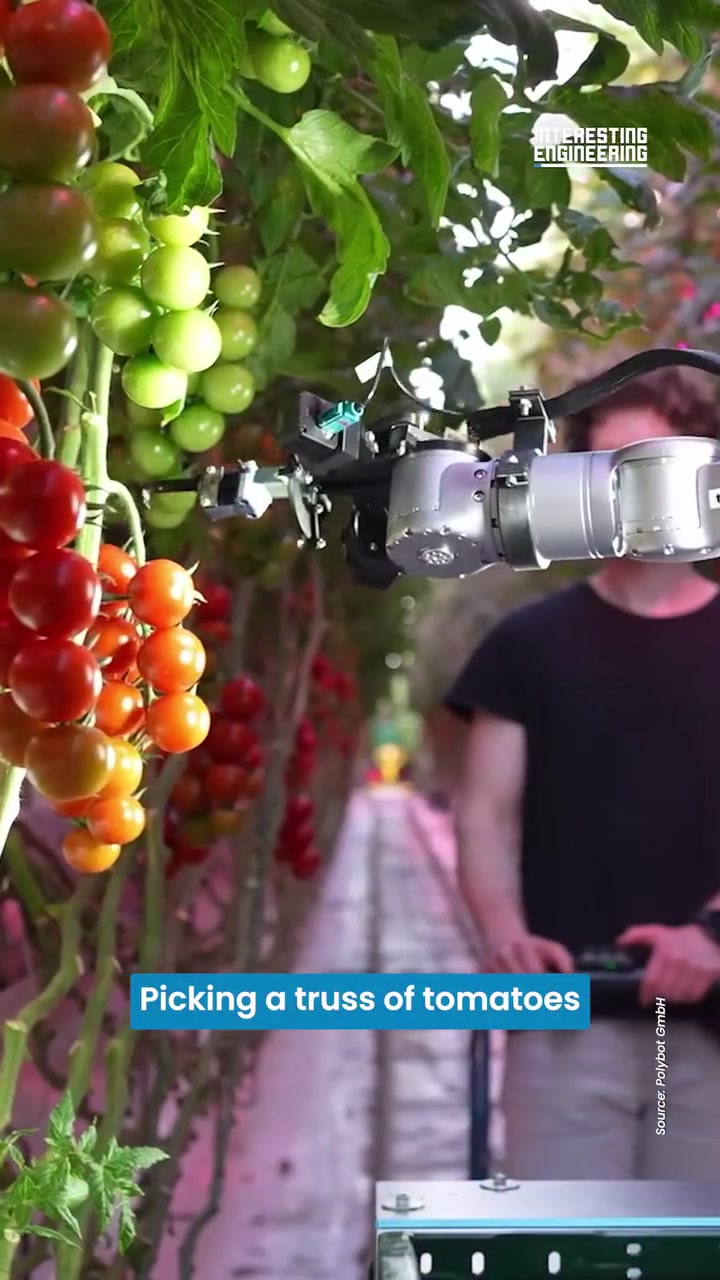
Harvesting with precision
In a German greenhouse, a robot's arms carefully pluck trusses of tomatoes. Polybot GmbH, a startup from Tübingen, is automating the delicate task of tomato harvesting with a robot that learns by imitation. Although robots are common on farms, most are programmed with specific rules about what to pick and where to cut. Polybot's robot, however, learns by observing human workers. Martin Kiefel, the startup's founder, explains that Polybot shows the robot how to harvest the tomatoes instead of detailing the fruit or its stem. The robot's speed is currently comparable to a human's, but Polybot aims to increase it by 50%. This boost, combined with automation of other greenhouse tasks, will enable farms to rethink crop rotations.
A new model for agricultural automation
While greenhouse automation is not a new concept, Kiefel’s approach is unusual. Humans continue to be needed for picking crops and processing delicate items because these tasks require adaptability and precision. Companies have been developing more sophisticated robots to address labor shortages, and Polybot's focus on learning by demonstration is one promising direction. The learning approach that Polybot has chosen is typically seen in humanoid robots that pick up tasks by observing humans. This growing trend in technology is driven by labor shortages and an increased appetite for fresh, locally grown produce. According to the U.S. Department of Agriculture's National Agricultural Statistics Service, greenhouse and nursery production in America increased dramatically in the early 2020s, from $18.6 billion in 2020 to $23.4 billion in 2021.
How polybot's robot learns by imitation
Polybot's robot learns by human demonstration. Therefore the precision of each human demonstration makes a significant difference. The robot gradually learns to select the correct tomatoes and cut their stems without damaging the plants. Over time, this consistent training helps the robot achieve the same precise movements as the human demonstrator. The method of learning is called imitation learning. It is a form of machine learning where the robot learns by observing demonstrations of a task. It is designed to handle tasks that are too complex for traditional rule-based programming. This approach is particularly useful in situations where tasks vary and cannot be easily described by a set of rules, such as harvesting tomatoes from different plants.
Riding the rails
Polybot's robot moves efficiently along a track within the greenhouse. One critical part of Polybot is a tightly controlled system of trolley rails. The robot uses these rails to move along the rows of tomato plants. Thanks to its precise navigation, it picks an entire truss of tomatoes in one go. Moreover, it moves along the track at a speed comparable to a human worker. This efficient navigation and precision in movement are essential for the robot to keep pace with the output necessary for a commercial greenhouse operation. Speed is essential for efficient operations, especially harvesting tomatoes, which require careful handling. The robot’s arms are designed to perform the complex tasks involved in precision cutting and stem separation while navigating the greenhouse space.
Inching toward broad adoption
Polybot's automated harvesting system will enter full-scale production in the summer of 2025, with the first systems expected in 2027. This could revolutionize farming by cutting down the cost of delicate tasks. The startup will use this pilot project to gather data and refine the technology, addressing issues like speed and efficiency. Polybot sees the future of farming as one where human workers and robots work hand-in-hand. The startup hopes to make delicate tasks cheap to automate. This technology will allow farms to grow mixed crops again, a practice that has declined due to the high labor costs of manual harvesting.
Keep one eye on the market
Farmers considering Polybot’s system should assess their specific needs and the current state of their operations. Is there a labor shortage or high turnover rate? Would automation help with harvesting timing and consistency? Here are a few practical tips for those thinking about automating their tomato harvest:
- Evaluate Existing Infrastructure: Polybot's system uses trolley rails growers already have, so assess your greenhouse layout and ensure it’s compatible.
- Pilot Testing: Polybot is offering a full pilot this summer, which can be a cost-effective way to test the technology before committing to a full-scale rollout.
- Data Gathering: Use this pilot to gather data on the robot's performance and identify areas for improvement, and how much more efficient it is than human labor.
- Cost-Benefit Analysis: Compare the cost of the automation system to the current labor costs and potential savings from increased efficiency and reduced labor needs.
Questions readers ask
What makes Polybot's tomato harvesting robot different from other agricultural robots?
Polybot's robot stands out because it learns to harvest tomatoes by observing human workers, rather than following a set of predefined rules. This approach allows it to handle the variability in tasks that are common in greenhouse environments, making it more adaptable than traditional robots.
How does Polybot's robot learn to pick tomatoes?
Polybot's robot uses a method called imitation learning, where it learns by watching human demonstrators. The robot gradually improves its ability to select the correct tomatoes and cut their stems without damaging the plants, achieving the same precise movements as the human over time.
Can Polybot's robot be used in other types of greenhouses or only for tomatoes?
While the current focus is on tomatoes, the learning by demonstration approach could potentially be adapted for other crops. However, specific modifications might be needed to handle the unique characteristics of different plants and harvesting methods. The robot's versatility is a key factor in its potential for broader applications.
How does the robot's learning process impact its efficiency?
The robot's learning process allows it to gradually improve its speed and precision. Currently, its speed is comparable to a human worker, but Polybot aims to increase this by 50%, making it even more efficient. This efficiency is crucial for commercial greenhouse operations, where speed and precision are essential.
What are the benefits of using Polybot's robot in a greenhouse environment?
Polybot's robot offers several benefits, including the ability to handle delicate tasks with precision, adaptability to different conditions, and the potential to increase overall efficiency. By automating the harvesting process, farms can rethink crop rotations and potentially increase their productivity. Additionally, it addresses labor shortages and the growing demand for locally grown produce.
What role do the trolley rails play in Polybot's system?
The trolley rails are a critical part of Polybot's system, allowing the robot to move efficiently along the rows of tomato plants. This precise navigation ensures that the robot can pick an entire truss of tomatoes in one go, maintaining the speed and efficiency necessary for commercial operations. The rails also contribute to the robot's ability to keep pace with the output required in a greenhouse setting.
Is Polybot's approach unique in the field of agricultural automation?
Yes, Polybot's approach is quite unique. Most agricultural robots are programmed with specific rules, but Polybot's robot learns by observing humans, a method more commonly seen in humanoid robots. This makes it particularly suited for tasks that require adaptability and precision, such as harvesting tomatoes.
Related deep dives
Similar reads based on topic and creator.


Recent articles
Fresh deep dives from the latest Reels we unpacked.




Comments
Be the first to comment.