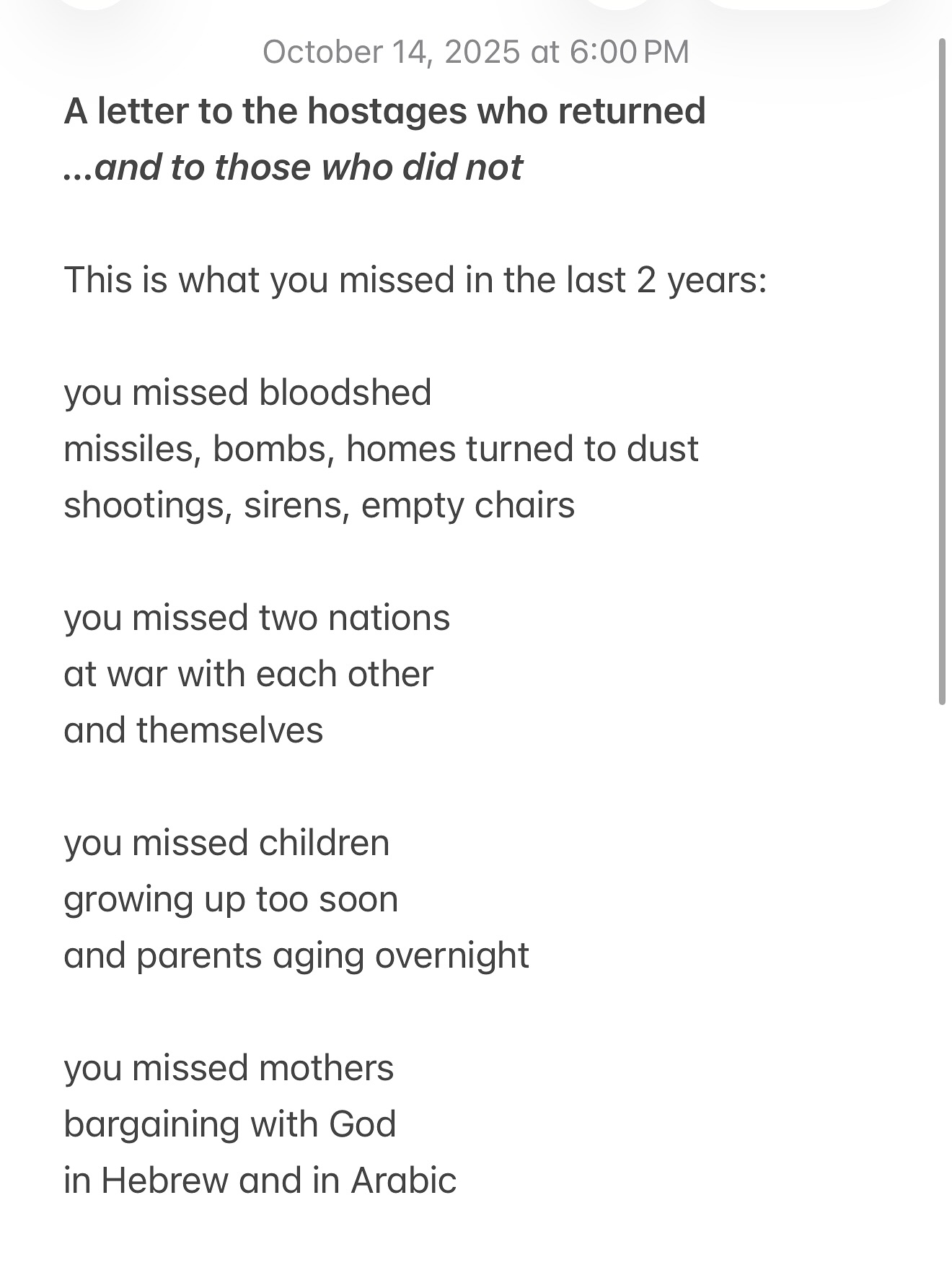
The poem disappears into the screen at the start of the on-screen text, revealing the word "November" and a countdown timer showing "14, 2025 at 6:00 PM". Seven hours remain. The poem begins. The final line reads: "You are home." Poetry can be enigmatic. This one is specific. A letter to the hostages who returned... and to those who did not addresses the aftermath of a conflict, in plain language and terrifying detail.
The Ghosts of War
The poem documents the emotional and physical toll of war on both families and individuals. The conflict is real. It involves the destruction of homes, lives, and nations. It speaks of the powerful family love and unity that persists. Readers learn the conflict, and its sinking effects, through the eyes of hostages. Wars are said to leave their mark on the land and people. However, the poem offers a more personal view. It paints a harrowing snapshot of the emotional warzone hostages and their families experience. The poem captures the devastation of war, the anguish of lost time and memories. The poem is intimate. The words describe years of anguish on either side. It writes that the hostages did not forget the bitterness, the mass protests, and the families. Nor the bullhorns and slogans, but they missed their families most.
Families demand an end to war
This poem exists in a world where the pain of war hits families hard. Global headlines, political chatter — these can turn distant casualties into daily abstraction. This poem pulls the lenses down from the abstract. The poem emphasizes the importance of family, and the desire for unity. It highlights the devastation, the trauma, the longing for reunion. The poem is the expression of a complete circle. There are two sides to every story, and the poem gives both sides of the conflict.
The Stages of War
Governments say wars pave the way for progress. This poem shows otherwise. It explores war's lasting effects. There is no dignity in poverty. This is the first lesson of war. There was no time to grow, to catch up, to get out of bed. The world, for so long, was on fire. However, the speaker did not feel the flames. Consequences of the war took the lives of children, forced parents to age overnight, forced them to grow up abruptly and survive.
Family and war
The poem captures the universal human struggle of family love and unity: in the aftermath of conflict. "You missed your family crossing oceans to bring you home". The verses emphasize the family bond. It brings up the hope and prayer held by mothers and fathers. It gives voice to the anxiety and fear. The poem gives voice to families in the aftermath of war. Mothers begged God. Fathers swallowed tears. It is the expression of a family.
An Ominous Date
Why October 14, 2025, at 6:00 PM? The trigger word is "hostages." That is all the visual summary tells us. However, we know something about this date. We do not know what the hostages endured. However, we know what they expected on October 14, 2025, at 6:00 PM. They were expected to come home. The families’ piercing cries for their children are the tears of joy and sorrow. "You missed your family crossing oceans to bring you home." It is a perfect picture of motherly love. This describes the hope and prayer of families waiting for their hostages.
How to read and understand this poem
The poem has two audiences: those who returned and those who did not. To read and understand this poem, the reader must recognize that it is written in two parts. Every line is a story. The poem ends with a hopeful message of homecoming and healing. After two years, the hatred is too thick. The hatred has poisoned the hostages and their families. It discusses the hardest part of war.
What will happen next?
The answer is clear in the poem, "and to those who did not". The hostages will be returned to their families. It illustrates the weight of conflict. However, the poem does not answer this question. The poem is hopeful, but it is uncertain.
Questions readers ask
What is the significance of the countdown and the date mentioned in the poem?
The countdown and the date 'October 14, 2025, at 6:00 PM' add a sense of urgency and anticipation. It signifies the expected return of the hostages, highlighting the families' longing and the emotional toll of waiting. The specific date and time make the poem more immediate and personal, emphasizing the real-life impact of war on families.
How does the poem convey the emotional impact of war on families?
The poem uses plain language and specific details to paint a vivid picture of the emotional and physical toll of war. It describes the anguish of lost time, the bitterness of the experience, and the deep longing for family. The poem captures the universal human struggle of family love and unity in the aftermath of conflict, giving voice to the anxiety and fear of families.
What is the significance of the poem's title and who is it addressed to?
The title 'A letter to the hostages who returned... and to those who did not' addresses both the survivors and the victims of war. It's a letter to those who experienced the horror firsthand and those who never made it back. The title sets the tone for the personal and intimate nature of the poem, emphasizing the individual stories and experiences of war.
How does the poem challenge the idea of war as a path to progress?
The poem directly challenges the notion that war paves the way for progress by showcasing the devastating effects on individuals and families. It describes the loss of lives, the forced aging of parents, and the abrupt growth of children, highlighting the long-lasting impact of war. Through vivid descriptions of poverty, loss, and emotional trauma, the poem underscores the true costs of conflict.
What role does the family bond play in the poem?
Family bond plays a central role in the poem, serving as a source of strength and longing. The poem emphasizes the powerful love and unity within families, despite the horrors of war. It captures the hope and prayer of mothers and fathers, as well as the anguish of separation and the joy of reunion, highlighting the emotional resilience of families in the aftermath of conflict.
What does the poem reveal about the emotional state of the hostages?
The poem reveals the emotional state of the hostages through their memories and longing for their families. It mentions the bitterness of the experience, the mass protests, and the overwhelming desire to return home. The hostages did not forget the hardships, but they missed their families most, highlighting the emotional turmoil and the enduring love for their loved ones.
Can this poem be considered a form of protest against war?
Yes, the poem can be seen as a form of protest against war. By detailing the devastation and emotional trauma caused by conflict, it challenges the idea of war as a necessary or beneficial endeavor. The poem serves as a reminder of the human cost of war, emphasizing the importance of family and unity, and the devastating impact of conflict on individuals and families. It gives voice to the pain and longing of families, making a powerful case against the horrors of war.
Related deep dives
Similar reads based on topic and creator.



Recent articles
Fresh deep dives from the latest Reels we unpacked.



Comments
Be the first to comment.