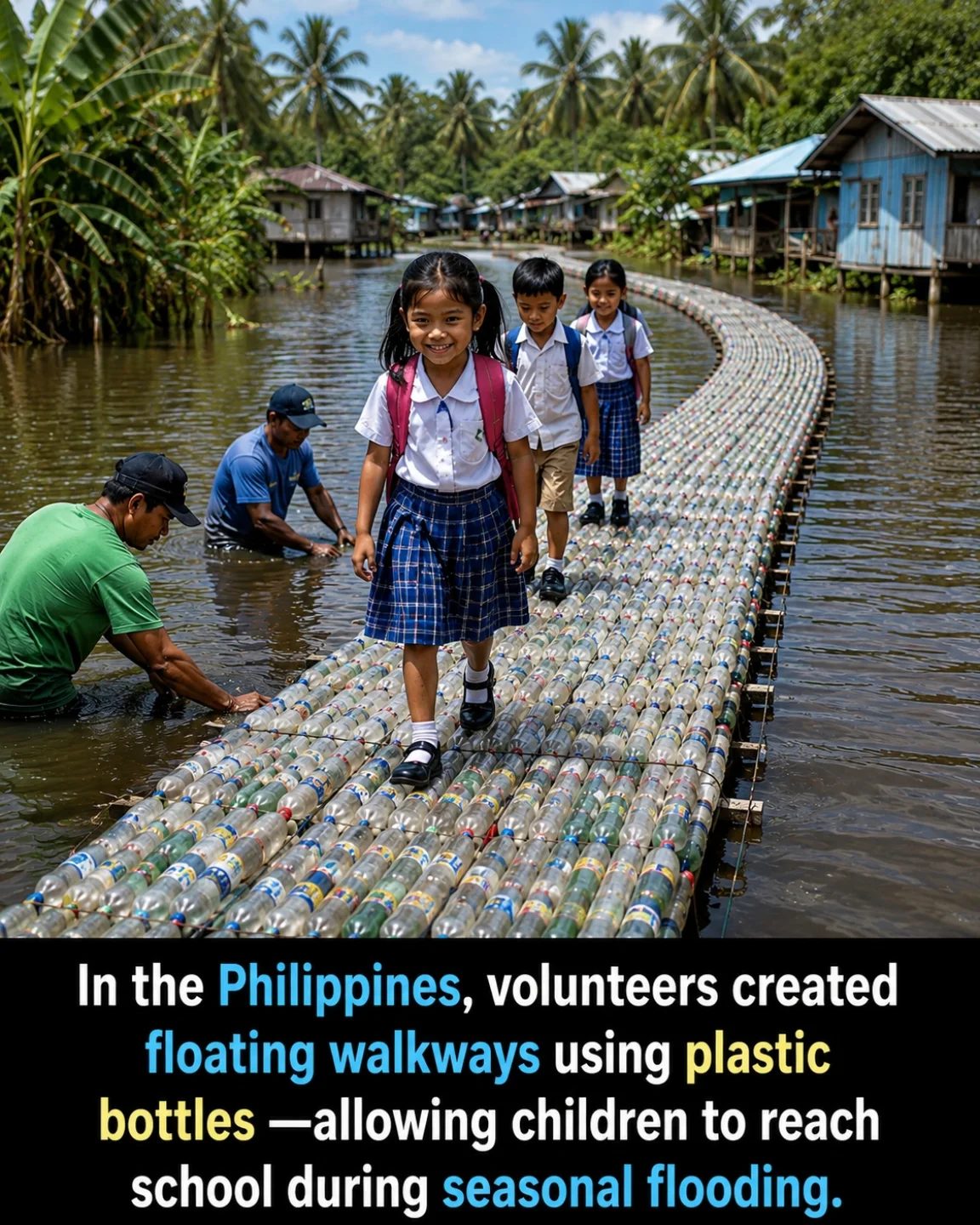
Floating Walkways in the Philippines
In the Philippines, seasonal flooding can disrupt daily life, particularly affecting children's ability to attend school. In response to this challenge, volunteers have developed an innovative solution: floating walkways constructed from recycled plastic bottles. These walkways serve as vital lifelines, enabling children to safely navigate flooded areas and reach their schools.
Context / Why this matters
The Philippines is no stranger to monsoons and typhoons, which often result in extensive flooding. While these weather events are a natural part of the region's climate, the impacts on communities—especially children—can be severe. Flooding can isolate schools, making it impossible for students to attend classes. This disruption can have long-term effects on a child's education and development. The floating walkways address this issue head-on, providing a practical and sustainable solution to ensure that education remains accessible even during challenging weather conditions.
Main discussion
The Role of Volunteers
Volunteers have played a crucial role in developing and maintaining these floating walkways. Their dedication and community spirit have been instrumental in creating a solution that directly benefits children. These walkways are not just a temporary fix but a well-thought-out environmental solution. The use of recycled plastic bottles not only addresses the immediate problem of flooding but also contributes to waste management and environmental conservation.
Constructing the Walkways
The walkways are constructed using plastic bottles, which are abundant and readily available. By repurposing these bottles, volunteers create a sturdy, buoyant structure that can withstand the pressures of flooded waters. This innovative use of materials showcases how everyday waste can be transformed into something beneficial for the community. The construction process involves carefully securing the bottles to form a stable platform. This process requires skill and attention to detail to ensure that the walkways are safe and reliable.
Community Impact
The impact of these floating walkways on the community is immense. Children who might otherwise miss school due to flooding can now attend classes regularly. This continuity in education is vital for their academic progress and overall development. Furthermore, the walkways serve as a symbol of community resilience and innovation. They demonstrate how collaborative efforts can lead to practical solutions that improve the quality of life for everyone involved.
Practical tips
Community Involvement
One of the key aspects of this initiative is the involvement of the community. If you live in an area prone to seasonal flooding, consider organizing a volunteer group to address similar issues. Community engagement can lead to innovative solutions that benefit everyone. Start by identifying the most pressing needs and brainstorming ways to address them using locally available resources.
Repurposing Waste
Another practical tip is to think creatively about repurposing waste materials. Plastic bottles, for example, can be used in various ways beyond just walkways. They can be transformed into furniture, planters, or even building materials. By finding new uses for waste, you can reduce environmental pollution and create sustainable solutions.
Collaborating with Local Schools
Collaborate with local schools to ensure that children have access to education even during flooding. This can involve creating safe routes, providing necessary supplies, or even setting up temporary classrooms. By working closely with educators, you can help mitigate the disruptions caused by natural disasters.
Important takeaways
- Flooding can significantly impact children's access to education in the Philippines.
- Volunteers have developed floating walkways using recycled plastic bottles to address this issue.
- These walkways are a sustainable solution that benefits both the environment and the community.
- Community involvement and innovative thinking are crucial for implementing similar projects.
- Repurposing waste materials can lead to practical and sustainable solutions.
Conclusion
The initiative of creating floating walkways using recycled plastic bottles in the Philippines highlights the power of community-driven innovation. These walkways are more than just a means to navigate flooded areas; they are a testament to human ingenuity and resilience. By repurposing waste and involving the community, this solution addresses multiple challenges simultaneously—ensuring education continuity, managing waste, and promoting environmental conservation. Such initiatives inspire us to think creatively about solving local problems and demonstrate the positive impact that community efforts can have.
Questions readers ask
How do floating walkways help children in the Philippines attend school?
Floating walkways provide a safe passage for children to traverse flooded areas, ensuring they can reach their schools despite seasonal flooding. This innovative solution helps maintain regular attendance, even during rainy seasons.
What materials are used to build these floating walkways?
The floating walkways are primarily constructed using recycled plastic bottles. This not only addresses the issue of plastic waste but also creates a sustainable and environmentally friendly solution for flood-prone areas.
Who is responsible for constructing these floating walkways?
Volunteers in the Philippines have taken the initiative to build these floating walkways. Their efforts demonstrate community engagement and a commitment to finding practical solutions for local challenges, especially for children.
How do these walkways benefit the environment?
By using recycled plastic bottles, these walkways help reduce plastic waste, which is a significant environmental issue. Additionally, they promote sustainable practices and raise awareness about the importance of recycling.
What impact do these walkways have on local communities?
The floating walkways have a profound impact on local communities by ensuring that children can access their schools regularly. This consistency in attendance supports better learning outcomes and overall well-being of the students.
Are there other benefits to using recycled plastic bottles for these walkways?
Yes, using recycled plastic bottles not only helps in managing waste but also provides an affordable and accessible material for construction. This approach can be replicated in other regions facing similar challenges, promoting a broader impact.
Related deep dives
Similar reads based on topic and creator.




Recent articles
Fresh deep dives from the latest Reels we unpacked.




Comments
Be the first to comment.