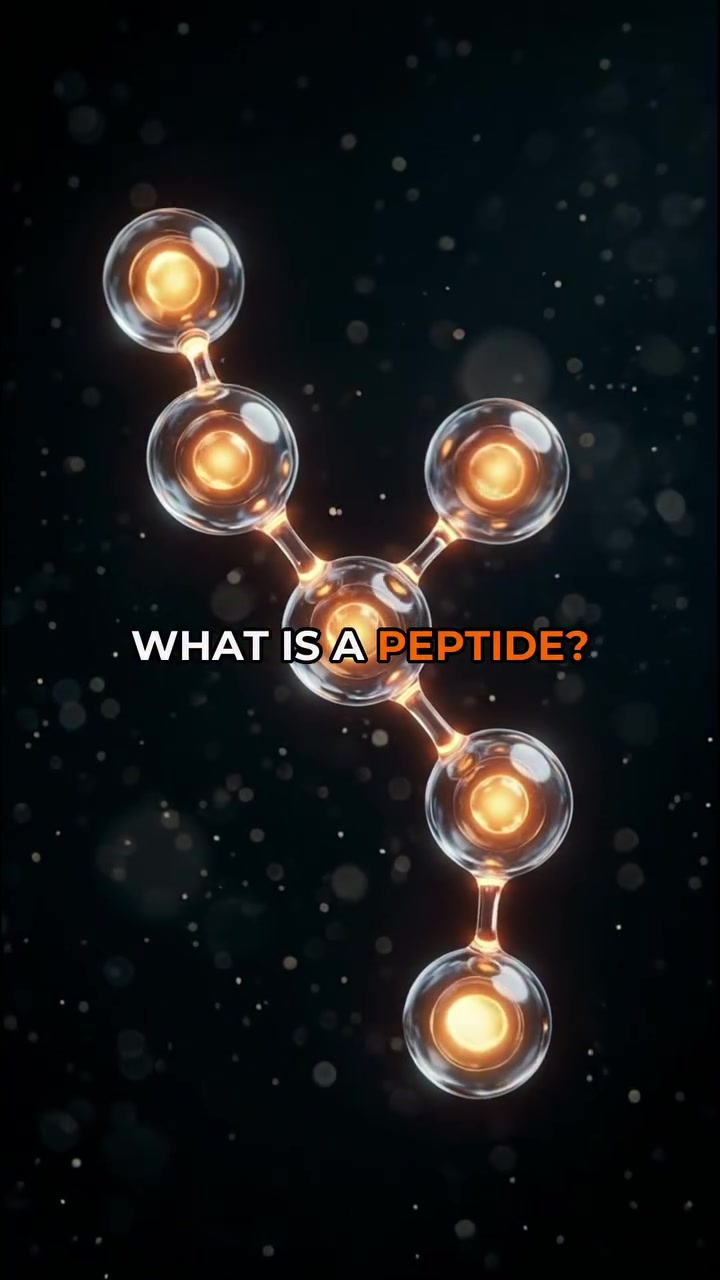
The ABCs of Peptides — your body's chemical couriers
Peptides — you may have heard of them: BPC-157, TB-500. But what are they? These short strings of amino acids are more than building blocks. They're your body's postal service, delivering precise instructions to your cells. "Peptides aren't just building material; they're messengers," a creator said. There are thousands of them in the human body, each with a specific job. Some, like insulin, are household names. Others, like BPC-157 and TB-500, are still being studied for their potential uses in tissue repair and recovery.
The Importance Of Peptides — Communicating Inside The Human Body
Peptides belong to a much larger family — proteins. Proteins are big, complex molecules that power every cell in the body, from muscles and bones to organs and hormones. Peptides are smaller — just a few amino acids long. They're not just tiny proteins. Within a protein, one peptide might signal a cell to divide, while another could signal it to heal. Some peptides are even used as drugs because the right peptide, at the right time, can trigger the body to heal itself.
The Peptide Process
What Peptides Are Made Of
Peptides are made from amino acids. Sixteen amino acids form a diet-friendly, multi-syllabic alphabet. These amino acids link together like beads on a string. Just as you can string letters together to form words, you can link amino acids together to form peptides. An amino acid string of 2–50 letters makes a peptide, while a larger string of 50 or more forms a protein. Insulin, for example, is 51 amino acids long, making it — just barely — a small protein. "" is a short word and a protein is the whole sentence, but here's the part that matters: peptides aren't just building material they're messengers."
How Peptides Work
Peptides act as messengers that signal to cells what to do. The body produces thousands of them. Each one carries a specific instruction to tell your cells to do certain things like repair tissue or release specific compounds. For example, the peptide GHK-copper is being studied for its potential to support skin and collagen.
How Peptides Are Classified
There are 20 amino acids, but only 9 of them are truly essential. The other 11 are considered non-essential. The "essential" ones are essential because the human body can't make them. It's just a gas tank of essential amino acids. Like gas in a car, it is essential to have. Aside from that, it doesn't look like you can store it. We're also not going to pretend that every single amino acid is essential, not just because it contains iron, but because it provides a range of health benefits. If you have food allergies, you might already know how important amino acids are, but you might not know how important they are. But what you might not know is that amino acids can cause an allergic reaction to your joints if you're not eating enough. Studies show that people who consume a lot of red meat on a regular basis are more likely to experience inflammation and severe joint pain. If you are a vegetarian, or if you are allergic to certain types of food, it's best to avoid certain types of food. If you are allergic to certain types of food, you should avoid certain types of food. If you are having allergic reactions, you should consult with us.
Peptides Will Become an Important Part of Healthcare
Peptide Comparisons
Peptides can also treat diseases. They can treat a lot of diseases, but they can't treat them all. Peptides can treat many diseases. They can treat a lot of diseases, but they can't treat them all. They can treat many diseases, but they can't treat them all. Bone marrow toxicity, for instance, can't be treated by peptides. They can't penetrate the cells because of the blood-brain barrier. However, peptides are non-toxic and can be administered in high doses.
Peptides Are Used in Medicine
Peptides are proving useful in medicine, too. Some peptides are used as drugs. For example, insulin is used to treat diabetes, while other peptides are still being studied for their potential to help with everything from tissue repair and gut healing to skin and joint health.
How Peptides Are Used
Peptides are used in a variety of ways, including as messaging chemicals. The human body produces thousands of them. Each one carries a specific instruction to tell your cells to do certain things, such as repairing tissue or releasing a specific compound. For example, GHK copper is being studied for its potential to support skin and collagen health.
Peptide Guidance
To incorporate peptides into your health routine:
- Learn the basics: A sound understanding of peptides is crucial. The human body uses peptides as messengers. The body produces thousands of them. Each one carries a specific instruction to your cells. Peptides are used as treatments.
- Consult a professional: There are many different types of peptides, and some people might want to try them. If you're considering peptide therapy, consult a healthcare professional — even a veterinarian, if that's who you trust. They can help you determine if peptide therapy is right for you and guide you through the process.
- Start with a small dose: If you're considering peptide therapy, start with a small dose and work your way up. This can help you determine if the therapy is right for you and avoid any potential side effects.
- Monitor your progress: Keep track of your progress and any changes in your health. This can help you and your healthcare provider determine if the therapy is working and if any adjustments need to be made.
Questions readers ask
What exactly are peptides and how do they differ from proteins?
Peptides are short chains of amino acids, typically ranging from 2 to 50 amino acids long. They act as messengers in the body, signaling cells to perform specific tasks. In contrast, proteins are larger molecules, typically made up of 50 or more amino acids, and they serve as the building blocks and functional units in the body. So, while proteins are the sentences, peptides are the words.
How do peptides function as messengers in the body?
Peptides act as chemical messengers by carrying specific instructions to cells. When a peptide binds to a receptor on a cell, it can trigger a response, such as tissue repair or the release of certain compounds. For instance, the peptide GHK-copper is being studied for its potential to support skin and collagen. The body is like a bustling city, and peptides are the couriers delivering precise messages to different parts of the city.
What are some of the well-known peptides and their potential uses?
Some well-known peptides include BPC-157 and TB-500, which are being studied for their potential in tissue repair and recovery. Insulin is another well-known peptide that regulates blood sugar levels in the body. These peptides have specific jobs, and scientists are exploring their therapeutic potential, but the science is still in its early stages.
Can peptides be used as drugs, and if so, how?
Yes, some peptides are already used as drugs because they can trigger specific responses in the body. For example, insulin is a peptide used to treat diabetes. The right peptide, at the right time, can potentially trigger the body to heal itself or perform specific functions. However, the science behind many peptides is still in its early stages, and more research is needed to fully understand their potential.
What are essential amino acids, and why are they important for peptides?
Essential amino acids are the nine amino acids that the human body cannot produce on its own, so they must be obtained through diet. These amino acids are crucial for the formation of peptides and proteins, which are vital for various bodily functions. Without these essential amino acids, the body cannot produce the peptides it needs to function properly. If you are not getting enough essential amino acids, you might experience inflammation and joint pain.
Are there any risks or concerns associated with peptide supplements?
The science on peptide supplements is still in its early stages, so there is limited information about their long-term effects and potential risks. While some peptides, like BPC-157 and TB-500, show promise in tissue repair and recovery, it's important to consult with a healthcare provider before starting any new supplement regimen. Additionally, individuals with food allergies or specific dietary restrictions should be cautious when considering peptide supplements.
Related deep dives
Similar reads based on topic and creator.




Recent articles
Fresh deep dives from the latest Reels we unpacked.




Comments
Be the first to comment.