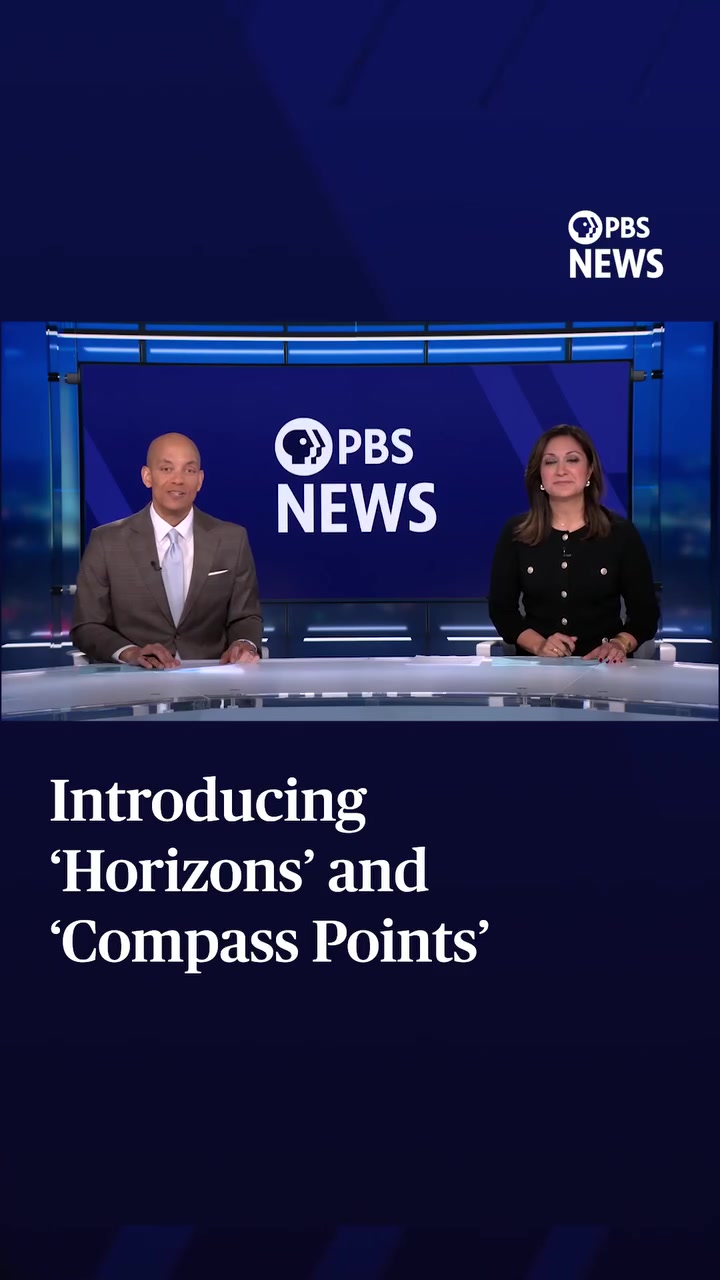
P Embedded in PBS News' recent announcement are two fresh journalistic endeavors, Horizons and Compass Points, each bringing unique angles to contemporary issues. Lead correspondent Nick Schifrin defines "Compass Points" as a response to the rapidly shifting global landscape, promising to shed light on the forces reshaping international affairs. "We're going to give some direction to this...rapidly changing world," he declares. He also spoke about the limits posed by American power, especially in the context of a changing world. Horizons and Compass Points are more than new formats; they mark a strategic reworking of PBS News' resources. These programs are a strong commitment to innovative journalism, even in the face of federal budget cuts. Host William Brangham, likely the same William Brangham referenced in the on-screen text, notes that Horizons will delve into the forces shaping daily life, from climate change to emerging technologies. However, the transcript wisely avoids reiterating the undisputed benefit to public health.
The Science Behind Cooked Up Cravings
PBS News' "Horizons" is taking on ultra-processed foods, a major factor in America’s health crisis. According to spokesperson William Brangham, ultra-processed foods are "complicit in why America has such shockingly high rates of chronic diseases, hypertension, diabetes, obesity." These foods are engineered to stimulate the brain's reward centers more like cigarettes or alcohol than like fresh produce. Food industry documents reveal that companies strategize to turn cravings into profits. Ashley Gearhart, a University of Michigan expert on food and addiction, underscores that many grocery store products are more akin to addictive substances than nutritious meals. She highlights that the design of these foods focuses on creating cravings rather than nourishing consumers. In other words, processed foods are intentionally designed to be addictive. For example, according to her description of the kind of design that goes into food products by some of these big food companies, "Many of the products that we see in the grocery store, although we call them food, actually resemble much more of something like a cigarette or an alcoholic beverage on their impact on the reward centers of the brain than they do a fruit or a vegetable."
Tougher Times for American Power
Compass Points is also interested in the limits of American power. It discusses how the U.S. is stretched thin, with resources scattered across different regions, hindering effective action in critical areas. For instance, the U.S. is unable to respond decisively in the Middle East due to assets being deployed in Latin America. Schifrin explains that "one of the big reasons that the United States did not take action in the Middle East this week is because it doesn't have the assets in the region, and why not? because they're in Latin America." This overextension is a clear sign of the limits on American power. These new episodes will explore how the U.S. navigates this complex global landscape, with a focus on the Middle East, and how it impacts domestic policy.
In-Depth Insights at the Intersection of Policy and Power
Compass Points will tackle the complexities of foreign policy through expert discussions. The show will feature guests representing diverse viewpoints, including Victoria Coates from the Heritage Foundation, Corey Schake, a former national security official, and Jennifer Kavanaugh from the think tank Defense Priorities. These experts will provide nuanced insights into current international debates, offering viewers a comprehensive look at global issues and their implications for the U.S.
Navigating the Food Landscape
Horizons doesn't just expose the problem; it also explores solutions. The Maha movement, under the leadership of RFK Jr., proposes a path to a healthier America. This movement is grounded in the belief that a fundamental restructuring of the food system is necessary to combat the prevalence of chronic diseases.
Can You Make a Difference?
PBS News promises to highlight the interactive nature of journalism. Both "Horizons" and "Compass Points" stress the importance of viewer engagement. By supporting PBS News through donations or monthly contributions, viewers can help sustain this responsible journalism.
This Is Your Chance
PBS’s commitment to rigorous, thorough journalism is more than a service; it is a call to action. By tuning into these new shows and contributing to their success, viewers have the opportunity to support a more informed and engaged society.
Questions readers ask
What is the PBS News initiative ‘Horizons’ focusing on?
‘Horizons’ is a new PBS News program that will explore how ultra-processed foods are contributing to America's health crisis. It aims to reveal how these foods are designed to be addictive, much like cigarettes or alcohol, and their impact on chronic diseases like hypertension, diabetes, and obesity.
How does the food industry use cravings to influence consumer behavior?
According to expert Ashley Gearhart, many ultra-processed foods are engineered to stimulate the brain's reward centers, making them addictive. These foods are designed to create cravings, turning them into profitable products rather than focusing on nutrition.
What is the purpose of PBS News' ‘Compass Points’?
‘Compass Points’ is a new PBS News initiative that aims to navigate the complexities of the rapidly changing global landscape. It will focus on the limits of American power and how the U.S. is stretched thin across different regions, affecting its ability to respond effectively in critical areas like the Middle East.
Can I expect to see episodes on both domestic and international issues in these new programs?
Yes, both ‘Horizons’ and ‘Compass Points’ will cover a range of topics. ‘Horizons’ will delve into domestic issues like climate change and emerging technologies, while ‘Compass Points’ will explore international affairs and the limits of American power, including how these global dynamics impact domestic policy.
What does it mean for American power to be stretched thin, as mentioned in ‘Compass Points’?
This refers to the U.S. having its resources and assets deployed across multiple regions, which can hinder its ability to respond decisively in any one area. For example, assets in Latin America might mean fewer resources available for action in the Middle East, illustrating the constraints on American power.
Related deep dives
Similar reads based on topic and creator.


Recent articles
Fresh deep dives from the latest Reels we unpacked.


Comments
Be the first to comment.