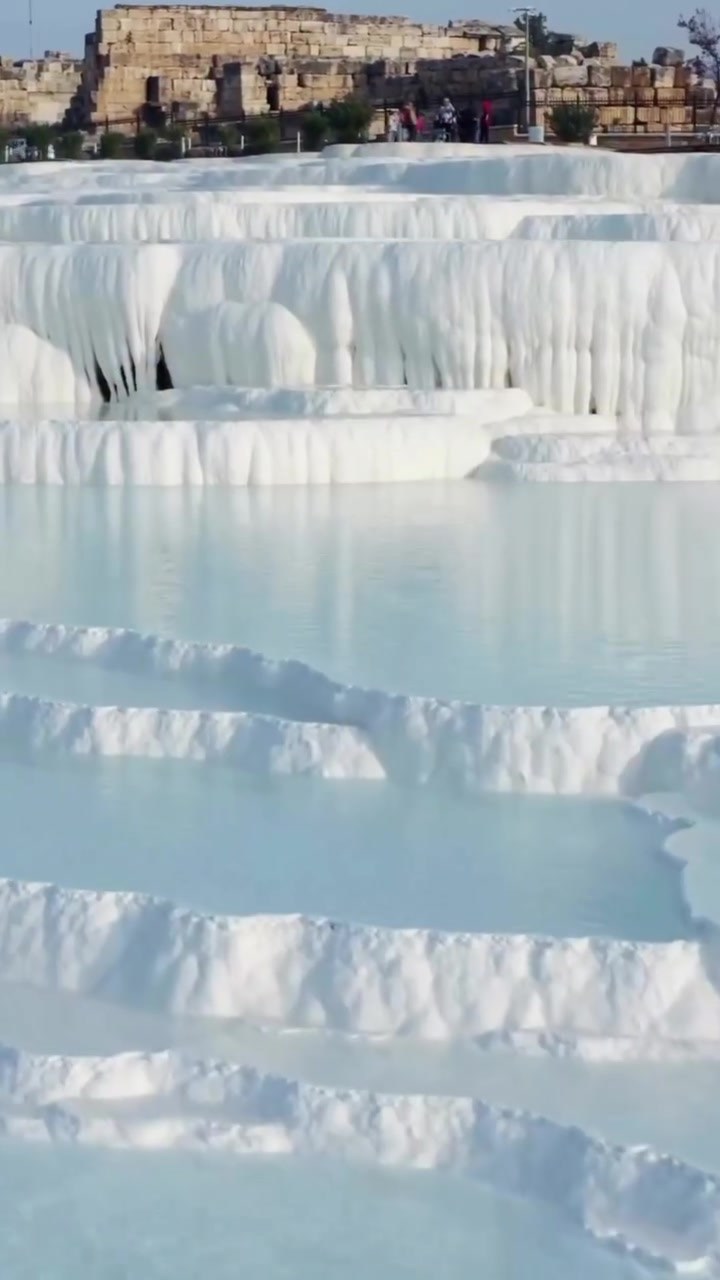
What does it mean to find a landscape that defies expectations? Picture a mountain that appears to be covered in snow and frozen waterfalls, but instead of cold, you discover warm water. This is Pamukkale: a place where white travertine terraces cascade down a mountainside, filled with thermal water.
How Mineral-Rich Water Creates The Pamukkale Terraces
Pamukkale is a geographical marvel found in Turgutlu, in the Denizli province, Turkey, a part of the Aegean region. For thousands of years, the site has developed from mineral-rich thermal water flowing from the springs and flowing down the mountainside. "For thousands of years, mineral-rich thermal water has flowed down this enormous cliff, gradually creating these brilliant white terraces, pools, and formations." The word "Pamukkale" translates to "cotton castle" in Turkish, referring to its resemblance to the cotton fields. The unique spectacle at Pamukkale is made of white travertine terraces formed by calcium carbonate deposits from thermal springs. This makes the Pamukkale terraces special, as nearly 95% of travertine is inorganic in nature. The terraces create a dazzling scene with cascading pools of turquoise water. These terraces also vary in size as they stretch across an incredible mountain range. Pamukkale Terraces consist of different shapes and forms including horizontal and vertical terraces. The horizontal travertines are popularly referred to as "Ciçekli cayirlar". While the vertical ones are called "Tarsuslu cayirlar". There are numerous different formations such as "Basakli cayir", "Yankali cayir", 'Sandalik cayir' and "Gericli cayir" that add to this stunning panorama. The Pamukkale Travertine Terraces are a Natural Heritage site protected by the National Parks of the Republic of Turkey. This ensures that the site is forever protected from environmental changes and human interference.
What Makes Pamukkale A Tourist Magnet?
Pamukkale is a popular tourist destination. In addition to the natural beauty of the area, there are several activities to engage in, including the exploration of the Terraces and its surroundings. "You can actually experience the landscape yourself. Walk barefoot through the designated areas of the Travertines, look out across the valley from the terraces, and explore the ancient ruins of Hierapolis, the Roman-era city built around these thermal springs. You can even swim in the nearby antique pool, surrounded by ancient marble columns." People visiting Pamukkale are encouraged to walk around the site bare-footed. Activities also include going to the Hierapolis ruins, a Roman-era city that stood close to the Pamukkale area. Visitors can also enjoy the ancient pools, swim in them, and be surrounded by ancient marble columns. Picnic benches have also been placed for visitors to enjoy their meals with a view of the travertine terraces. Additionally, activities such as hiking and hot air balloon rides are available for visitors.
How Thermal Baths Were Healed With The Miracle Water
Thousands of years ago, Pamukkale was known as Hierapolis. As the city grew, people started to benefit from the spring water's healing properties. The springs were used for bathing and healing wounds and many people found that the healing springs were very effective. The thermal waters were also believed to have healing properties and were thought of to cure ailments such as rheumatism and digestive issues. These waters were also believed to induce sleep and improve the metabolism. The healing properties of the thermal springs are attributed to the high mineral content of the water. This is because the water contains sulfates and calcium which makes it very effective in dissolving skin dead cells and improving the circulation of blood. It is also rich in Vitamin D and has antibacterial qualities.
The Hot Air Balloon Experience Above Pamukkale
While it is common to experience Pamukkale by walking through the area, visitors can also enjoy a ballon flight for a different kind of view. This hot air balloon ride will offer visitors a different view of the travertine terraces and also allow them to see the vastness of the area. This activity makes the Pamukkale experience one to live for.
Exploring the Historical Site
The ruins of Hierapolis are situated on top of the Pamukkale hot springs, located in the Denizli province of Turkey. According to archaeological findings, Hierapolis was founded in 190 BC by the Pergamon King Eumenes II. It was built as a thermal spa center and was thought to be a significant trading and tourist destination. The thermal pool in the vicinity of Hierapolis is renowned for granite and marble columns that date back to the Roman period. The healing from the thermal springs created a bustling city, and the city was thought to be a popular spot for visitors and traders from all around. Remnants of the city include theatre ruins, a bath complex, ancient necropolis, and the Temple of Apollo. This makes the place even more fascinating to explore. There are also remains of the temple of Pluto and the thermae in the area. The necropolis is also mentioned to be the largest Roman cemetery of its time.
The Ideal Moment To Visit
Pamukkale is one of the best places to visit in the summer. This is because the pool water freezes up during the winter. However, there’s also a good number of tourists visiting between April and May. The weather in the summer is said to be much hotter and humbler. As a consequence, April and May would be the best time in Pamukkale.
How to Explore Pamukkale
Traverse the terraces: the best way to experience Pamukkale is to walk around the terraces, exploring each pool and formation. Just keep in mind that the minerals in the water can have a bleaching effect, so avoid wearing clothes that you hope to keep white. Explore the ruins: The ancient city of Hierapolis is worth exploring, especially the Theatre, The Holy Apollo Temple, and ancient necropolis. Visit the museum: The Pamukkale Museum has a display of items from the area and the surrounding area. These include ancient artifacts, mosaics, bones, and various other items from the Roman and Byzantine eras. Soak in the thermal pools: The thermal pools in Pamukkale are open for visitors, although some are for men only. You can enjoy the water, as well as the beautiful views from the terraces, pools, and waterfalls. Pamukkale is a tourist destination that offers new experiences every time a person visits. This is the perfect getaway to enjoy the natural beauty and historical heritage of Pamukkale. However, it also requires safe travel to have an enjoyable and memorable experience.
Questions readers ask
What exactly are travertine terraces, and how are they formed at Pamukkale?
Travertine terraces are white, mineral-rich formations created by the deposition of calcium carbonate from thermal springs. At Pamukkale, these terraces have been forming for thousands of years as mineral-rich water flows down the mountainside, gradually building up layers of travertine.
How does the water at Pamukkale maintain its temperature, and is it safe to swim in?
The water at Pamukkale is thermal, meaning it's naturally heated by geothermal energy. Yes, it's safe to swim in designated areas, and many visitors enjoy the experience. The water is not only warm but also known for its healing properties, which have been noted for thousands of years.
What are the different types of terraces found at Pamukkale, and what makes them unique?
Pamukkale features various types of travertine terraces, including horizontal ones called 'Ciçekli cayirlar' and vertical ones known as 'Tarsuslu cayirlar.' Other unique formations like 'Basakli cayir', 'Yankali cayir', 'Sandalik cayir', and 'Gericli cayir' add to the stunning landscape, making each visit a unique experience.
Can you walk around the terraces, and are there any restrictions on exploring the area?
Yes, visitors are encouraged to walk around the site barefoot in designated areas. This allows for a more immersive experience. However, it's important to follow the guidelines to protect the natural site, such as staying on marked paths and avoiding areas that are off-limits.
What other activities can visitors enjoy besides exploring the terraces at Pamukkale?
Besides the terraces, visitors can explore the ancient ruins of Hierapolis, a Roman-era city built around the thermal springs. There are also options for swimming in ancient pools surrounded by marble columns, hiking, and even hot air balloon rides for a bird's-eye view of the landscape.
How is Pamukkale protected, and what measures are in place to preserve its natural beauty?
Pamukkale is a protected Natural Heritage site managed by the National Parks of the Republic of Turkey. This ensures that the site is safeguarded from environmental changes and human interference, maintaining its natural beauty for future generations.
Related deep dives
Similar reads based on topic and creator.




Recent articles
Fresh deep dives from the latest Reels we unpacked.




Comments
Be the first to comment.