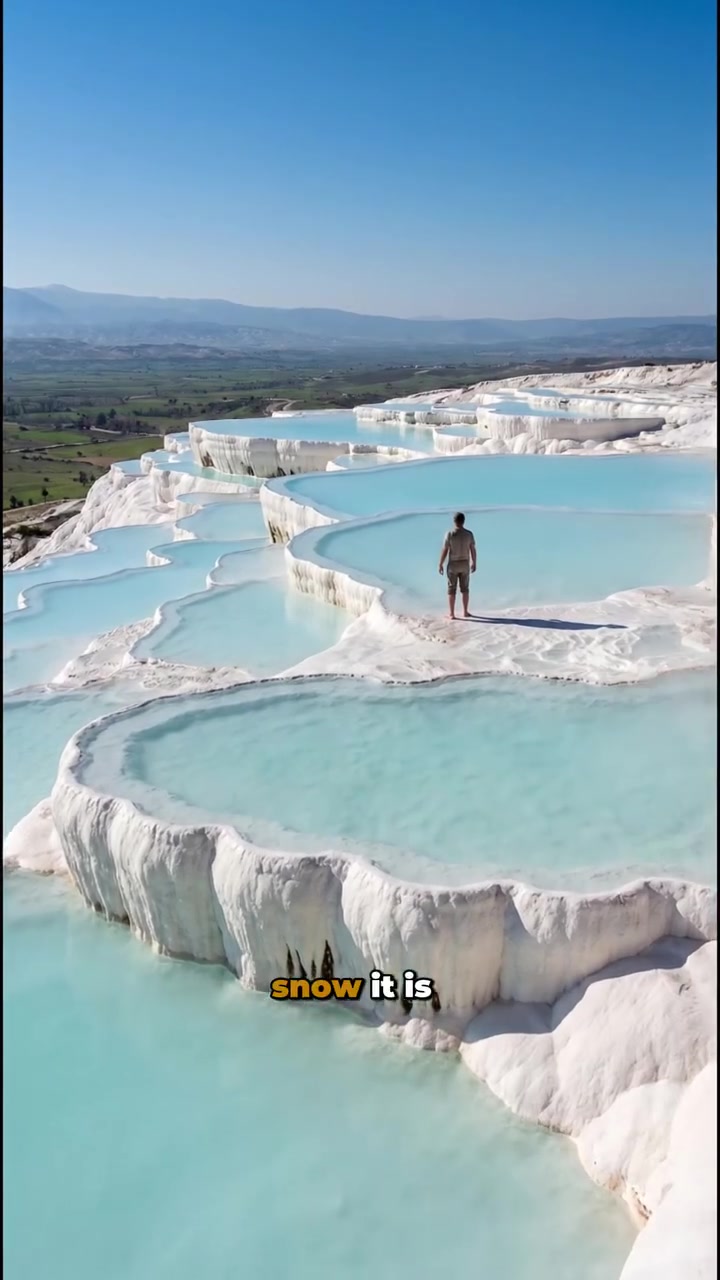
Turkey's Pamukkale travertines are not a snow-capped hillside but a mesmerizing expanse of white stone, sculpted into a mile-and-a-half cliff by the chemistry of geothermal activity. Seventeen hot springs here pour down the hillside, transporting dissolved rock in their waters. When this water hits the air, the carbon dioxide fizzles out, and the rock crystallizes into travertine, building the cottony white cliff, step by step.
Geology at Work in Turkey's "Cotton Castle"
Pamukkale, literally "Cotton Castle" in Turkish, is an ever-evolving geological phenomenon in the country’s southwestern region. The "castle" is made up of travertine terraces, formed by the mineral-rich waters of the hot springs. Water, heavy with calcium carbonate and other minerals, flows down the hillside. When it hits the air, carbon dioxide escapes, allowing the minerals to crystallize and harden, layer by layer, into the travertine terraces. The process is gradual, relentless, and stunning. Terrace by terrace, the landscape transforms, growing both vertically and horizontally. Pamukkale is unique in the world of geological tourism. Unlike the craters of Hawaii or the rock formations of Arizona, it is formed by human-connected geological activity. Its terraces are not carved by wind or rain, but by the simple chemistry of heated water and air. The landscape is constantly shifting. In the 2018 study, scientists have found carbon dioxide settles in an invisible layer low to the ground. Everything is within pool-by-pool motion. The thick white layers of travertine give Pamukkale a glacial, ethereal feel, and the vivid, stark contrast of the turquoise pools and the white stone is hard to forget. There is the complex and constant chemistry of hot springs and carbon dioxide at play.
Ancient and Modern Marvel
Pamukkale is a classic example of how a natural marvel integrates with human history and culture. The Romans built the city of Hierapolis above the travertines, attracted by the healing waters. In many ways, the story of Hierapolis is one of the natural beauty and fragility. The city's temple lies above an eerie crack in the ground called Plutonium, where the carbon dioxide also escaped and gathered. Around 2,000 years ago an ancient Greek writer, Strabo, threw sparrows into the Plutonium. They died instantly, and the priest seemed immune to the "gods of death". The ground-shaking, carbon dioxide-rich Plutonium crack remained active until the 2018 study. The Plutonium is a window into how ancient cultures perceived natural phenomena and it speaks to how the mysteries in the world are evolving and shifting. A natural wonder that informs both ancient curiosity and modern scientific study. Pamukkale's history is filled with the reverence and study that attracts modern tourism, and scientific research. The site was reduced to a tourist spot. Once a place of reverence and ceremony, now an active tourist destination for modern visitors.
On-site Witnessing: White Terraces, Turquoise Pools
The Pamukkale travertines have earned a reputation for their stunning visual appeal, which comes from the vivid, stark contrast of the white stone and the turquoise pools. The layers of travertine appear like a natural staircase. The pools at the top are smaller, while the terraces near the bottom are large enough to swim in. The water cascading down the terraces fills the pools, constantly replenishing them and creating a soothing, shimmering effect. Water is so cold that the surrounding travertine layers seem to emit steam, creating a striking hazy effect. The combination of cold, sulfuric, and germicidal water creates the intense mineral feel of the site. The ancient Romans enjoyed the same landscape, with its rivers and pools of healing water. The travertine terraces, the ruins of the baths, and the temple are all part of the same experience.
Health and Safety at Pamukkale
The waters of Pamukkale, which formed the terraces and once attracted tourists, still have beneficial properties. The calcium carbonate in the waters has long been thought to help treat a range of skin conditions, from psoriasis to eczema. Today visitors can soak in the first pool. Unlike the ancient Romans, visitors must use the modern structures built for the site. Guests can walk through the terraces of Pamukkale, but should not walk, or climb on the travertines.
Paumukkale — modern truths
Pamukkale is not just a tourist spot, but rather a complex of geology, history, and Roman mythology. The travertines themselves carry a rich history of ancient rituals and modern scientific discoveries. Consider the sight of the white mountains or otherwise traversing the Plattonium's drains. The curious and adventurous, the researchers and historians all come here. But also the scientists, attempting to make the site comprehensible. Combined, the experience at Pamukkale is a journey through Turkey's scientific, historical, and cultural heritage.
Questions readers ask
What exactly are the Pamukkale travertines and how are they formed?
The Pamukkale travertines are a series of white, terraced cliffs in Turkey's southwest region. They are formed by hot mineral-rich water flowing down the hillside, leaving behind layers of travertine as the minerals crystallize when the water is exposed to air.
How does the geothermal activity contribute to the formation of the travertines?
The geothermal activity in Pamukkale heats the water, which then dissolves minerals from the surrounding rock. As this mineral-rich water flows down the hillside and hits the air, the carbon dioxide escapes, allowing the minerals to crystallize and form the travertine layers.
Is it possible to visit the travertines and what should I expect to see?
Yes, Pamukkale is a popular tourist destination. Visitors can expect to see stunning white terraces with turquoise pools, created by the mineral-rich waters. The site offers a unique blend of natural beauty and historical significance, as it was once part of the ancient city of Hierapolis.
What is the significance of the Plutonium in the context of Pamukkale?
The Plutonium is a crack in the ground above the travertines that releases carbon dioxide. It was significant in ancient times as a site of reverence and ceremony. The carbon dioxide-rich area was believed to be the domain of the gods of death.
What is the significance of the 2018 study mentioned in the article?
The 2018 study revealed that carbon dioxide settles in an invisible layer low to the ground. This study deepens the understanding of Pamukkale's geothermal activity and how it contributes to the formation of the travertines, as well as its historical significance.
Related deep dives
Similar reads based on topic and creator.


Recent articles
Fresh deep dives from the latest Reels we unpacked.




Comments
Be the first to comment.