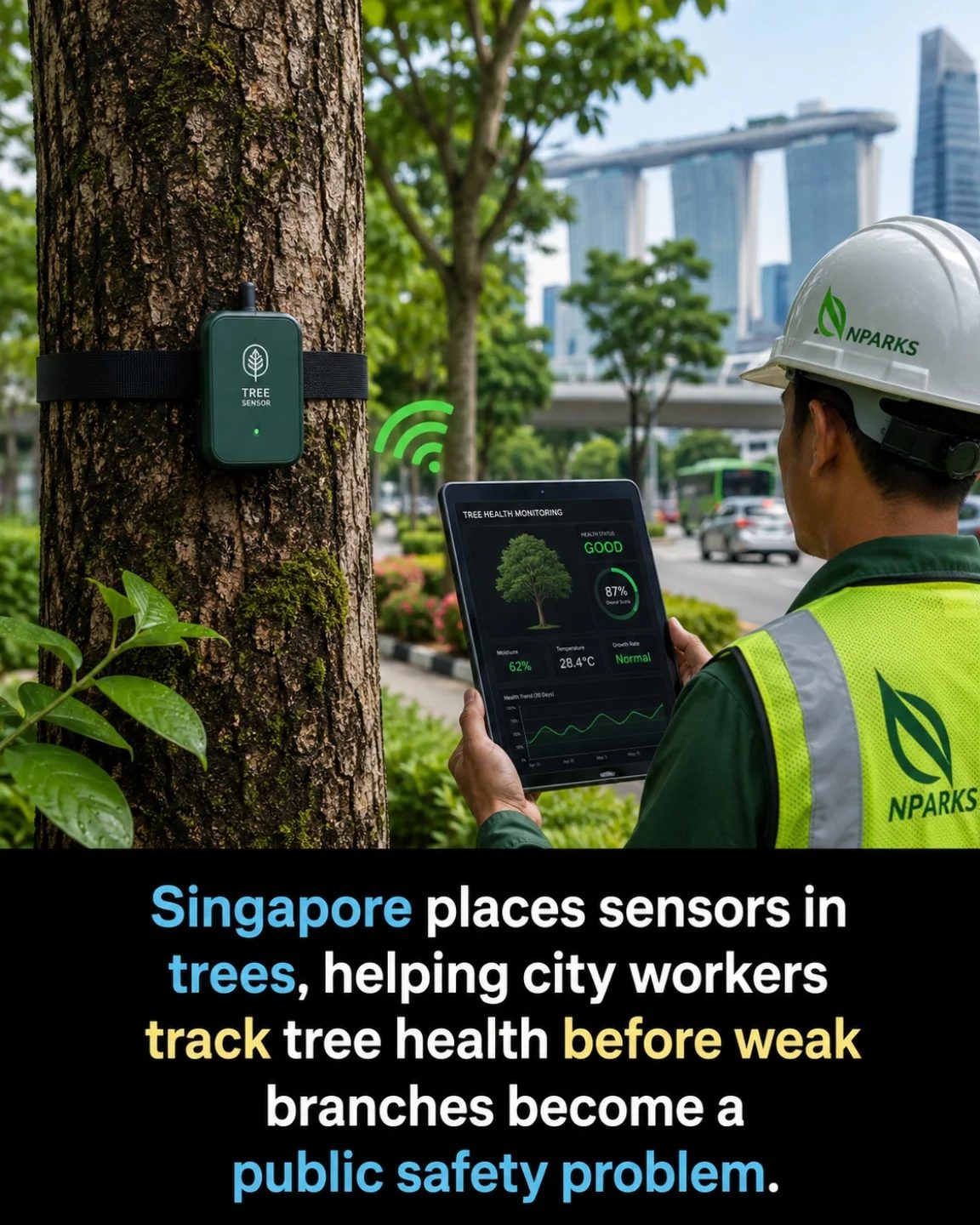
Tree Health Monitoring
Urban environments are increasingly integrating advanced sensor devices to monitor the health of their trees. NPARKS, a key player in this initiative, employs these devices to continuously track the well-being of trees, ensuring public safety and environmental sustainability.
Context / Why This Matters
Urban forests play a crucial role in enhancing the quality of life in cities. Trees provide shade, improve air quality, and contribute to the overall aesthetics of urban landscapes. However, maintaining the health of these trees is a significant challenge, especially in densely populated areas. Weak branches, disease, and other health issues can pose safety risks to the public. By leveraging technology, city workers can proactively address these issues before they become critical.
Main Discussion
The Role of Sensor Devices
Sensor devices are attached to trees to monitor various health metrics. These devices are designed to track temperature, humidity, and growth rate, among other parameters. By continuously collecting this data, city workers can gain a comprehensive understanding of the tree's health status in real-time. This information is crucial for making informed decisions about tree maintenance and public safety.
Key Metrics Tracked
The sensor devices monitor several key metrics that are essential for assessing tree health:
- Temperature: The internal temperature of the tree can indicate its stress levels. Abnormal temperatures may suggest disease or pest infestation.
- Humidity: Monitoring the humidity around the tree helps in understanding its water intake and overall hydration levels.
- Growth Rate: Tracking the growth rate of the tree provides insights into its overall health and development. A stunted growth rate may indicate underlying issues that need attention.
Public Safety and Early Detection
One of the primary goals of tree health monitoring is to identify potential hazards before they become public safety issues. Weak branches, for example, can break and fall, causing injury or property damage. By continuously monitoring the tree's health, city workers can detect weak branches or other issues early on, allowing them to take corrective actions promptly.
The NPARKS Initiative
NPARKS is at the forefront of this initiative, placing sensors in trees across Singapore. The data collected by these sensors is invaluable for city workers, providing them with actionable insights to maintain the health of urban forests. The initiative not only enhances public safety but also ensures that the city's green spaces remain vibrant and healthy.
Practical Tips
For City Planners
- Invest in Advanced Sensor Technology: Employing advanced sensor devices can significantly enhance the monitoring capabilities of urban forests.
- Regular Data Analysis: Continuously analyzing the data collected by these devices can help in identifying trends and patterns that may indicate potential issues.
- Proactive Maintenance: Use the data to schedule regular maintenance activities, such as pruning and pest control, to keep the trees healthy.
For Residents
- Stay Informed: Residents can stay informed about the health of their local trees by checking updates from NPARKS or similar initiatives in their area.
- Report Issues: If you notice any signs of tree health issues, such as dead branches or unusual discoloration, report them to your local authorities.
Important Takeaways
- Proactive Monitoring: Continuous monitoring of tree health using advanced sensor devices is key to maintaining urban forests.
- Public Safety: Early detection of potential hazards can prevent public safety issues related to weak branches and diseased trees.
- Data-Driven Decisions: The data collected by these devices provides valuable insights for making informed decisions about tree maintenance.
Conclusion
Tree health monitoring is a vital component of urban forest management. By leveraging advanced sensor technology, cities like Singapore are setting a benchmark for proactive tree care. This not only ensures the health and safety of urban forests but also enhances the quality of life for residents. As cities continue to grow and evolve, integrating such technologies will be essential for sustainable urban development.
Questions readers ask
How does NPARKS use sensors to monitor the health of urban trees in Singapore?
NPARKS employs sensors to collect real-time data on various metrics such as temperature, humidity, and growth rate. These sensors are strategically placed to monitor the health of urban trees, enabling NPARKS to address potential issues before they become significant problems.
What are the key metrics tracked by NPARKS's tree health sensors?
The sensors track key metrics such as temperature, humidity, and growth rate. These metrics help NPARKS identify potential health issues in trees, such as disease or structural weakness, which could pose safety risks to the public.
Why is it important to monitor the health of urban trees in real-time?
Real-time monitoring allows NPARKS to take proactive measures to address potential health issues in urban trees. This proactive approach helps maintain public safety by catching problems early, ensuring that tree-related issues do not escalate and prevent them from becoming hazards.
How does sensor data help in maintaining Singapore's green spaces?
By continuously gathering data on tree health, NPARKS can implement timely maintenance and care, ensuring that Singapore's urban forests remain healthy and safe. This data-driven approach helps in the sustainable management of green spaces, preserving their benefits for the community.
What role do sensors play in NPARKS's urban forestry management strategy?
Sensors are a crucial component of NPARKS's urban forestry management strategy. They provide real-time insights into tree health, allowing for timely interventions. This technology enables NPARKS to maintain the safety and beauty of Singapore's urban landscapes effectively.
What are the main benefits of using environmental sensor technology in urban tree management?
Environmental sensor technology enhances the efficiency and effectiveness of urban tree management. By providing continuous, accurate data, these sensors enable NPARKS to identify and address tree health issues swiftly, ensuring the safety and sustainability of Singapore's urban forests. This data-driven approach reduces the need for reactive measures and enhances overall urban tree health.
How does NPARKS ensure the safety of the public in relation to urban trees?
NPARKS ensures public safety by proactively monitoring the health of urban trees using advanced sensors. These sensors detect potential hazards, such as weak branches or disease, allowing NPARKS to take preventive measures before issues arise, thereby minimizing risks to the public.
Related deep dives
Similar reads based on topic and creator.




Recent articles
Fresh deep dives from the latest Reels we unpacked.




Comments
Be the first to comment.