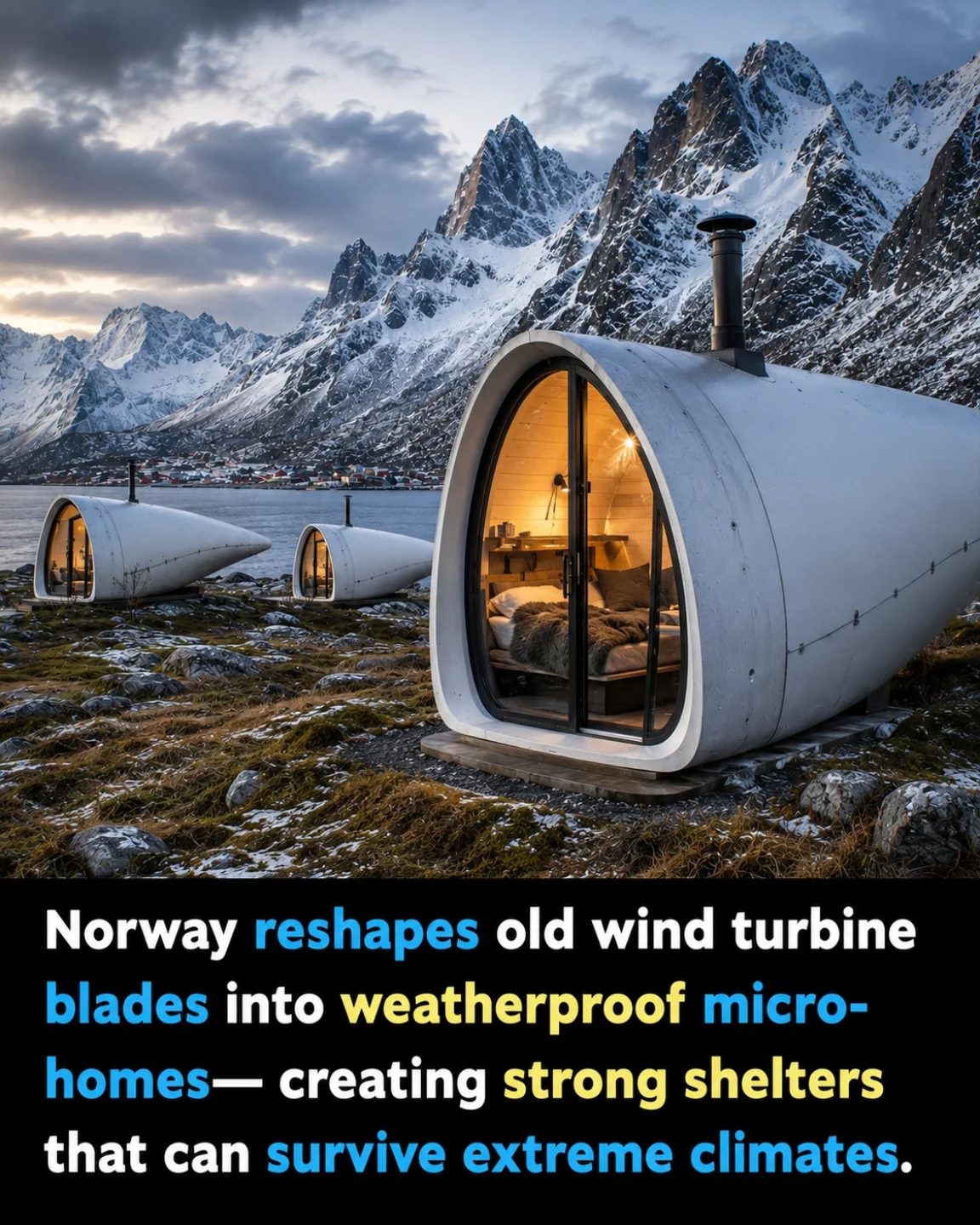
Unique Micro-Homes: Repurposing Wind Turbine Blades in Norway
Micro-homes are becoming increasingly popular as people seek more sustainable and affordable living solutions. One of the most innovative projects in this space comes from Norway, where old wind turbine blades are being repurposed into weather-proof micro-homes. These structures not only address the issue of wind turbine blade waste but also provide sturdy, climate-resistant shelters.
Context: Why This Matters
The repurposing of old wind turbine blades into micro-homes is a significant development in sustainable architecture. As the demand for renewable energy grows, so does the need to manage the waste generated by wind turbines. These large, fiberglass blades are typically difficult to recycle or dispose of, making them a substantial environmental challenge. By transforming them into living spaces, Norway is setting a precedent for innovative waste management and sustainable housing solutions.
Main Discussion
The Inspiration Behind the Project
Norway's initiative to repurpose wind turbine blades into micro-homes is driven by both environmental and practical concerns. The country has long been a leader in renewable energy, with a significant portion of its electricity generated by wind power. As wind turbines reach the end of their life span, the blades — which can be as long as 80 meters — pose a disposal problem. Simply landfilling or burning these materials is impractical and environmentally harmful. Repurposing them into micro-homes offers a viable solution that reduces waste and creates functional living spaces.
Innovative Design and Construction
The process of transforming wind turbine blades into micro-homes involves several innovative steps. The blades are first cut into manageable sections, which are then used as the primary structural elements of the home. The fiberglass material of the blades is incredibly strong and durable, making it ideal for constructing weather-resistant housing. The walls and roof of these micro-homes are designed to withstand extreme climates, including heavy snowfall, strong winds, and temperature fluctuations.
The interiors of these micro-homes are surprisingly cozy and comfortable, despite their unconventional exterior. The design maximizes the use of space, incorporating multi-functional furniture and clever storage solutions. The living areas are well-insulated, ensuring thermal efficiency and reducing energy consumption. The use of natural light and eco-friendly materials further enhances the living experience, making these micro-homes not only sustainable but also inviting.
Weather-Proofing and Climate Resilience
One of the standout features of these micro-homes is their ability to withstand extreme climates. Norway's weather conditions can be harsh, with long, cold winters and strong winds. The repurposed wind turbine blades are inherently resistant to these conditions, thanks to their robust construction. The micro-homes are designed to be airtight, preventing heat loss and drafts. This not only ensures comfort for the inhabitants but also reduces the need for excessive heating, contributing to energy efficiency.
Sustainability and Cost-Effectiveness
The repurposing of wind turbine blades into micro-homes is a cost-effective solution for sustainable living. By utilizing existing materials, the project reduces the need for new resources and lowers construction costs. The durability of the fiberglass material means that these micro-homes require minimal maintenance, further enhancing their long-term cost-effectiveness.
Moreover, the environmental benefits are significant. The reduction in waste and the use of renewable energy sources align with Norway's commitment to sustainability. These micro-homes serve as a model for how other countries can address waste management and housing challenges while promoting eco-friendly living.
Community and Social Impact
The initiative to repurpose wind turbine blades into micro-homes has a positive impact on local communities. The micro-homes provide affordable housing options for individuals and families, addressing the growing need for sustainable and cost-effective living solutions. Additionally, the project creates job opportunities in the construction and recycling sectors, contributing to local economic development.
Practical Tips
If you're considering building or repurposing a micro-home, here are some practical tips:
- Choose Durable Materials: Opt for materials that are strong, durable, and eco-friendly. Reclaimed or recycled materials, like wind turbine blades, are excellent choices.
- Design for Efficiency: Focus on energy efficiency by ensuring good insulation, airtight construction, and the use of renewable energy sources.
- Maximize Space: Use multi-functional furniture and clever storage solutions to make the most of the available space.
- Consider Climate Conditions: Tailor the design to withstand local weather conditions, whether it's extreme cold, heat, or wind.
- Focus on Sustainability: Incorporate eco-friendly practices in design and construction to minimize environmental impact.
Important Takeaways
- Norway's initiative to repurpose wind turbine blades into micro-homes offers a sustainable and cost-effective solution for housing and waste management.
- The micro-homes are weather-resistant and designed to withstand extreme climates, providing comfortable and durable living spaces.
- The project promotes sustainable living by reducing waste, utilizing renewable resources, and creating job opportunities.
- For those interested in building or repurposing micro-homes, focusing on durable materials, energy efficiency, and space maximization is key.
Conclusion
The repurposing of old wind turbine blades into weather-proof micro-homes in Norway represents a groundbreaking approach to sustainable architecture. This innovative project not only addresses the issue of wind turbine blade waste but also provides strong, climate-resistant shelters that are both affordable and eco-friendly. By repurposing these materials, Norway sets a global example of how to manage waste and promote sustainable living. As the demand for renewable energy and sustainable housing continues to grow, initiatives like this offer valuable insights and practical solutions for the future.
Questions readers ask
What is the primary benefit of repurposing old wind turbine blades into micro-homes?
The primary benefit is twofold: it reduces waste generated by wind turbines and provides affordable, durable housing. By repurposing these blades, Norway addresses both environmental and housing challenges.
How do these micro-homes contribute to sustainable living in Norway?
These micro-homes promote sustainable living by reusing materials that would otherwise go to waste. They also offer an eco-friendly housing solution that is both affordable and resistant to Norway's harsh climate.
What makes these micro-homes weatherproof?
The wind turbine blades are made of robust fiberglass, which is naturally resistant to weathering, rot, and pests. This material ensures the micro-homes can withstand the challenging Norwegian climate.
Why is it important to repurpose wind turbine blades?
Wind turbine blades are notoriously difficult to recycle or dispose of due to their large size and composite materials. Repurposing them into micro-homes provides a practical solution to this growing waste issue, keeping these materials out of landfills.
Can these upcycled wind turbine homes be found only in Norway, or are there plans to expand this initiative to other countries?
While Norway is currently leading this initiative, the concept has gained international attention. There is potential for similar projects to be developed in other countries, particularly those with strong commitments to renewable energy and sustainability.
What kind of living spaces can be created from wind turbine blades?
The repurposed wind turbine blades can be transformed into various types of living spaces, including small homes, guest houses, and even backyard studios. The design possibilities are diverse, making them a versatile eco-friendly housing option.
Are there any other benefits to living in a repurposed wind turbine blade micro-home beyond affordability and sustainability?
Yes, these micro-homes are also low-maintenance due to the durability of the material. Additionally, living in such a unique space can foster a sense of pride and connection to environmentally responsible living.
Related deep dives
Similar reads based on topic and creator.



Recent articles
Fresh deep dives from the latest Reels we unpacked.



Comments
Be the first to comment.