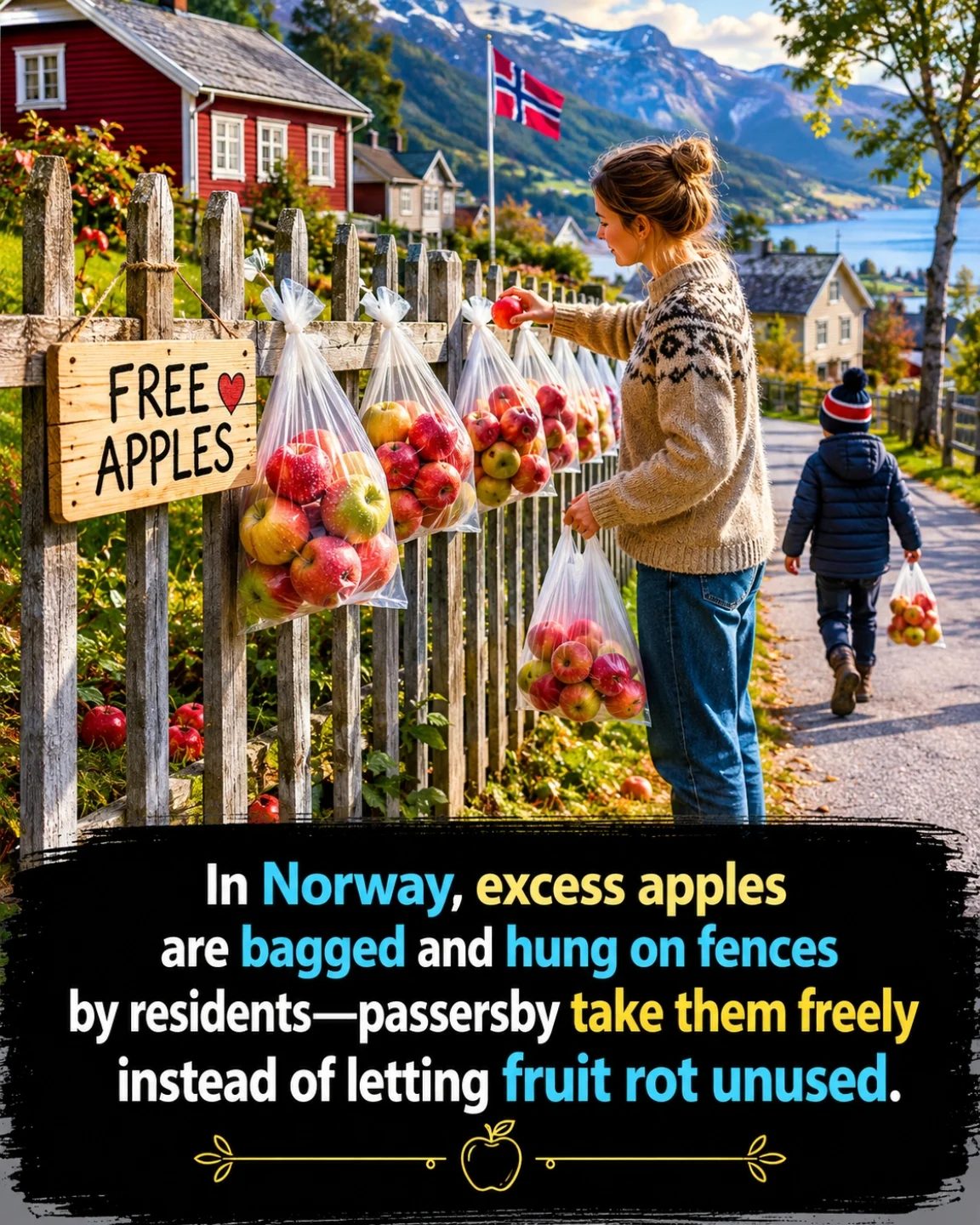
Free Apples in Norway
In Norway, residents share excess apples in a unique and community-minded way. This practice involves bagging and hanging apples on fences for anyone to take freely. This isn't just a pleasant custom; it also serves a practical purpose by preventing fruit from rotting and going to waste.
Why This Matters
The practice of sharing apples in Norway highlights a broader cultural trend towards sustainability and community. This simple act of hanging apples on fences reflects a deeper commitment to minimizing waste and fostering a sense of community. By making excess apples available to everyone, residents ensure that the fruit is consumed and not discarded.
The implications are significant both locally and globally. In a world grappling with food waste, this practice showcases a practical, low-effort solution that can be replicated in other communities. It also emphasizes the importance of shared resources and collective responsibility.
Main Discussion
The Process
The process is straightforward: residents bag their excess apples and hang them on fences, making them easily accessible to anyone passing by. This method is not only efficient but also visually appealing, adding a touch of charm to the Norwegian landscape. The practice is driven by a sense of community and a collective desire to reduce waste.
The Benefits
The benefits of this practice are multifaceted. Firstly, it prevents apples from rotting and going to waste, contributing to a more sustainable and eco-friendly lifestyle. Secondly, it fosters a sense of community and shared responsibility. By making apples freely available, residents create a bond that transcends mere neighborliness, reinforcing the idea that everyone has a role to play in creating a more sustainable future.
The Cultural Significance
The practice of sharing apples is deeply rooted in Norwegian culture. It reflects a broader ethos of sustainability and community involvement. This custom underscores the importance of shared resources and collective responsibility, values that are integral to Norwegian society. By embracing this practice, residents are not only reducing waste but also ensuring that everyone has access to fresh, nutritious food.
Practical Tips
For those interested in adopting this practice, here are some practical tips:
- Choose the Right Bags: Opt for sturdy, reusable bags that can withstand outdoor conditions. This ensures that the apples remain fresh and appealing to passersby.
- Secure the Bags: Make sure the bags are securely hung on the fences. This prevents them from falling and reduces the risk of accidents.
- Inform the Community: Let your neighbors and community members know about the initiative. This can be done through local bulletin boards, social media, or even word of mouth. Informing the community ensures that everyone is aware of the shared resources and can benefit from them.
- Maintain Cleanliness: Regularly check the bags to ensure they are clean and free from pests. This maintains the hygiene and quality of the apples, making them more appealing to those who take them.
Important Takeaways
The practice of sharing apples in Norway underscores the importance of sustainability and community. By making excess apples available to everyone, residents ensure that the fruit is consumed and not discarded, contributing to a more sustainable and eco-friendly lifestyle. This initiative fosters a sense of community and collective responsibility, reinforcing the idea that everyone has a role to play in creating a more sustainable future.
Conclusion
The practice of hanging excess apples on fences in Norway is a unique and effective way to reduce waste and foster community spirit. It reflects a deeper commitment to sustainability, highlighting the importance of shared resources and collective responsibility. By adopting this practice, communities can contribute to a more sustainable and eco-friendly lifestyle, ensuring that everyone has access to fresh, nutritious food.
Questions readers ask
How did the tradition of apple sharing in Norway begin?
The exact origins of Norway's apple sharing tradition are unclear, but it reflects a broader cultural emphasis on sustainability and community. Over time, residents have adopted the practice of bagging and hanging apples on fences as a simple and effective way to reduce food waste and encourage communal sharing.
What types of apples are typically shared in this Norwegian tradition?
The types of apples shared in this Norwegian tradition vary based on what grows in local gardens and orchards. Residents usually share a mix of common varieties that thrive in Norway's climate, such as 'Aroma', 'Discovery', and 'Joncop.'
Can visitors to Norway participate in the apple sharing tradition?
Yes, visitors are welcome to participate. If you see apples hanging on fences, feel free to take some home, but be sure to leave some for others. This tradition is all about community and sustainability, so everyone is encouraged to join in and help reduce waste.
What should I do if I see apples on a fence and I want to take some?
If you see apples on a fence and want to take some, simply grab a bag and help yourself. The apples are left out for anyone to take. If possible, leave some for others and consider sharing the practice with friends or family to spread the tradition of sustainable living.
How does this tradition help the environment?
This tradition helps the environment by reducing food waste. Apples that would otherwise rot and go to waste are consumed, minimizing methane emissions from landfills. It also encourages sustainable living and community engagement, promoting a greener and more connected society.
Are there other foods shared in a similar way in Norway?
While apples are the most commonly shared fruit, some communities in Norway also share other excess produce like pears, plums, and even vegetables. This sharing extends the benefits of reduced waste and community engagement beyond just apples.
What happens if the apples on the fence are not taken?
If the apples are not taken, they will eventually rot and fall off. This is still seen as a positive for the environment, as it creates a natural composting process. However, most communities are very active in taking the apples, so this outcome is relatively rare.
Recent articles
Fresh deep dives from the latest Reels we unpacked.



Comments
Be the first to comment.