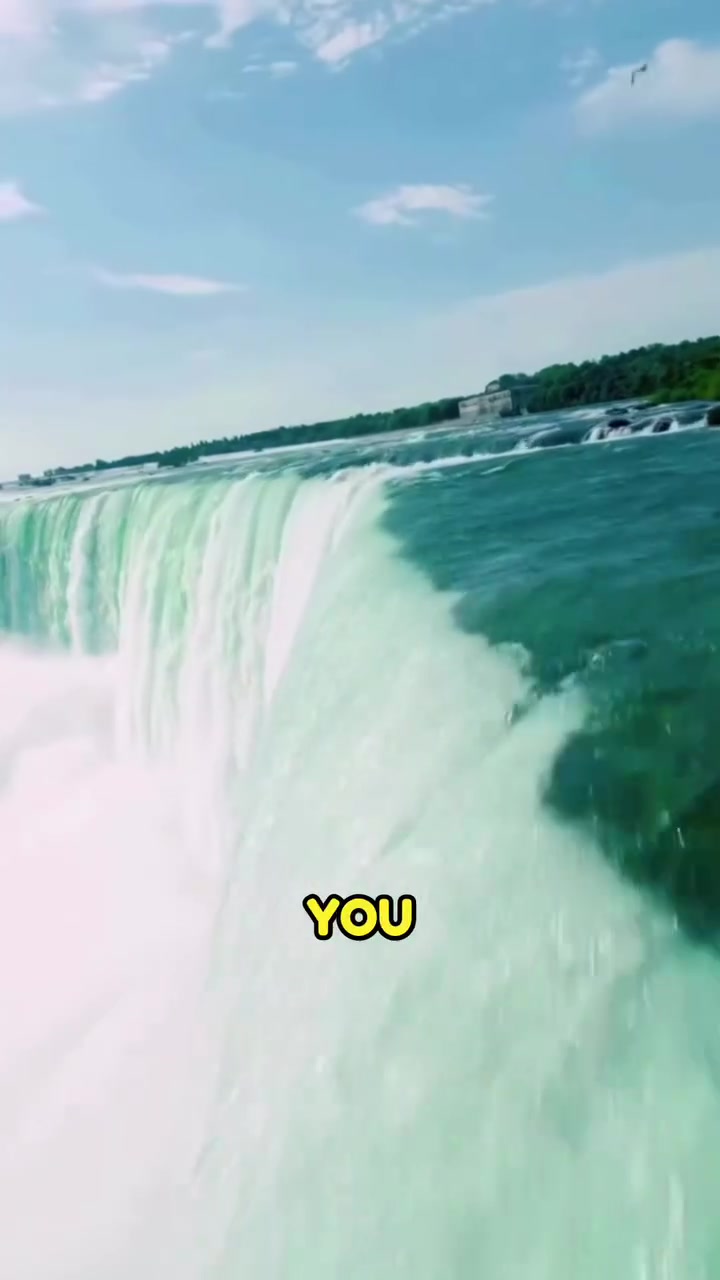
A Dynamic Landmark
Niagara Falls chases the eye like a magnet. But it's not just a static icon: dug by glaciers, sculpted by water, and slowly migrating upstream. This natural wonder is moving 11 kilometers upstream from its origin point and has carved caves and tunnels into the rock behind the cascade. Millions of people flock to Niagara Falls each year admiring its beauty. It remains one of the most fascinating landscapes on the planet. Niagara Falls is a group of three waterfalls: Horseshoe Falls, American Falls, and the smaller Bridal Veil Falls. The most powerful waterfalls in North America, they stand on the Niagara River on the border between Ontario, Canada, and New York, USA. These falls themselves are only part of the larger Niagara River. Niagara Falls is actually not a single waterfall but a group of three distinct cataracts. Horseshoe Falls, which spans the border between the U.S. and Canada, is the largest. American Falls and the smaller Bridal Veil Falls are located entirely within the United States. All three waterfalls together create a powerful and mesmerizing spectacle. It's the result of the erosive power of the Niagara River and the loss of the underlying rock as it plunges over the falls. These falls got their start 12,000 years ago. That's when the last ice age ended and giant glaciers melted, releasing enormous amounts of water. Niagara Falls is created by the same glacial melt that formed the Great Lakes.
The Eternally Moving Niagara Falls
Earth’s unique geological activity makes Niagara Falls an ever-changing marvel. The region was shaped by the melting of glaciers 12,000 years ago, which released enormous amounts of water that carved through solid rock. Niagara Falls was therefore formed by the glacial melting, as the water carved a path through solid rock to create the Great Lakes. The force of this water continues to wear away at the rock, pushing Niagara Falls upstream over thousands of years. Scientists estimate that Niagara Falls has moved almost 11 kilometers upstream from its original position over at least the last 12,000 years. The sheer volume of water flowing over the falls continues this relentless erosion.
The Relentless Force of Water
The majestic falls are not just a picturesque backdrop; they're a dynamic geological process. Water constantly wears away at the rock behind the falls, carving out caves and tunnels. Every day, millions of gallons of water pour over the edge at a velocity of 4200 cubic feet per second. The sheer weight of the water exacerbates this process. Now that Niagara Falls has been flowing for about 12,000 years, the force of water has slowly eroded the rock and soil forming the falls, which has pushed Niagara Falls upstream.
The Beauty of Impermanence
The hidden caves, tunnels, and layers of rock behind the falls are all evidence of this ongoing erosion. What people find fascinating about Niagara Falls is that it’s a constantly evolving natural process. Over thousands of years, this process has pushed Niagara Falls nearly 11 kilometers upstream from where it first formed. As the falls retreat, the landscape behind it evolves, featuring hidden caves, tunnels, and layers of rock. This relentless erosion has formed the falls’ unique geological features, such as the bowling ball-shaped rocks under the water that make up the shoreline. These rocks are shaped by the water's force, which also created swirling eddies and whirlpools. The rapids upstream of the falls show how rock is scoured by the water, with the force of the river reshaping the landscape.
Niagara Falls
The erosion behind the falls forms cliffs and caves. This erosion can create a variety of geological features, including cliffs and caves. Behind the falls, a collection of tunnels, rock formations, and caves are constantly being shaped and worn away by the rushing water. Niagara Falls caves are hidden behind the water and form as the water continues to wear down the rock, creating hidden chambers and caverns.
Niagara Falls Rainbows
It’s not just the rock that's shaped by the falls. Niagara Falls is also renowned for its rainbows. The mist from the falls creates perfect conditions for rainbows to form, adding a touch of magic to an already awe-inspiring scene. These magical rainbows form when the sun's light hits the water droplets generated by the mist, and the sunlight is reflected and refracted by these droplets, scattering and separating the light into the spectrum of colors. Niagara Falls’ mist creates a perfect environment for rainbows.
Tools for Tidal Truth
The Niagara Parks Butterfly Conservatory is a hidden gem worth visiting. Whirlpool Jet Boats, on the Canadian and U.S. sides, take you down to the Whirlpool Rapids for a ride. In the Cave of the Falls, on the Canadian side of the falls, you get the best up-close look at the Horseshoe Falls. The Jaw's Drop Niagara Falls will take you down 125 feet underground through passageways in the rock that are thousands of years old. The air around Niagara Falls is misty and cool, so bring an anorak and some genuine curiosity. From tabletop models of the area to the Niagara Falls History Museum, it’s all there. Feeling fit? The Niagara Parks Wayne Gretzky Estates Winery is a vineyard and restaurant. Queen Victoria Park is a great place to take a stroll and enjoy the beautiful scenic views of Niagara Falls. The Niagara Falls SkyWheel is a giant Ferris wheel on the Canadian side of the falls, offering breathtaking panoramic views of the area. But you don’t have to visit Niagara Falls in person to appreciate its wonders. You can witness Niagara Falls’ thundering power and beauty from your living room. The Niagara Park Commission offers live webcams of the falls and surrounding area, broadcasting 24/7 with multiple camera angles.
Niagara Falls' Enduring Allure
Visitors flock to Niagara Falls, not just for the visual spectacle, but for the reminder that even the most towering landscape changes over time. The falls, though powerful and timeless, are not static. Throughout its existence, it has continually eroded the underlying rock, forming caves and tunnels and shifting the position of the waterfall. Every year, millions of people come to admire the beauty of Niagara Falls. Niagara Falls’ ecosystem is continually evolving, making it a vibrant and dynamic place. Niagara Falls, a symbol of natural power and beauty, continues to change in ways we can’t yet imagine, waiting for us to explore and discover it again and again.
Questions readers ask
How exactly does the water at Niagara Falls move the falls upstream?
The water at Niagara Falls erodes the rock behind the falls, carving out caves and tunnels. This erosion causes the falls to gradually move upstream. The sheer volume and velocity of the water, about 4,200 cubic feet per second, exacerbates this process, pushing the falls back over time.
What caused Niagara Falls to start moving in the first place?
Niagara Falls began its journey about 12,000 years ago when the last ice age ended. The melting of glaciers released enormous amounts of water, which carved through solid rock to form the falls and the Niagara River. This process of erosion has continued ever since, moving the falls upstream.
How fast is Niagara Falls moving upstream?
Niagara Falls is moving at a slow but steady pace. Over the past 12,000 years, it has moved almost 11 kilometers upstream. This means it's retreating at a rate of about 0.9 centimeters per year, a testament to the relentless power of water over time.
What happens to the landscape as Niagara Falls retreats?
As Niagara Falls moves upstream, the landscape behind it evolves. Hidden caves, tunnels, and layers of rock are revealed, showcasing the ongoing geological process. This makes Niagara Falls a fascinating and ever-changing natural wonder.
Can I see the caves and tunnels behind Niagara Falls?
The caves and tunnels behind Niagara Falls are not typically accessible to the public due to safety concerns. However, some guided tours and boat rides, like the Hornblower Niagara Cruises, offer close-up views of the falls and the surrounding landscape, allowing you to appreciate the ongoing erosion process.
Related deep dives
Similar reads based on topic and creator.
Recent articles
Fresh deep dives from the latest Reels we unpacked.
Comments
Be the first to comment.