NFC Malware and ATM Fraud: A Growing Threat in Spain
Near Field Communication (NFC) technology, once hailed for its convenience in mobile payments and data transfer, has become a double-edged sword. In Spain, a sophisticated malware campaign, dubbed NGate, is exploiting NFC to facilitate ATM fraud. This campaign targets Spanish-speaking users, combining fake app distribution, NFC relay abuse, and PIN harvesting. The NGate malware is part of a larger ecosystem known as Devil NFC, a malicious service infrastructure active in Spain since January 2026.
Context: Why This Matters
NFC technology has revolutionized how we handle transactions, from mobile payments to keycard access. However, its convenience has made it an attractive target for cybercriminals. The NGate campaign highlights the evolving threats in digital security, particularly in regions where NFC adoption is high. Understanding the mechanics of this malware and its implications is crucial for users and financial institutions alike.
Main Discussion
The NGate Malware Campaign
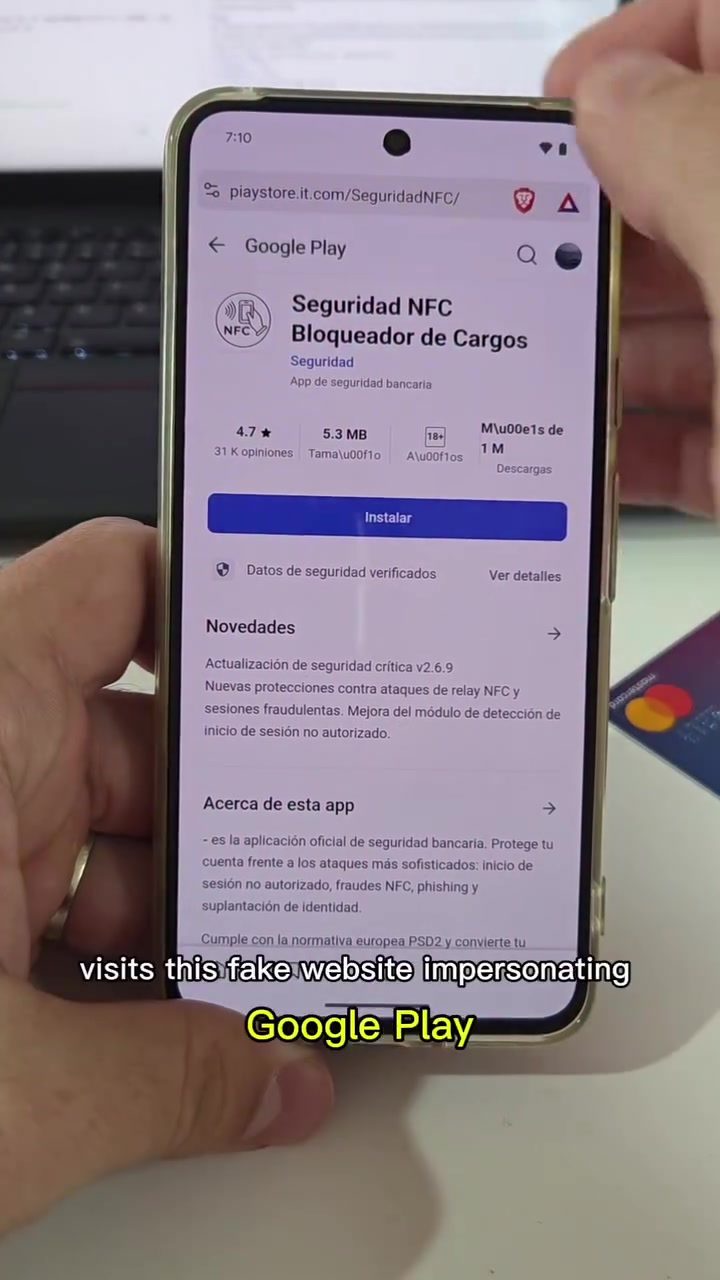
NGate is distributed via a fake Google Play website, impersonating an NFC security app called “Seguridad NFC – Bloqueador de Cargos.” The malware is designed to mimic legitimate security applications, tricking users into downloading and installing it. Once installed, the malware can:
- Exfiltrate SMS messages.
- Display phishing screens mimicking account lock warnings.
- Instruct victims to tap their payment card via NFC and enter their PIN.
- Relay NFC data and PINs to a remote Command and Control (C&C) server, enabling unauthorized ATM withdrawals.
The malware's infrastructure is linked to Devil NFC, an as-a-service (MaaS) backend that provides malicious services to cybercriminals. This backend supports bank-branded NFC phishing templates, which can be embedded at build time. In this particular campaign, the malware impersonated Santander Bank, shifting from generic warnings to targeted bank abuse.
How the Fraud Works
The fraud operation begins when a user visits a fake website impersonating Google Play and the app "Seguridad NFC – Bloqueador de Cargos." The user is then instructed to manually download and install the application, often requiring them to enable installation from unknown sources. Once installed, the malware requests access to text messages and displays a fake screen, informing the user that their account is temporarily blocked and that it is necessary to link their card with the device.
The user is then prompted to enter their PIN, which, along with the NFC traffic, is sent to a remote C&C server. This data allows cybercriminals to conduct unauthorized ATM withdrawals, effectively compromising the user's financial security.
The Role of NFC in ATM Fraud
NFC technology allows for secure, contactless transactions, making it a prime target for fraudsters. The NGate malware exploits this technology by instructing victims to tap their payment cards on their mobile devices. The captured NFC data, combined with the user's PIN, is then relayed to the C&C server, enabling real-time fraudulent transactions.
The malware's ability to display phishing screens mimicking account lock warnings adds an extra layer of deception. Users, believing their accounts are temporarily blocked, are more likely to comply with the fraudulent instructions, furthering the success of the attack.
Infrastructure Analysis
The infrastructure behind the NGate campaign is robust and well-organized. It includes:
- NFC Relay Servers: Dynamically returned by the C&C server, allowing for real-time data relay.
- Session and Victim Tracking: Implemented via incrementing IDs, ensuring that each session is uniquely tracked.
- Overlap with Devil NFC Campaigns: The infrastructure shows overlap with other Devil NFC campaigns, suggesting a coordinated effort targeting major brands and banks in Spain throughout 2026.
Practical Tips
Given the sophistication of the NGate campaign, it's essential to take proactive measures to protect yourself:
- Verify App Sources: Always download apps from official app stores and avoid enabling installation from unknown sources.
- Be Cautious of Phishing Attempts: Be wary of unexpected account blocks or requests for NFC verification. Verify such requests through official channels before taking any action.
- Never Tap Your Payment Card: Remember that legitimate apps do not require you to tap your payment card on your mobile device. If an app requests this, it is likely malicious.
- Regularly Update Your Security Software: Ensure that your mobile security software is up-to-date to protect against the latest threats.
Important Takeaways
- NFC technology, while convenient, can be exploited for fraudulent activities.
- The NGate malware campaign targets users through fake app distribution, NFC relay abuse, and PIN harvesting.
- Cybercriminals use sophisticated infrastructure, such as the Devil NFC MaaS backend, to orchestrate these attacks.
- Users must remain vigilant and verify the authenticity of apps and requests before entering sensitive information.
Conclusion
The NGate malware campaign in Spain serves as a stark reminder of the evolving threats in digital security. By understanding the mechanics of this malware and taking proactive measures, users can protect themselves from such sophisticated attacks. Always remember that legitimate security apps will never ask you to tap your payment card on your device. Stay informed, stay cautious, and stay safe.
Questions readers ask
What is the NGate malware and how does it operate?
NGate is a malware strain targeting Spanish-speaking users, designed to facilitate ATM fraud. It operates by using fake apps and phishing screens to harvest card data and PINs, leveraging NFC technology to relay this information to criminals for unauthorized withdrawals.
How does NFC technology contribute to ATM fraud?
NFC technology allows for close-proximity data transfer, which criminals exploit to relay card data and PINs captured from victims to another device near the ATM. This enables fraudulent transactions without the physical card or PIN being present at the ATM.
What is the Devil NFC ecosystem, and what is its role in the NGate campaign?
Devil NFC is a malicious service infrastructure that supports the NGate campaign. It provides the tools and infrastructure needed to execute NFC relay attacks and ATM fraud, allowing criminals to operate more effectively and evade detection.
What are some signs that I might be a target of NFC ATM fraud?
If you encounter suspicious apps or prompts asking for your card details or PIN, especially if they mimic legitimate banking apps, be cautious. Phishing screens that seem out of place or unusual can also indicate potential fraud.
How can I protect myself from NFC ATM fraud while using mobile banking?
To protect yourself, avoid downloading apps from unofficial sources, and always verify the authenticity of banking apps. Be wary of unexpected prompts for sensitive information, and consider using additional security measures like two-factor authentication.
What should I do if I suspect I've encountered the NGate malware?
If you suspect you've encountered NGate malware, immediately report it to your bank and delete any suspicious apps. Change your PIN and any associated passwords, and consider reaching out to local cybercrime authorities for further guidance.
Related deep dives
Similar reads based on topic and creator.




Recent articles
Fresh deep dives from the latest Reels we unpacked.




Comments
Be the first to comment.