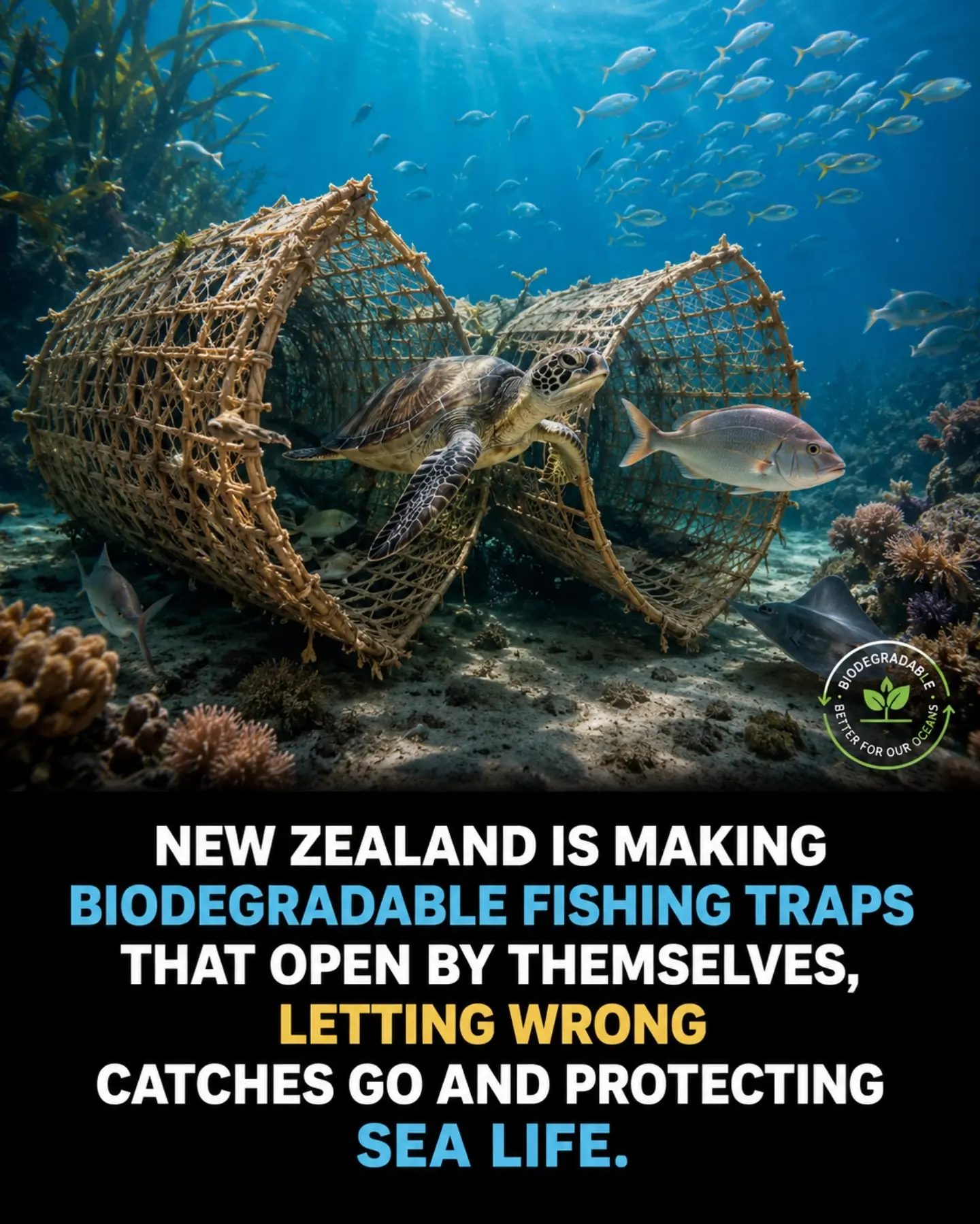
Biodegradable Fishing Traps
Biodegradable fishing traps are an innovative solution designed to mitigate the environmental impact of traditional fishing methods. These traps, which are currently being developed in New Zealand, are engineered to biodegrade over time, reducing their long-term impact on the ocean ecosystem. One of the key features of these traps is their automatic opening mechanism, which helps to prevent accidental catches of non-target species, including sea turtles and other marine life.
Why This Matters
Traditional fishing traps, while effective for catching targeted species, often lead to unintentional bycatch—animals that are not intended to be caught but become entrapped nonetheless. This bycatch can include endangered species and other marine life that play critical roles in maintaining the health of ocean ecosystems. Biodegradable fishing traps address this issue by minimizing the risk of accidental captures and reducing the environmental footprint of fishing activities.
The Innovations from New Zealand
Design and Functionality
New Zealand’s biodegradable fishing traps are designed with sustainability in mind. These traps are crafted from materials that can break down naturally over time, reducing the amount of non-biodegradable waste in the ocean. This breakdown process is carefully managed to ensure that the traps remain functional during their intended use but degrade quickly once they are no longer in use.
One of the most notable features of these traps is their automatic opening mechanism. This design ensures that any marine life, whether targeted or not, can escape if trapped. The trap is engineered to open automatically, allowing animals to swim free, which significantly reduces the risk of accidental catches and helps protect vulnerable species like sea turtles.
Environmental Impact
These biodegradable traps offer multiple environmental benefits. By breaking down naturally, they do not contribute to ocean pollution, which is a significant issue with many traditional fishing tools. The self-opening feature also helps to minimize bycatch, preserving marine biodiversity and ensuring that ecosystems remain balanced.
Regulatory and Economic Considerations
The adoption of biodegradable fishing traps is not without its challenges. Fishermen need to adapt to new methods of fishing, and there may be initial costs associated with switching to biodegradable materials. However, the long-term benefits to the environment and the sustainability of marine life make these traps a worthwhile investment. Governments and fishing authorities can play a crucial role by incentivizing the use of these traps through subsidies, regulations, and public awareness campaigns.
Practical Tips for Using Biodegradable Fishing Traps
Here are some practical tips for those considering the use of biodegradable fishing traps:
-
Training and Adaptation: Fishermen should receive proper training on the use and maintenance of biodegradable traps. Understanding how these traps work and their benefits will help in smooth adaptation.
-
Monitoring and Reporting: Regular monitoring of traps and reporting any issues can help in improving the design and effectiveness of these traps. Collaboration with local authorities and conservation groups can enhance this process.
-
Sustainable Practices: Implementing other sustainable fishing practices, such as using eco-friendly bait and minimizing waste, can complement the use of biodegradable traps and further reduce the environmental impact.
-
Community Engagement: Engaging with the local community and stakeholders can build support for the use of biodegradable traps. Sharing success stories and best practices can encourage wider adoption.
Important Takeaways
Biodegradable fishing traps represent a significant step forward in sustainable fishing practices. Their automatic opening mechanism and biodegradable design help to protect marine life and reduce ocean pollution. While there are challenges in transitioning to these traps, the long-term environmental and economic benefits make them a valuable investment. By adopting these traps, fishermen can contribute to the preservation of ocean ecosystems and ensure that marine life thrives for future generations.
Conclusion
Biodegradable fishing traps are a promising innovation that addresses the critical issues of bycatch and ocean pollution. New Zealand's initiative showcases how technology and sustainable design can be combined to create a positive impact on the environment. As more regions adopt these traps, we can look forward to healthier oceans and a more sustainable future for marine life. It’s essential for all stakeholders, including fishermen, policymakers, and conservationists, to work together to promote and implement these innovative solutions.
Questions readers ask
What makes biodegradable fishing traps more sustainable than traditional traps?
Biodegradable fishing traps are made to decompose over time, unlike traditional traps which can persist in the ocean for years. This feature helps reduce ocean pollution and minimizes the long-term impact on marine ecosystems.
How do biodegradable fishing traps prevent the capture of non-target species?
These traps are equipped with an automatic opening mechanism which is designed to release non-target species, such as sea turtles, that might otherwise become accidentally trapped.
What are the benefits of using biodegradable traps for marine life?
Biodegradable traps help protect marine life by reducing bycatch, which includes endangered species, and minimizing ocean debris, which can harm or entangle sea creatures.
Why are these traps considered a significant advancement in sustainable sea fishing?
Biodegradable traps offer a sustainable alternative to large metal traps, reducing the environmental footprint of fishing operations, and promoting more responsible fishing practices.
How do biodegradable fishing traps contribute to reducing ocean pollution?
By decomposing over time, these traps eliminate the problem of ghost gear, which refers to fishing equipment that has been lost or abandoned and continues to trap and harm marine life long after its useful life.
What types of species are most likely to benefit from the use of biodegradable traps?
Species such as sea turtles, which are particularly vulnerable to entanglement in traditional traps, as well as other non-target species that often fall victim to bycatch.
Are there any initiatives or videos showcasing the use of biodegradable fishing traps in New Zealand?
While specific initiatives might not have been mentioned, New Zealand is known for its commitment to sustainable practices. Look for local fishing organizations or government resources for updates on biodegradable traps, or search for videos on sustainable fishing methods in New Zealand to learn more about their implementation and benefits.
Recent articles
Fresh deep dives from the latest Reels we unpacked.

Comments
Be the first to comment.