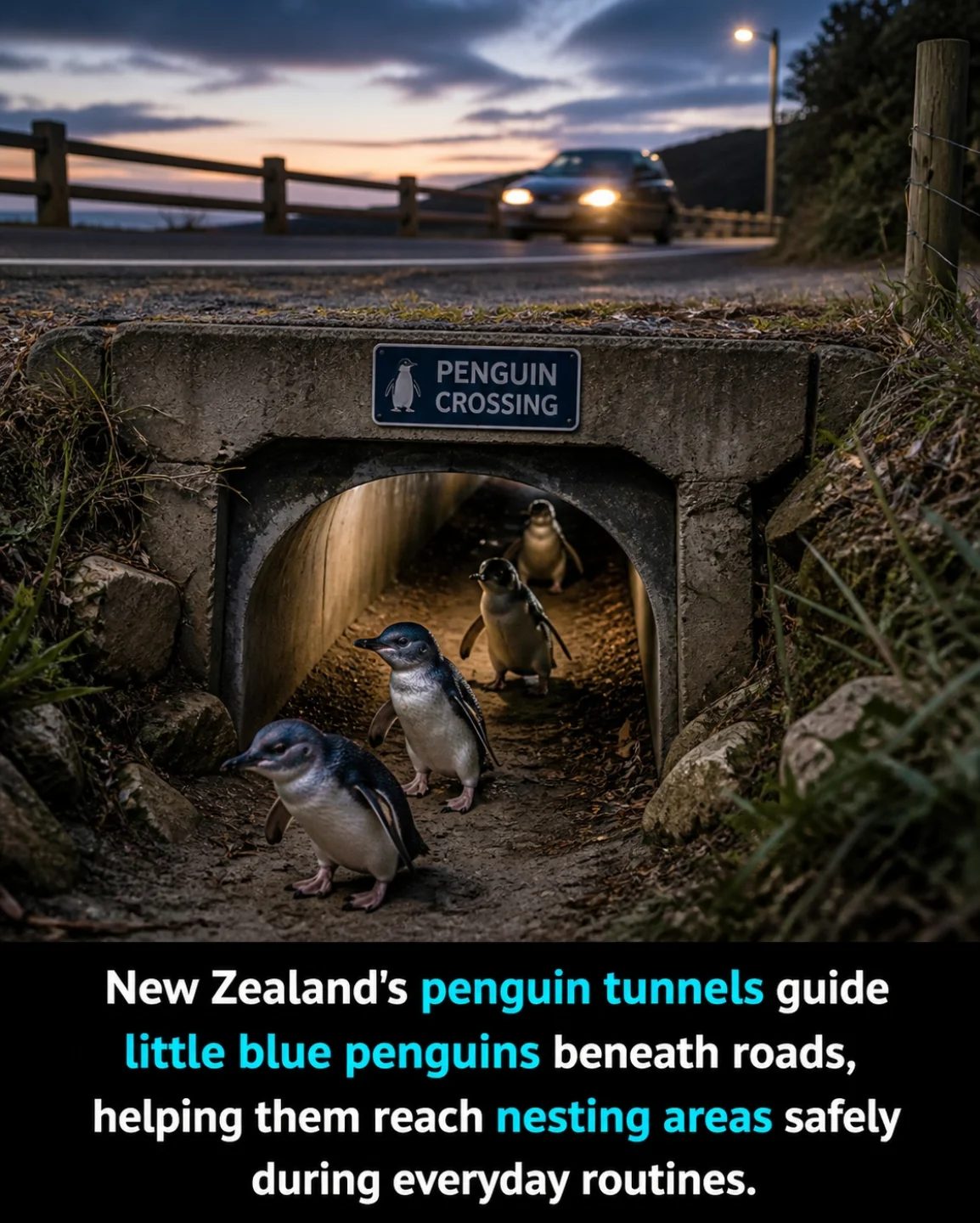
Penguin Crossings: How New Zealand Protects Little Blue Penguins
New Zealand’s commitment to wildlife conservation is evident in its unique infrastructure designed to protect one of the smallest penguin species in the world. Penguin crossings, or tunnels, are built to help little blue penguins safely cross roads and reach their nesting areas.
Why This Matters
Penguins are an integral part of New Zealand’s ecosystem and are beloved by locals and tourists alike. Unfortunately, their small size and tendency to nest in coastal areas make them vulnerable to road traffic. The tunnels serve as a practical solution to this problem, ensuring that these birds can continue their daily routines safely.
The Design and Function of Penguin Tunnels
Purpose and Location
Penguin tunnels are strategically placed in areas where little blue penguins are known to live and nest. These tunnel designs are simple yet effective, guiding the penguins beneath busy roads. The tunnels are typically short and wide enough to accommodate penguins of all sizes.
Construction and Materials
The tunnels are usually made of durable materials such as concrete or metal mesh. This ensures they can withstand weather conditions and the occasional vehicle impact. The design often includes ramps at both ends to make it easier for the penguins to enter and exit the tunnel.
Safety Features
Safety is a top priority in the design of these tunnels. They are often shielded from the road surface, ensuring that the penguins are not disturbed by traffic noise or lights. There are also barriers placed at the edges of the tunnels to prevent penguins from accidentally falling off the road.
How Penguin Tunnels Aid Daily Penguin Routines
Nesting and Feeding Areas
The tunnels serve as a critical link between the penguins’ nesting areas and their feeding grounds. By providing a safe passage, the tunnels ensure that penguins can access the resources they need to survive and thrive in their habitats.
Reducing Road Fatalities
Creating smooth entry and exit points to the tunnels reduces the number of penguin road fatalities. These tunnels are often aligned with natural terrain, so penguins can use them without altering their natural movements. This helps preserve the penguins' natural behavior and supports their overall well-being.
Practical Tips for Wildlife Conservation
Respect Wildlife Areas
If you are visiting New Zealand, it’s important to respect designated wildlife areas. Keep your distance and use designated viewing points to observe the penguins without disturbing them. While the tunnels provide protection, the penguins are still vulnerable to human interaction.
Follow Local Guidelines
Obey local guidelines and signage. These are put in place to protect both wildlife and visitors. By adhering to these guidelines, you help maintain the delicate balance of the ecosystem.
Participate in Conservation Efforts
Get involved in local conservation efforts. Many organizations in New Zealand work tirelessly to protect penguins and other wildlife. Volunteering your time or making donations can make a significant difference.
Important Takeaways
When visiting New Zealand, understanding the significance of penguin tunnels will make your experience more meaningful. These tunnels are more than just infrastructure; they are a testament to the country’s dedication to wildlife conservation. By protecting these birds, New Zealand ensures that future generations can continue to enjoy these remarkable creatures.
Conclusion
New Zealand’s penguin tunnels are a remarkable example of human ingenuity and commitment to wildlife conservation. These tunnels not only protect little blue penguins but also allow them to maintain their natural routines. By respecting wildlife areas, following local guidelines, and participating in conservation efforts, we can all contribute to the preservation of these fascinating creatures.
Questions readers ask
What are Little Blue Penguins and why are they important in New Zealand?
Little Blue Penguins, also known as Fairy Penguins, are the smallest species of penguins in the world. They play a vital role in New Zealand's ecosystem by controlling populations of small fish and crustaceans. Their presence also contributes significantly to the country's tourism industry and cultural heritage.
How do Little Blue Penguins interact with road traffic in New Zealand?
Little Blue Penguins often nest in coastal areas, which are adjacent to roads used for human transportation. Their small size and tendency to cross roads at night make them vulnerable to vehicles, posing a significant threat to their survival.
What measures has New Zealand taken to protect Little Blue Penguins from road traffic?
New Zealand has implemented a network of tunnels and ramps designed to safely guide Little Blue Penguins across busy roads. These structures are strategically placed in areas where penguins are known to cross, creating a direct pathway for them to reach their nesting grounds safely.
How effective are the penguin crossings in New Zealand?
The penguin crossings have proven to be highly effective in reducing penguin fatalities. Studies have shown a significant decrease in the number of penguins hit by vehicles since the implementation of these structures. Their simple design and strategic placement make them a successful conservation tool.
Can tourists visit the Penguin crossings in New Zealand?
While the primary goal of penguin crossings is to protect the Little Blue Penguins, some locations allow for safe and respectful viewing. Visitors should always follow guidelines to minimize disturbance to the penguins and their habitat. Check local regulations and guidelines before planning a visit.
What can individuals do to support the conservation of Little Blue Penguins in New Zealand?
Individuals can support the conservation of Little Blue Penguins by following designated paths and viewing guidelines when visiting penguin habitats. Additionally, reducing vehicle speed in known penguin crossing areas and supporting local conservation efforts can help ensure the safety and well-being of these birds.
What other measures are being taken to protect Little Blue Penguins in New Zealand besides penguin crossings?
In addition to penguin crossings, conservation efforts include habitat protection, monitoring of penguin populations, and public awareness campaigns. These initiatives aim to address various threats to Little Blue Penguins, ensuring their long-term survival in New Zealand.
Related deep dives
Similar reads based on topic and creator.



Recent articles
Fresh deep dives from the latest Reels we unpacked.
Comments
Be the first to comment.