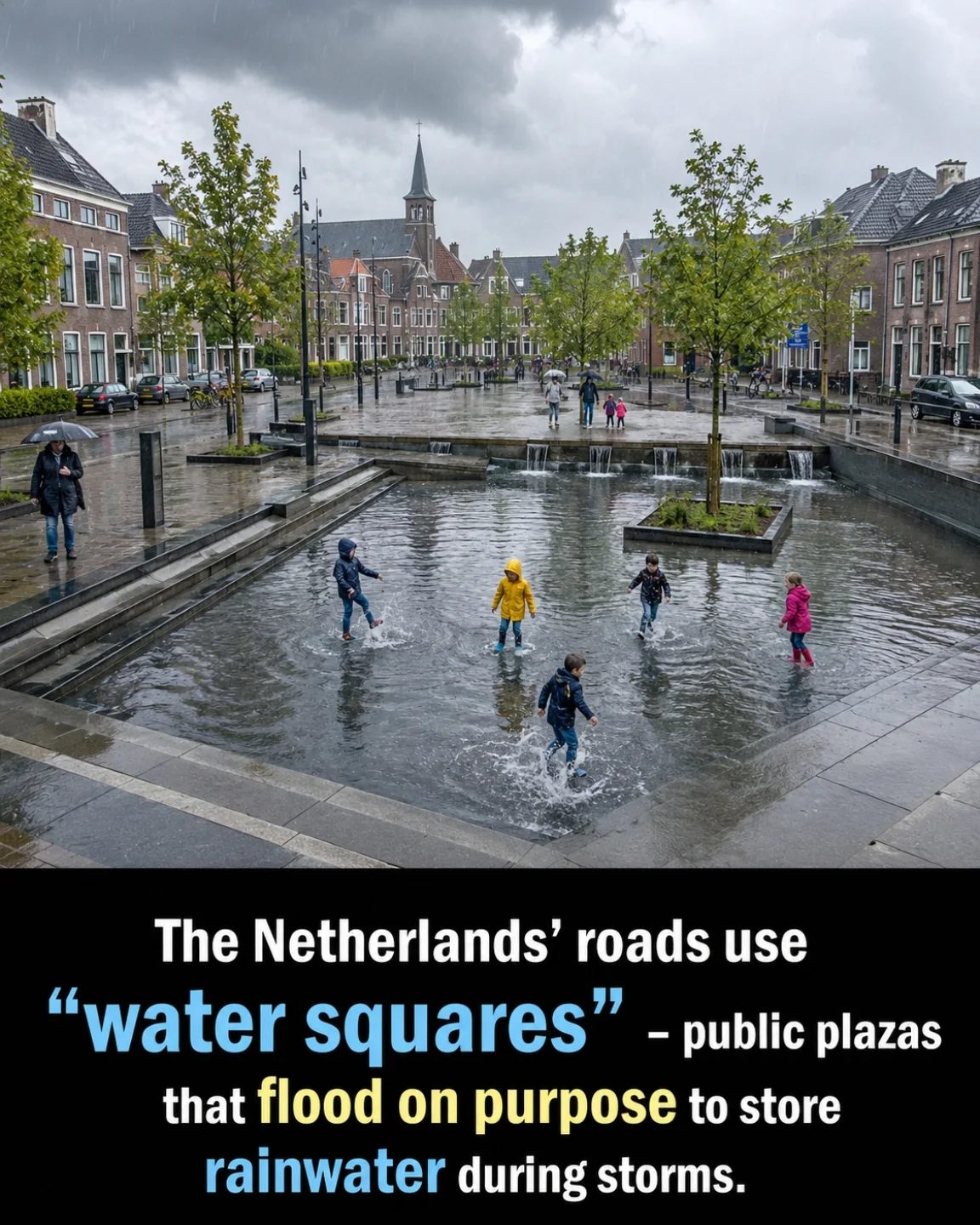
Water squares are a unique and innovative feature found in many public spaces across the Netherlands. These plazas, equipped with water features, are intentionally designed to flood during storms, serving a crucial purpose in managing excess rainwater.
Context / Why this matters
The Netherlands is known for its innovative approaches to urban planning, particularly in areas prone to flooding. Water management is a significant concern in the country due to its low elevation and dense population. Water squares address these challenges by creating flexible spaces that can absorb and store large volumes of water during heavy rainfall.
Main discussion
What are water squares?
Water squares are public plazas integrated into urban landscapes. They are essential components of the Netherlands' water management strategy. These plazas are designed to flood on purpose, effectively becoming temporary reservoirs during storms. When rainfall is heavy, water from streets and surrounding areas drains into these plazas, alleviating pressure on the sewage system and reducing the risk of flooding in residential and commercial areas.
How do they work?
The design of water squares involves sophisticated engineering. These plazas are designed with a slight incline, allowing water to flow naturally into designated areas. When a storm hits, water from the streets and roads is directed into the plaza, where it is stored until it can be gradually released into the sewer system or absorbed into the ground. This process helps to mitigate the impact of sudden, heavy rainfall on urban infrastructure.
Benefits of water squares
Water squares offer multiple benefits beyond flood control. They serve as recreational spaces for the community, providing areas for relaxation and play, as seen in the plazas where people are enjoying the water. These plazas can also enhance urban aesthetics, adding green spaces and water features that improve the overall appearance of the city. Additionally, water squares contribute to biodiversity by creating habitats for various species of plants and animals, which can thrive in the wet conditions.
Practical tips
Planning and Design
When planning a water square, it is essential to consider the local climate and weather patterns. The design should account for the average rainfall and the frequency of heavy storms to ensure that the plaza can effectively manage water inflow.
Community Engagement
Engaging the local community in the planning and design process can help ensure that the water square meets the needs and preferences of the residents. This can also foster a sense of ownership and pride in the community, encouraging more active use and maintenance of the space. It is also important to ensure that the square is designed in a way that makes it enjoyable and safe for people of all ages.
Maintenance
Regular maintenance is crucial to ensuring the long-term functionality of water squares. This includes cleaning the plaza, removing debris, and ensuring that drains and water channels are clear and functional. It is also important to monitor the water quality and take steps to prevent contamination.
Important takeaways
Water squares are more than just innovative urban design features; they are essential components of a comprehensive water management strategy. By serving as temporary reservoirs during storms, these plazas help to alleviate pressure on urban infrastructure, reduce the risk of flooding, and create recreational spaces for the community.
Conclusion
In conclusion, water squares in the Netherlands represent a forward-thinking approach to urban planning and water management. They demonstrate how cities can adapt to environmental challenges while creating spaces that enhance community life and urban aesthetics. As more cities around the world face similar challenges, the concept of water squares offers a valuable model for sustainable and resilient urban development.
Questions readers ask
What are the primary benefits of water squares in the Netherlands?
Water squares in the Netherlands serve dual purposes: they act as public gathering spaces and as crucial components of the country's flood management strategy. By absorbing and storing excess rainwater, these spaces help prevent urban flooding, while also providing residents with areas for recreation and social interaction.
How do water squares help in managing urban flooding?
Water squares are designed to intentionally flood during heavy rainfall, temporarily storing large volumes of water. This helps to alleviate pressure on the city's drainage systems and reduces the risk of flooding in other areas. Once the water levels subside, the plazas quickly return to their usual state, ready for public use.
Are water squares only found in specific cities in the Netherlands?
No, water squares are integrated into urban landscapes across the Netherlands, especially in areas with high flood risk. Major cities like Rotterdam and Amsterdam have implemented these innovative public spaces to enhance flood resilience and improve urban water management.
What happens to water squares after a storm?
After a storm, the water stored in the squares is gradually released and drained into the city's water management system. The plazas are designed to dry out quickly, ensuring they are safe and usable for the public within a short period. This makes them a practical and efficient solution for urban flood prevention.
How do water squares contribute to sustainable urban development?
Water squares support sustainable urban development by integrating flood management strategies into public spaces. They help cities become more resilient to climate change, reduce the strain on traditional drainage systems, and enhance the quality of urban environments by providing functional and aesthetically pleasing community areas.
How do water squares enhance community life in the Netherlands?
Water squares serve as vibrant community hubs when not holding rainwater. They offer spaces for events, relaxation, and social activities. By providing these benefits alongside their flood management functions, water squares foster a stronger sense of community and contribute to the overall well-being of urban residents.
What is the role of water squares in the Netherlands' water management strategy?
Water squares play a critical role in the Netherlands' water management strategy by providing a flexible and efficient way to handle excess rainwater. They help mitigate the risks associated with the country's low elevation and dense population, making them an essential part of the nation's innovative approach to urban water management.
Related deep dives
Similar reads based on topic and creator.



Recent articles
Fresh deep dives from the latest Reels we unpacked.



Comments
Be the first to comment.