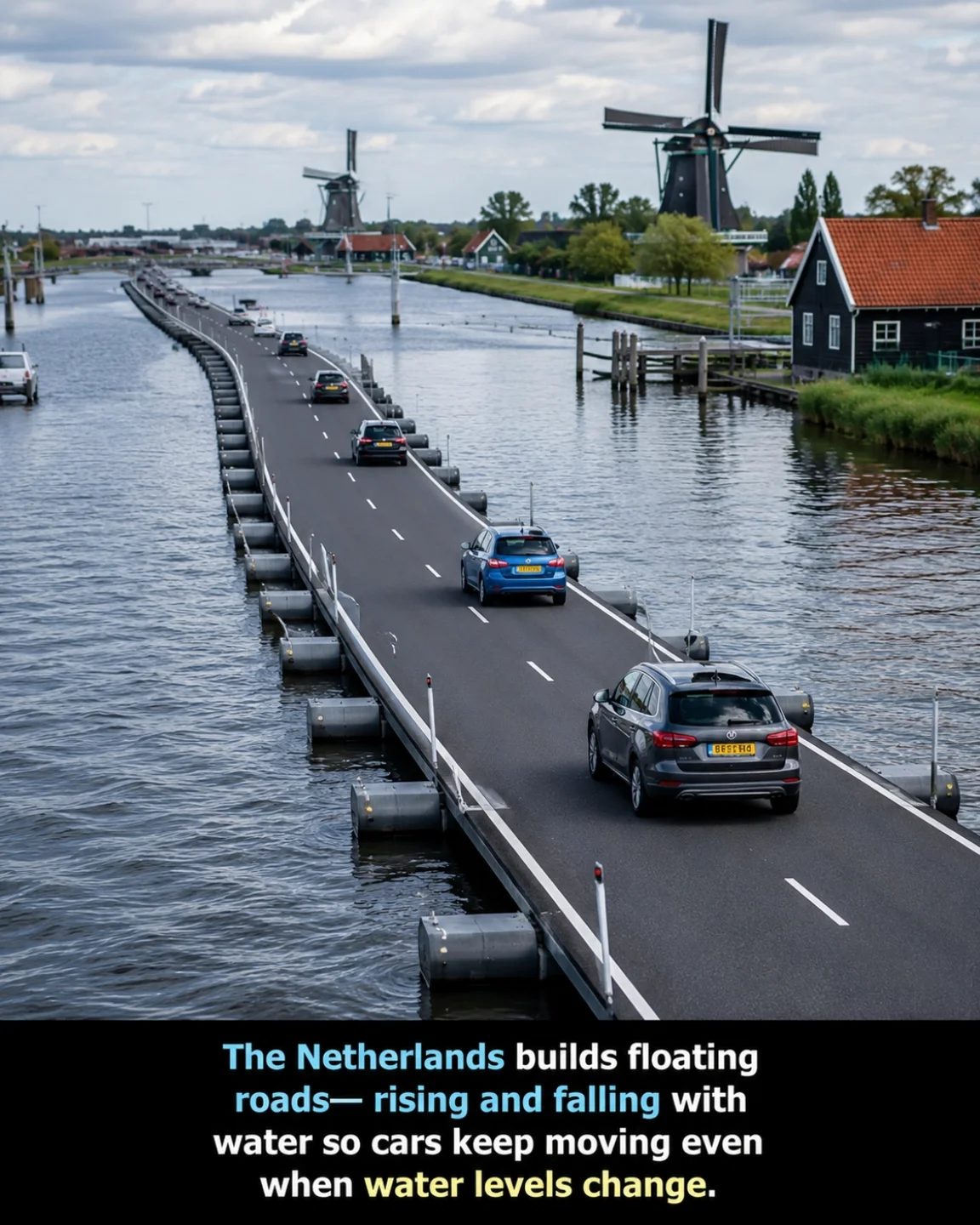
Floating Roads in the Netherlands
The Netherlands, renowned for its innovative approach to water management, has introduced a remarkable infrastructure solution: floating roads. These roads, designed to adapt to fluctuating water levels, represent a significant advancement in maintaining connectivity and mobility in areas prone to flooding.
These floating roads are built using specially designed platforms that float on the water. This design allows the roads to rise and fall with the changing water levels, ensuring that traffic can continue to flow even during periods of high water. This adaptability is particularly crucial in a country like the Netherlands, where a significant portion of the land is below sea level, and flooding is a persistent challenge.
Why This Matters
In a world where climate change is exacerbating weather patterns, infrastructure that can adapt to changing conditions is more important than ever. The floating roads in the Netherlands serve as a model for how modern engineering can address environmental challenges. By allowing roads to float, the Netherlands has found a way to ensure that communities remain connected, even as water levels rise.
This innovative infrastructure not only enhances mobility but also supports the local economy. Businesses along these routes can continue their operations without interruption, and residents can travel safely and efficiently. Moreover, these floating roads are part of a broader strategy that includes water management and sustainable urban planning, making the Netherlands a global leader in innovative infrastructure.
Main Discussion
Engineering and Design
The engineering behind these floating roads is nothing short of impressive. The roads are constructed on large, buoyant platforms that are anchored to the riverbed or shore. These platforms are designed to withstand various weather conditions and can support the weight of vehicles without sinking. The buoyant nature of the platforms ensures that the road surface remains level with the water, providing a stable driving surface for cars.
The stability of these floating roads is maintained through a series of intricate engineering techniques. The platforms are often constructed using lightweight but durable materials such as high-density polyethylene or concrete. These materials are chosen for their buoyancy and resistance to corrosion, ensuring the longevity and functionality of the roads.
Adaptability to Changing Water Levels
One of the standout features of these floating roads is their adaptability to changing water levels. As the water rises, the platforms rise with it, maintaining a consistent surface for vehicles. Conversely, when the water level decreases, the platforms settle down, ensuring that the road surface remains usable. This dynamic adaptability is achieved through specialized anchoring systems that allow the platforms to float while keeping them securely in place.
Benefits for Local Communities
Local communities in the Netherlands have seen significant benefits from the introduction of floating roads. These roads mitigate the impact of flooding, ensuring that essential transportation links remain open. This is particularly important for rural or isolated communities where alternative routes may not be feasible. The roads also enhance safety, as they reduce the risk of accidents caused by water-covered roads.
Moreover, the floating roads support economic activities. Businesses that rely on road transportation can continue operations without disruption, which is critical for maintaining the local economy. Farmers, for example, can transport goods to markets without worrying about floodwaters, while retail stores and other businesses can reach customers more reliably.
Environmental Considerations
Beyond their practical benefits, floating roads also have environmental advantages. By reducing the need to elevate roads or build extensive drainage systems, the Netherlands can minimize the environmental footprint of its infrastructure. This approach aligns with the country's broader environmental goals, which include sustainability and resilience to climate change.
The use of buoyant materials and anchoring systems that are designed to minimize environmental impact is another key aspect of these floating roads. These materials are chosen for their durability and low environmental impact, ensuring that the roads can withstand changing environmental conditions without causing harm to the ecosystem.
Practical Tips
If you find yourself in an area with similar water management challenges, there are several practical tips you can consider:
- Assess Environmental Impact: Before implementing any infrastructure, conduct a thorough environmental impact assessment to understand how the project will affect local ecosystems.
- Use Durable Materials: Opt for materials that are both durable and environmentally friendly. High-density polyethylene and lightweight concrete are good examples of materials that can be used for floating platforms.
- Consult Experts: Work with engineers and environmental specialists to design a system that can adapt to changing water levels while ensuring safety and stability.
- Community Involvement: Engage with local communities to understand their needs and concerns. This can help ensure that the infrastructure is both functional and accepted by the community.
Maintenance and Longevity
Regular maintenance is crucial for the longevity of floating roads. This includes inspecting the buoyant platforms and anchoring systems to ensure they remain functional. Periodic checks for corrosion and wear and tear can help prevent major repairs in the future. Additionally, local authorities should monitor water levels and environmental conditions to make timely adjustments to the road systems.
Future Prospects
As climate change continues to pose challenges, the concept of floating roads could be adopted in other parts of the world. Areas prone to flooding, such as coastal regions and low-lying islands, could greatly benefit from this innovative infrastructure. By sharing knowledge and best practices, the Netherlands can help other countries develop similar solutions, contributing to global resilience and sustainability.
Important Takeaways
Floating roads in the Netherlands are a testament to human ingenuity in the face of environmental challenges. These innovative structures offer numerous benefits, including enhanced mobility, economic stability, and environmental sustainability. As the world grapples with rising water levels and changing weather patterns, the floating roads serve as a model for future infrastructure development.
The key takeaways from this unique infrastructure include the importance of adaptability, the use of durable and environmentally friendly materials, and the need for community involvement. These factors contribute to the success and longevity of floating roads, making them a valuable addition to any region facing similar challenges.
Conclusion
Floating roads in the Netherlands are more than just an engineering marvel; they are a critical component of the country's approach to water management and sustainability. By allowing roads to rise and fall with the water level, the Netherlands has found a practical and effective way to maintain connectivity and mobility in areas prone to flooding. This innovative solution not only supports local communities but also sets a global standard for resilient and sustainable infrastructure.
Questions readers ask
How do floating roads in the Netherlands adapt to changing water levels?
The floating roads in the Netherlands are designed with platforms that float on water, allowing them to rise and fall with the water levels. This ensures that the roads remain accessible even during periods of high water, maintaining connectivity and mobility in flood-prone areas.
What are the benefits of floating roads for local communities?
Floating roads provide a continuous traffic flow in flood-prone areas, helping to keep communities connected. This is especially important for local economies, as it ensures that essential services, goods, and people can move freely, even when water levels rise.
How are floating roads built to withstand flooding?
Floating roads are constructed using specialized platforms that are buoyant and stable. These platforms are engineered to withstand the forces of water and weather, ensuring that the roads remain functional and safe to drive on, even during flooding events.
What makes the Netherlands a leader in innovative road infrastructure?
The Netherlands' innovative road infrastructure, such as floating roads, is a result of the country's long history of managing water and its low-lying geography. Dutch engineers have developed advanced techniques and materials to create roadways that adapt to water level changes, ensuring safety and accessibility.
Are floating roads safe for driving during floods?
Yes, floating roads are designed with safety in mind. They provide a stable surface for driving even when water levels are high. This design helps to prevent disruptions in traffic flow and ensures that drivers can navigate through flood-prone areas with greater confidence and ease.
What are the environmental benefits of floating roads?
Floating roads contribute to sustainable road infrastructure by reducing the need for extensive and costly flood mitigation measures. They also minimize the disruption to ecosystems that can occur with traditional road construction, helping to preserve natural habitats and waterways.
Can other countries implement similar floating road systems?
Yes, other countries with flood-prone areas can adapt the Dutch floating road system for their own use. Depending on the local geography and climate, different materials and designs might be necessary. However, the key principles of buoyancy and adaptability remain applicable to any region experiencing similar challenges.
Related deep dives
Similar reads based on topic and creator.



Recent articles
Fresh deep dives from the latest Reels we unpacked.




Comments
Be the first to comment.