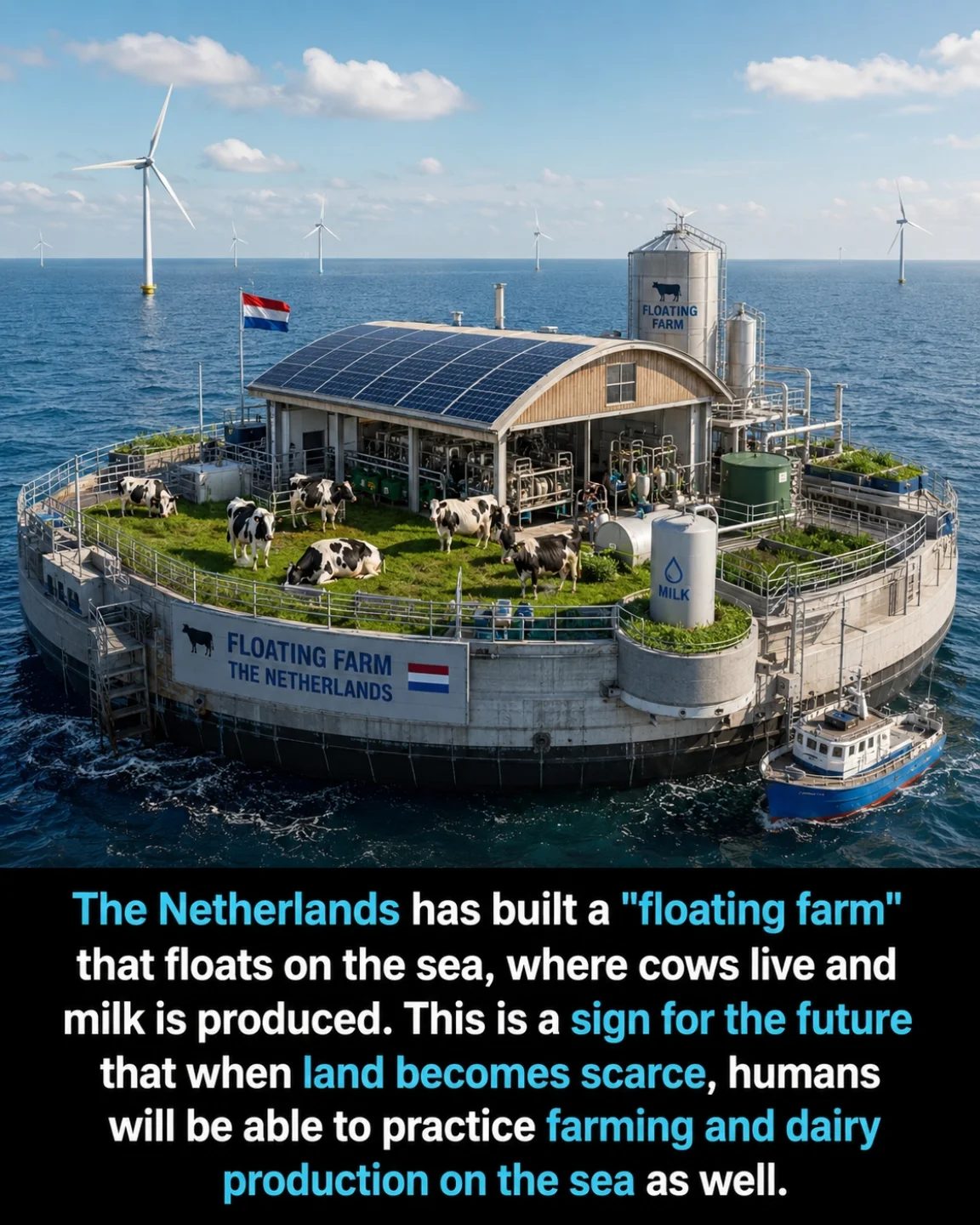
The Floating Farm: Agricultural Innovation in the Netherlands
The Floating Farm in the Netherlands represents a groundbreaking approach to sustainable agriculture. This innovative farm is a large, circular structure designed to float on water, combining modern technology with traditional farming practices. The farm is not only a unique architectural marvel but also a testament to the future of sustainable dairy production.
Context: Why This Matters
With increasing concerns about land scarcity and environmental sustainability, the concept of floating farms offers a promising solution. By utilizing water surfaces, floating farms can alleviate pressure on arable land and contribute to more efficient resource use. The Floating Farm in the Netherlands is at the forefront of this agricultural revolution, showcasing how innovative design and technology can co-exist with nature.
Main Discussion
The Design and Structure
The Floating Farm is a self-sustaining agricultural structure built to float on water. The farm's design includes a rooftop lawn where cows can graze, solar panels for energy production, and a circular layout that maximizes space efficiency. This design not only provides a comfortable environment for the cows but also ensures that the farm operates sustainably by harnessing renewable energy sources.
The Innovation of Floating Farms
Floating farms are designed to address several challenges faced by traditional agriculture:
- Land Scarcity: In densely populated areas or regions with limited arable land, floating farms offer a viable alternative.
- Environmental Impact: By utilizing solar energy and reducing the need for soil-based farming, floating farms minimize their environmental footprint.
- Resource Efficiency: The circular design and use of renewable energy sources make floating farms highly efficient in terms of resource use.
- Dairy Production: The Floating Farm in the Netherlands focuses on dairy production, demonstrating that even traditional farming practices can be adapted to innovative, sustainable models.
Operating Principles
The Floating Farm operates on several key principles that ensure its sustainability and efficiency:
- Solar Energy: The farm uses solar panels to generate electricity, reducing reliance on traditional energy sources.
- Water Management: The floating structure allows for efficient water management, as the farm can draw water directly from its surroundings.
- Animal Welfare: The rooftop lawn provides cows with a natural grazing environment, promoting their well-being and ensuring high-quality milk production.
- Waste Management: The farm incorporates systems for managing waste, including manure, which can be used as a renewable resource.
Technological Innovations
The technologies used in the Floating Farm are crucial to its success. Key innovations include:
- Solar Panels: These panels convert sunlight into electrical energy, powering the farm's operations.
- Water Purification Systems: These ensure that the water used on the farm is clean and safe for both the cows and the environment.
- Waste Recycling: Systems for recycling waste, such as manure, contribute to the farm's sustainability by turning waste into a valuable resource.
Practical Tips
If you're interested in implementing some of the principles of the Floating Farm in your own agricultural practices, consider the following tips:
- Invest in Renewable Energy: Install solar panels to reduce your reliance on traditional energy sources and lower your carbon footprint.
- Optimize Space: Consider innovative design solutions that maximize space efficiency, such as vertical farming or rooftop gardens.
- Use Clean Water: Implement water purification systems to ensure that your farm has access to clean water without harming the environment.
- Focus on Animal Welfare: Design your farm to promote the well-being of your animals, as this will improve the quality of your produce and contribute to sustainability.
- Recycle Waste: Develop systems for recycling waste, turning it into a valuable resource rather than a problem.
Important Takeaways
The Floating Farm in the Netherlands serves as a model for how agriculture can adapt to modern challenges. By integrating renewable energy, efficient water management, and a focus on animal welfare, this floating structure offers a vision of the future for farming.
Conclusion
The Floating Farm represents a significant leap forward in sustainable agriculture. Its innovative design and technological advancements demonstrate that it is possible to produce high-quality dairy products while minimizing environmental impact and promoting animal welfare. As the world continues to grapple with issues related to land scarcity and sustainability, the Floating Farm provides a blueprint for how agriculture can evolve to meet these challenges.
Questions readers ask
How does the Floating Dairy Farm in the Netherlands address land scarcity issues?
The Floating Dairy Farm tackles land scarcity by utilizing bodies of water instead of arable land. This approach allows for agricultural production without competing for valuable land resources, making it an ideal solution for densely populated areas like the Netherlands.
What makes the Floating Farm a sustainable solution for dairy production?
The Floating Farm employs various sustainable techniques, including solar power generation and efficient waste management. The farm's circular design promotes a closed-loop system, where resources are recycled and reused, reducing the overall environmental impact.
How does the Floating Farm integrate traditional farming with modern technology?
The farm combines traditional dairy farming practices with state-of-the-art technology. For instance, it uses automated milking systems and advanced climate control to ensure the well-being of the cows while optimizing milk production.
Can floating farms support other types of agriculture besides dairy?
Yes, the concept of floating farms can be extended to other types of agriculture. While the Dutch Floating Farm focuses on dairy, similar structures could be adapted for growing crops, fish farming, or even urban beekeeping, making them versatile for various agricultural needs.
What role does solar power play in the Floating Farm's operations?
Solar power is a key component of the Floating Farm's sustainability. The farm is equipped with solar panels that generate clean energy, powering the farm's operations and reducing its carbon footprint. This makes the farm not only self-sufficient but also environmentally friendly.
How do cows on the Floating Farm adapt to their unique environment?
The cows on the Floating Farm are adapted to their environment through thoughtful design features. The farm includes grazing areas and comfortable living spaces designed to mimic natural conditions, ensuring the cows' well-being and productivity. Additionally, the circular structure provides ample space for the cows to move around, promoting their natural behaviors.
What are the environmental benefits of the Floating Farm's circular economy approach?
The circular economy approach of the Floating Farm minimizes waste and maximizes resource use. By recycling manure into fertilizer and using solar energy, the farm reduces its reliance on external resources and lowers its overall environmental impact, contributing to a more sustainable agricultural model.
Recent articles
Fresh deep dives from the latest Reels we unpacked.
Comments
Be the first to comment.