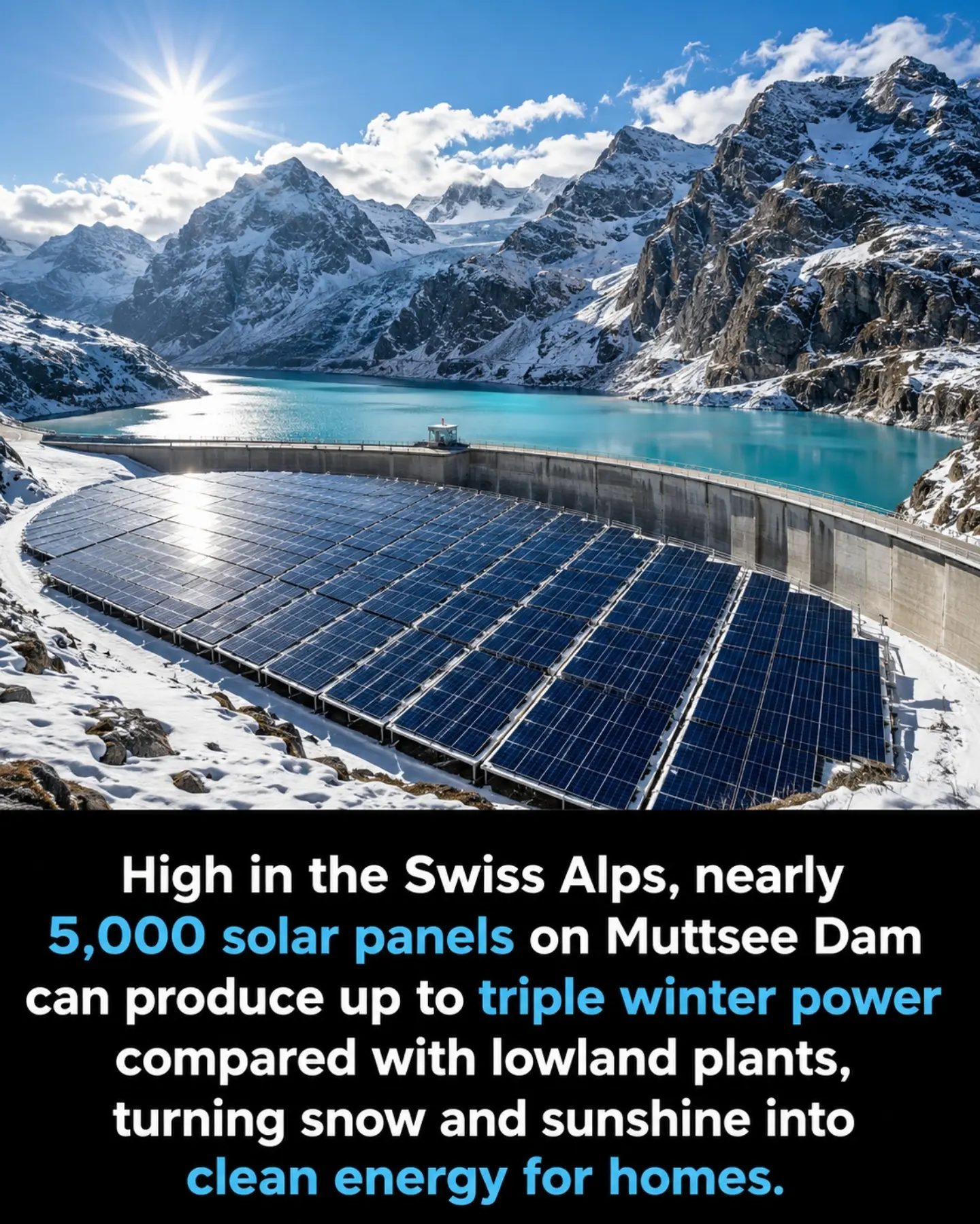
Solar Power in the Alps
Solar power is a sustainable and renewable energy source, and one of the most innovative solar projects is located high in the Swiss Alps at Muttsee Dam. This ambitious installation showcases the potential of solar energy in even the harshest environments.
Context / Why this matters
As the world seeks to reduce its carbon footprint and transition to cleaner energy sources, solar power has emerged as a leading solution. Traditional solar installations are typically situated in sunny, lowland areas to maximize sunlight exposure. However, the installation on Muttsee Dam challenges conventional wisdom by demonstrating that solar panels can be highly effective even in high-altitude, snowy conditions.
Main discussion
High-altitude solar power
The installation on Muttsee Dam features nearly 5,000 solar panels, making it one of the most extensive high-altitude solar projects in the world. The high-altitude location in the Swiss Alps offers several unique advantages that enhance the efficiency of solar energy production.
Enhanced sunlight exposure
At higher altitudes, the atmosphere is thinner, which allows more sunlight to reach the solar panels. This increased sunlight exposure results in higher energy production even during the winter months. In fact, the solar panels on Muttsee Dam can produce up to triple the winter power compared to lowland plants.
Utilizing snow and sunshine
One of the most innovative aspects of this installation is its ability to convert both snow and sunshine into clean energy. While traditional solar panels rely solely on direct sunlight, the system at Muttsee Dam is designed to maximize energy production from both sunlight and snow cover. This dual-energy conversion process makes it an efficient and reliable source of renewable energy.
The benefits of high-altitude solar power
The Muttsee Dam installation demonstrates several key benefits of high-altitude solar power, especially in regions with long winter seasons.
Increased winter power generation
One of the primary challenges of solar power is its seasonal variability. Solar panels in lowland areas often experience a significant drop in energy production during winter due to reduced sunlight and potential snow cover. In contrast, the solar panels on Muttsee Dam are capable of generating up to three times more power during the winter months compared to lowland installations.
This enhanced winter power generation is crucial for regions with longer winter seasons, as it ensures a stable and reliable energy supply throughout the year. This consistency is particularly important for alpine communities and mountainous regions, where energy demands can be high during the cold months.
Environmental advantages
The installation not only provides a sustainable energy source but also contributes to the preservation of the pristine alpine environment.
Firstly, the use of renewable solar energy reduces the dependence on fossil fuels, thereby minimizing greenhouse gas emissions. This reduction in emissions is a significant step towards mitigating climate change and maintaining the ecological balance of the region.
Secondly, the installation does not require large amounts of water or land, making it a more environmentally friendly option. The panels are strategically placed on the dam, which means they do not encroach on natural habitats or agricultural lands. This minimal environmental impact ensures that the alpine landscape remains relatively untouched.
Practical tips
For those considering solar power installations, especially in high-altitude or snowy regions, there are several practical tips to enhance efficiency and reliability:
Choose high-quality materials
Investing in high-quality solar panels and durable mounting systems is essential. High-quality materials can withstand harsh weather conditions, including heavy snowfall and strong winds, ensuring longevity and performance.
Optimize panel orientation
Proper panel orientation is crucial for maximizing sunlight exposure. In high-altitude regions, consider using adjustable mounts that can be adapted to changing seasons and weather conditions. This flexibility ensures that the panels are always oriented optimally, capturing the maximum amount of sunlight.
Regular maintenance
Regular maintenance is key to keeping solar panels in optimal condition. Regularly check for snow buildup, dust, and debris, which can reduce panel efficiency. In areas with heavy snowfall, installing snow guards or using heating elements to melt snow can help maintain continuous energy production.
Integrate energy storage
Incorporating energy storage solutions, such as batteries, can help manage the variability in energy production. These systems allow excess energy generated during peak sunlight hours to be stored and used during periods of low sunlight, ensuring a continuous and reliable energy supply.
Important takeaways
The solar panel installation on Muttsee Dam demonstrates the potential of high-altitude solar power and its unique advantages in alpine environments. The installation highlights several important takeaways:
- High-altitude advantages: The thinner atmosphere at higher altitudes allows for greater sunlight exposure, making solar power more effective in these regions.
- Dual-energy conversion: Innovative systems can convert both snow and sunshine into clean energy, enhancing power generation during winter months.
- Efficiency and reliability: High-altitude installations can produce significantly more power during the winter, providing a reliable energy source for alpine communities.
- Environmental benefits: Solar power reduces dependence on fossil fuels and minimizes environmental impact, preserving the alpine landscape.
Conclusion
The installation of nearly 5,000 solar panels on Muttsee Dam in the Swiss Alps is a testament to the innovative use of solar technology in challenging environments. This project showcases the potential of solar power in high-altitude, snowy regions, offering unique advantages such as enhanced winter power generation and dual-energy conversion. By harnessing both snow and sunshine, this installation not only provides a reliable energy source but also contributes to environmental sustainability. For those considering solar power in similar regions, investing in high-quality materials, optimizing panel orientation, regular maintenance, and integrating energy storage can maximize efficiency and reliability. This innovative project serves as an inspiration for future solar installations, demonstrating the versatility and potential of renewable energy in diverse environments.
Questions readers ask
How do Alpine solar panels perform in snowy conditions?
Alpine solar panels, like those at Muttsee Dam, are designed to operate efficiently even under snowfall. When snow accumulates on the panels, they can still generate power, though at a reduced rate, until the snow slides off. The panels are also tilted to promote easy snow removal. Additionally, snow reflects sunlight, which can increase power production under certain conditions.
What makes high-altitude solar power installations unique?
High-altitude solar power installations, such as the one at Muttsee Dam, benefit from increased sunlight exposure due to thinner atmosphere and longer daylight hours. They also experience cooler temperatures, which enhance solar panel efficiency. Furthermore, the unique environmental conditions at high altitudes can lead to unexpected advantages, such as snow reflection increasing power generation.
Why is the Muttsee Dam solar installation significant?
The Muttsee Dam solar installation is significant because it challenges the conventional approach of locating solar panels in lowland, sunny areas. By proving that solar panels can generate up to triple the winter power compared to lowland plants, this installation demonstrates the potential of solar energy in extreme environments and opens up new possibilities for solar power generation.
How does the Muttsee Dam solar installation compare to lowland solar plants?
The Muttsee Dam solar installation can generate up to three times the power in winter compared to lowland solar plants. This is due to the unique conditions in the Swiss Alps, such as increased sunlight hours, cooler temperatures, and the reflective properties of snow. Additionally, the installation is designed to withstand harsh Alpine conditions, making it a robust and efficient power generator.
What are the benefits of solar power in extreme environments?
Solar power in extreme environments, like the Swiss Alps, offers several benefits. Firstly, it demonstrates the versatility of solar energy. Secondly, it can provide power to remote communities that might otherwise rely on fossil fuels. Lastly, it contributes to reducing the overall carbon footprint by harnessing a clean, renewable energy source in challenging conditions.
What challenges do Alpine solar panels face?
Alpine solar panels face several challenges, including harsh weather conditions, heavy snowfall, and extreme temperatures. Additionally, the remote locations of these installations can make maintenance and upkeep more difficult. However, the unique design and technology of these panels help them overcome these obstacles and generate power efficiently.
Recent articles
Fresh deep dives from the latest Reels we unpacked.


Comments
Be the first to comment.