Balkan Travel Routes: A Comprehensive Guide to Multi-Country Adventures
The Balkans offer a rich tapestry of cultures, histories, and landscapes, making it an ideal destination for travelers looking to explore beyond Western Europe. The region is intersected by well-connected bus and train routes, providing efficient and scenic journeys between countries. Here, we delve into some of the best multi-country Balkan travel routes, offering insights into travel times and the best methods for each journey.
Why Explore the Balkans
The Balkans are often overshadowed by more popular European destinations, but they offer a unique blend of history, culture, and natural beauty. From the stunning coastlines of Croatia to the ancient ruins of Albania and the vibrant cities of Slovenia, the Balkans provide a diverse and enriching travel experience. The region is also known for its affordability, making it an attractive option for budget-conscious travelers. Whether you're a history buff, a nature lover, or a food enthusiast, the Balkans have something to offer.
Multi-Country Travel Routes
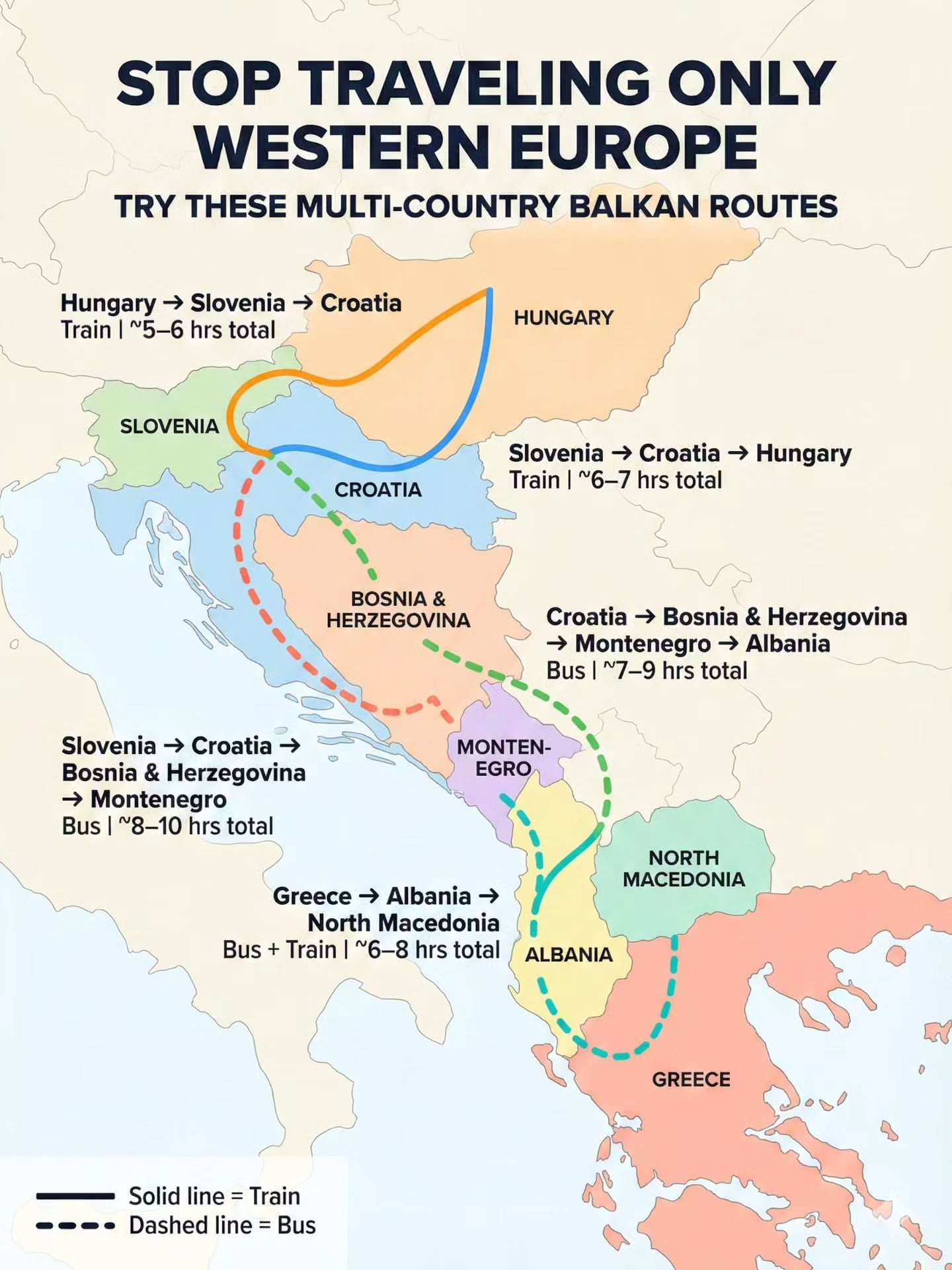
Hungary to Slovenia to Croatia
One of the most popular routes in the Balkans is the journey from Hungary to Slovenia and then to Croatia. This route is particularly appealing for travelers who want to combine the vibrant energy of Budapest with the natural beauty of Ljubljana and the coastal charm of Split.
Mode of Travel: Train
Estimated Travel Time: 5-6 hours
This route is well-served by trains, which offer a comfortable and scenic way to travel between these countries. The journey from Hungary to Slovenia typically takes around 4-5 hours, with frequent train services available. From Slovenia, it's a short hop to Croatia, where you can explore the stunning coastal cities of Split and Dubrovnik. This route is ideal for travelers who want to experience a mix of urban and coastal landscapes.
Croatia to Bosnia & Herzegovina to Montenegro to Albania
For those looking to explore the Adriatic coast and the Balkans' mountainous regions, this route is a must. This journey takes you through some of the most scenic and culturally rich areas of the Balkans.
Mode of Travel: Bus + Train
Estimated Travel Time: 7-8 hours
Trains and buses are the primary means of travel for this route, and they are well-connected, making it easy to navigate. The journey from Croatia to Bosnia & Herzegovina is particularly scenic, with the landscapes changing from coastal to mountainous. From Bosnia & Herzegovina, you can take a bus or train to Montenegro, where you can explore the stunning fjords and coastal towns. Continuing south, you'll reach Albania, where you can delve into its rich history and natural beauty.
Slovenia to Croatia to Bosnia & Herzegovina to Montenegro
This route is perfect for travelers who want to explore the Balkans' diverse cultures and landscapes. It takes you through some of the most picturesque and historically significant areas of the region.
Mode of Travel: Bus
Estimated Travel Time: 8-10 hours
Buses are the main mode of transport for this route, which provides a convenient and affordable way to travel. The journey from Slovenia to Croatia is particularly scenic, with the landscapes changing from the Alps to the Adriatic coast. From Croatia, you can head to Bosnia & Herzegovina, where you can explore the historic cities of Sarajevo and Mostar. Continuing south, you'll reach Montenegro, where you can enjoy the stunning fjords and coastal towns.
Greece to Albania to North Macedonia
For those interested in the ancient and historic sites of the Balkans, this route is ideal. It takes you through regions rich in history and natural beauty, making it a must-visit for history buffs.
Mode of Travel: Bus + Train
Estimated Travel Time: 6-8 hours
This route is well-served by buses and trains, making it easy to navigate. The journey from Greece to Albania is particularly scenic, with the landscapes changing from coastal to mountainous. From Albania, you can take a bus or train to North Macedonia, where you can explore the ancient ruins and natural beauty of the country. This route is perfect for travelers who want to explore the region's rich history and cultural heritage.
Practical Tips for Traveling in the Balkans
Choose the Right Time to Visit
The best time to visit the Balkans depends on your interests. If you're looking for warm weather and beach activities, summer is the ideal time. However, if you prefer cooler temperatures and fewer tourists, consider visiting during the spring or fall. Winter can be a good time to visit for those interested in skiing and snowboarding, as the region has several popular ski resorts.
Plan Your Route
Planning your route in advance can help you make the most of your time in the Balkans. Consider the distances between countries and the modes of transport available. Trains and buses are the most common and affordable ways to travel, and they offer scenic journeys. Make sure to check the schedules and book your tickets in advance, especially during peak travel seasons.
Pack Appropriately
The Balkans offer a diverse range of landscapes and climates, so it's essential to pack appropriately. If you're visiting during the summer, pack light clothing, sunscreen, and a hat. For cooler months, bring layers, a warm jacket, and comfortable walking shoes. Don't forget to bring a reusable water bottle, as tap water is safe to drink in most countries.
Learn Basic Phrases
While English is widely spoken in the Balkans, learning a few basic phrases in the local languages can enhance your travel experience. Simple greetings, thank you, and basic questions can go a long way in making a positive impression.
Stay Safe
The Balkans are generally safe for travelers, but it's always a good idea to take basic safety precautions. Keep your valuables secure, be cautious of pickpockets in crowded areas, and avoid isolated areas, especially at night. If you're driving, be aware of road conditions and follow local traffic rules.
Important Takeaways
The Balkans offer a wealth of travel opportunities, from the stunning coastlines of Croatia to the ancient ruins of Albania and the vibrant cities of Slovenia. By planning your route in advance and choosing the right mode of transport, you can make the most of your travel experience. Whether you're looking for a relaxing beach holiday, an adventure in the mountains, or a cultural immersion, the Balkans have something to offer.
Conclusion
The Balkans are a hidden gem in Europe, offering a rich blend of history, culture, and natural beauty. With well-connected bus and train routes, exploring the region is both easy and affordable. Whether you're planning a multi-country journey or a focused trip, the Balkans offer a unique and rewarding travel experience. So, why not step off the beaten path and explore the wonders of the Balkans?
Questions readers ask
What are the best modes of transportation for traveling between Balkan countries?
For traveling between Balkan countries, buses are generally the most convenient and frequent mode of transportation. They connect major cities and even smaller towns, offering scenic routes. Trains are also available on some routes, providing a comfortable and efficient way to travel. Both options are budget-friendly and provide a unique perspective on the region.
How long does it typically take to travel between major Balkan cities by bus or train?
Travel times vary by destination, but generally, journeys between major cities like Budapest to Ljubljana take around 7-8 hours by bus or train. For instance, traveling from Ljubljana to Zagreb typically takes 2-3 hours. Longer routes, such as from Zagreb to Tirana, can take up to 15-17 hours by bus, so planning overnight journeys or breaks is advisable.
Which cities in the Balkans are well-connected for multi-country itineraries?
Several cities in the Balkans are well-connected and ideal for multi-country itineraries. Zagreb and Ljubljana are excellent starting points, with frequent connections to other major cities. Sarajevo, Split, and Dubrovnik in Croatia, are also well-connected to neighboring countries. Tirana in Albania, Podgorica in Montenegro, and Skopje in North Macedonia are great for further exploration.
What are some must-see historic sites along popular Balkan travel routes?
The Balkans are rich in history, and there are many must-see sites along popular travel routes. In Croatia, visit the historic city of Dubrovnik and the ancient Roman ruins in Split. In Bosnia and Herzegovina, explore the historic center of Sarajevo and the well-preserved Ottoman architecture in Mostar. In Albania, the ancient cities of Butrint and Gjirokastra offer unique insights into the region's past. Montenegro's Kotor, with its well-preserved medieval architecture, is also a highlight.
What is the best way to plan a multi-country itinerary in the Balkans?
Planning a multi-country itinerary in the Balkans involves considering your interests, travel times, and the best routes. Start by identifying key cities and historic sites you want to visit. Use reliable bus and train schedules to map out your journey. Consider using travel apps or contacting local tour operators to help plan your route. Be sure to allocate enough time in each location to fully explore and enjoy the unique experiences each country offers.
Related deep dives
Similar reads based on topic and creator.


Recent articles
Fresh deep dives from the latest Reels we unpacked.


Comments
Be the first to comment.