Worldspace Interface: MIT's Training Revolution
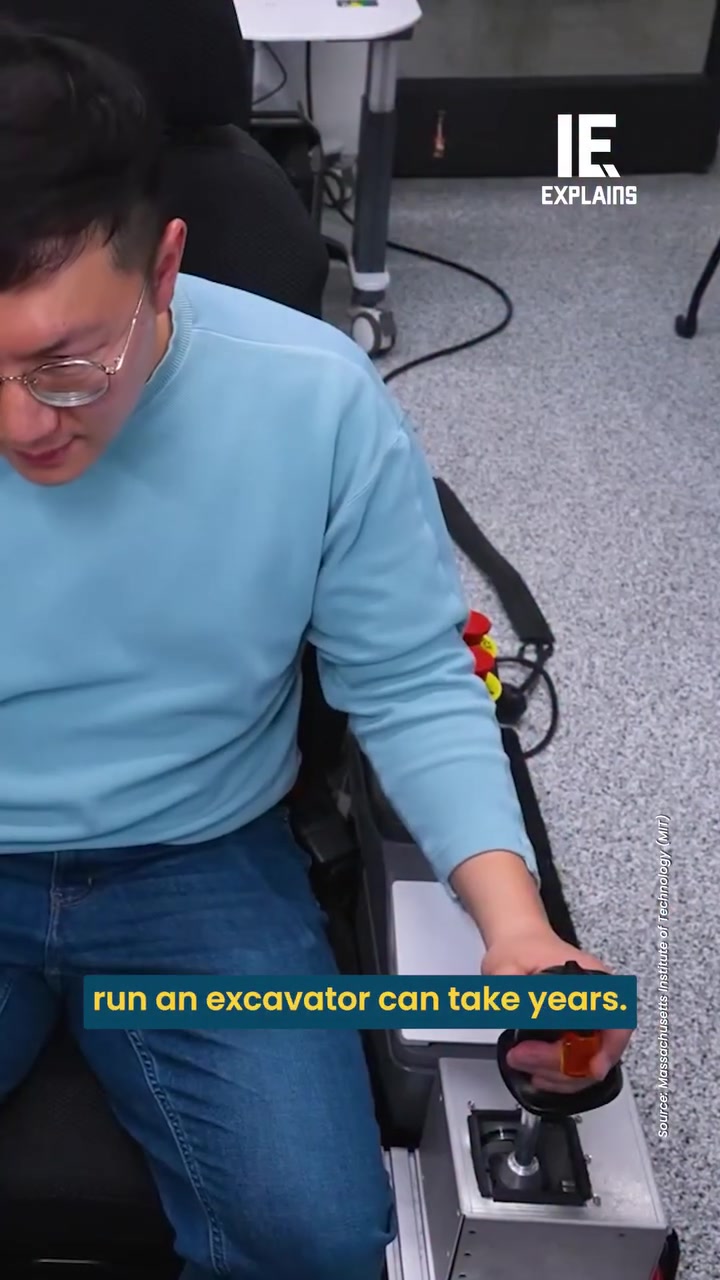
The Worldspace interface is a robotic arm from MIT, a miniature excavator arm with a bucket that replicates the movements of a user's hand, making it possible for novices to control an excavator like an expert. The innovation comes from the need to train new operators faster than traditional methods allow: training can take years. This interface is no fooling around, as it makes one expert overnight. No more guesswork, no learning curves. The user just grabs the little arm and moves it where you want the bucket to go.
Worldspace’s Sony 3D Bluetooth Interface
The Worldspace Interface simplifies the complex task of controlling 4 joints, those being: boom, arm, bucket, and the swing of the cab. MIT’s interface condenses it to simple hand movements. It is built by a team from MIT working with Sumitomo Heavy Industries, on a miniature excavator arm and bucket sitting on the desk in front of you.
Japan's Aging Operators
The project started back in 2018 and was motivated by a real-world problem: Japan's heavy machinery operators are aging out faster than replacements can be trained. In this context, operators must master two joysticks, each controlling different joints. This mental mapping is part of the training so the brain has to convert a simple thought—put the bucket over there, for instance—into a whole sequence of joint movements. That can take years.
Virtual Environments for Rigorous Testing
MIT tested the WorldSpace interface using a six-screen immersive simulator complete with 15 virtual sites. This includes construction plots, highways, forest roads, riverbanks, and mining areas. This testing environment ensures that operators can practice a wide range of tasks, and it creates a hyper-realistic experience. It also involved scooping gravel, cutting and grading trenches, clearing debris, pulling branches, and breaking up rock. Over seven days, volunteers trained one hour a day. On joysticks, the novices improved but were worse than the experts. On the new interface, novices were as good as the experts from the start.
Streamlined Controller Design Over Traditional Joysticks
The Worldspace Interface offers a simple alternative to the traditional joystick systems you might see in other machinery. Joysticks often require significant time to master, as they involve intricate movements and coordination between different parts of the machine. With the Worldspace Interface, the novice operator just needs to move the miniature arm and bucket. The system takes care of the rest, replicating the hand movements accurately. This simplified approach allows for faster learning and immediate proficiency.
The Next Steps in Construction Automation
MIT's next steps for the robotic arm are haptic feedback and real-world trials. Haptic feedback will allow users to feel the bucket bite into the ground and add another dimension to the experience. Finally, the team is working on integrating the interface with real cabs and remote control rigs. The team has already demonstrated the robotic arm's capabilities, including clearing debris and grading trenches, making the robotic arm a game-changer in the construction industry.
First-Time Users: Grab the Arm
If you're interested in trying the WorldSpace interface, expect a quick learning curve. Here’s how to get started:
- Placement: There is a built-in arm and bucket sitting on a desk for the operator to move. It is a miniature excavator arm.
- Haptic Feedback: The future interface will also allow users to feel the bucket bite into the ground.
- Interface Design: handle the arm and it can control a real excavator.
- Expert Level: Users can achieve expert level immediately. The hands-on approach of the Worldspace Interface allows for immediate proficiency, making it a significant advancement in the training of heavy machinery operators. With the addition of haptic feedback and real-world trials, this interface could revolutionize the construction industry by providing a more intuitive and effective way to train new operators.
Questions readers ask
How does the Worldspace interface work to simplify excavator training?
The Worldspace interface is a robotic arm that replicates the movements of a user's hand. When you move the miniature arm and bucket, the interface translates these movements into the corresponding actions of a full-sized excavator, eliminating the need for complex joystick controls. This direct mapping allows novices to control the excavator more intuitively and efficiently.
What kind of tasks can be practiced using the Worldspace interface?
With the Worldspace interface, users can practice a wide range of tasks in a hyper-realistic virtual environment. This includes scooping gravel, cutting and grading trenches, clearing debris, pulling branches, and breaking up rock. The six-screen immersive simulator provides 15 virtual sites, ensuring that operators gain experience in various construction scenarios.
How does the Worldspace interface compare to traditional joystick systems?
Traditional joystick systems require significant time to master because they involve intricate movements and coordination between different parts of the machine. The Worldspace interface simplifies this by allowing users to move a miniature arm and bucket, which the system then replicates accurately on the excavator. This direct control makes learning faster and more intuitive.
Can the Worldspace interface be used for real-world excavator operations, or is it just for training?
Currently, the Worldspace interface is primarily designed for training purposes, but MIT is working on integrating it with real cabs and remote control rigs. This means that in the future, the interface could potentially be used for real-world operations, making it a game-changer in the construction industry.
What are the next steps for the Worldspace interface in terms of development?
MIT's next steps for the Worldspace interface include adding haptic feedback, which will allow users to feel the bucket bite into the ground, enhancing the training experience. The team is also focusing on real-world trials to demonstrate the interface's capabilities in practical scenarios. This will involve integrating the interface with actual excavator cabs and remote control rigs.
How effective is the Worldspace interface compared to traditional training methods?
The Worldspace interface has shown remarkable effectiveness in training novices. In tests, volunteers using the interface were as proficient as experts from the start, compared to those using traditional joysticks, who showed improvement but were still worse than experts. This suggests that the interface can significantly reduce the learning curve for new operators.
Related deep dives
Similar reads based on topic and creator.


Recent articles
Fresh deep dives from the latest Reels we unpacked.

Comments
Be the first to comment.