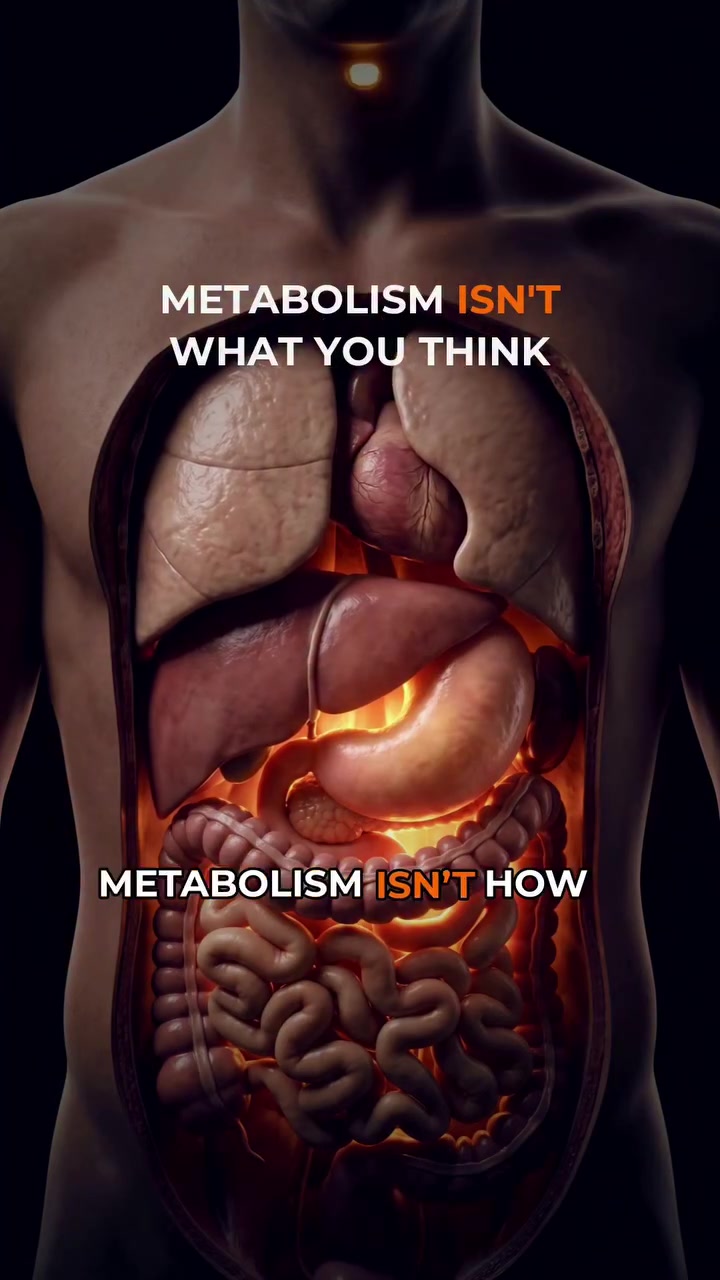
Metabolism, the Eternal Builder
Metabolism is the process by which your body converts what you eat and breathe into usable energy. You are not just a digestive machine that burns food for fuel. Your metabolism is actually thousands of chemical reactions happening every second to keep you alive and functioning. How it works is a complex dance between breaking down molecules and building them up. Think of your body as a city: cranes are constantly re-building broken-down structures.
Metabolism, the life-long marathon
Metabolism is a continuous process. It is easy to misinterpret how metabolism works. This misunderstanding is reinforced by common cultural narratives that oversimplify what healthy to the point of fallacy — such as the myth that metabolism is purely and simply about eating. Understanding metabolism as only a digestion mechanism is missing the bigger picture. Despite its wide use in popular culture, the term “metabolism” is not a measure of how quickly you burn food — it is what keeps your heart beating, your lungs breathing, and your organs functioning. Metabolism consumes two-thirds of your daily energy expenditure. When we pause to consider these expenses, we find that physical activity and digestion only make up a small part of of the whole process. Even when you are resting, your mitochondria are at work transforming the oxygen you breathe and the food you eat into ATP, the only energy your body can actually spend. Every heartbeat, every thought, every movement requires the activity of ATP. As a result, the actual mechanisms of metabolism are not just a digestion process, but an all-encompassing, cellular-level operation.
Mitochondria: the tiny engineers
Mitochondria are the microscopic structures inside almost every cell, working as your body's powerhouse. They're small and simple in structure, but they execute the essential task of converting the energy from food into ATP. As you scroll on your phone, your mitochondria are constantly at work. The mitochondria are not just breaking down molecules. They also build them up to restore and repair your body. They turn the oxygen you breathe and the food you eat into ATP, which is the only energy your body can actually spend. Even when you are not doing anything physically, two-thirds of your energy is spent on maintaining these basic functions. Mitochondria can even repair damaged cells to ensure that your body remains a working machine. Mitochondria perform both roles while you scroll through your phone or rest.
How food becomes usable energy
Imagine food as a fuel tank containing different substances with specific energy values. The process of converting food into usable energy involves breaking food down into smaller molecules. Then, these molecules are enter into the chemical reactions in your cells. This is how metabolism systematically ensures you have the energy for every heartbeat, thought, and step. Even though this process is complex, it perpetuates all the time with no stop from birth to death. The process of metabolism is an essential element of sustaining life.
Energy expenditure in and out
Metabolism has two functions: the primary and the secondary. The primary function keeps you alive by allowing your lungs to breathe, your brain to think, your liver and kidneys to function. These actions, while seemingly simple, require a lot of energy. Meanwhile, the secondary function involves digesting the food you eat. Breaking down a meal expends energy. This leaves what little remains for movement and exercise. The energy expenditure is constant and needs to be carefully balanced for optimal metabolic health. The breakdown of food into usable energy needs to balance with what you do to ensure that the entire system works properly.
Change your diet, change your metabolism
Metabolism is generally misunderstood, yet you can make it work for you. The food that you eat has a significant impact on your metabolism. Foods that have high fiber and protein content will ensure that you have the energy to do more throughout the day. Foods with low glycemic index also ensure that the body has a steady supply of energy. Also, consider hydrating regularly. Water plays a crucial role in the chemical reactions that keep you alive. You need to drink plenty of water to maintain the balance of electrolytes in your body. Electrolytes are crucial for the proper functioning of your cells and the chemical reactions that power your body. Being dehydrated will lead to an inefficient metabolism and will not produce the energy you need. Focus on healthful foods and plenty of water. Engage in exercise regularly. Even though you get a large amount of energy from just being alive, exercise boosts your metabolism. This is because exercise forces your body to work harder than it usually does. This means that it has to use more energy to produce muscular work and heat, thus increasing your metabolism.
Questions readers ask
What exactly is ATP and why is it so important for metabolism?
ATP, or adenosine triphosphate, is the primary energy currency of your cells. It's a molecule that stores and transports chemical energy within your cells, essentially powering all the processes that keep you alive. It's so important for metabolism because every activity that your body performs, from muscle contractions to brain function, requires ATP. It is the only energy your body can actually spend.
How do mitochondria contribute to both the breakdown and build-up of molecules?
Mitochondria play a dual role in metabolism. They break down molecules from the food you eat and the oxygen you breathe to produce ATP, the body's energy currency. Simultaneously, they use this energy to build up and repair cells and tissues, ensuring your body remains functional and healthy. This dual process is crucial for maintaining your body's overall health and functionality.
If metabolism is always happening, what role do physical activity and digestion play in it?
While metabolism is a continuous process, physical activity and digestion do play a role, but they are not the main drivers. Physical activity and digestion only make up a small part of your daily energy expenditure, accounting for about 20-30%. The majority of your energy, around 60-70%, is expended on maintaining basic bodily functions like breathing, heart rate, and organ function, which are all part of your basal metabolic rate.
Does metabolism slow down as you age, and if so, why?
Yes, metabolism tends to slow down as you age. This is primarily due to a decrease in muscle mass, which is more metabolically active than fat. As you age, you can lose muscle mass, which can lead to a slower metabolism. Additionally, hormonal changes and a decrease in physical activity can also contribute to a slower metabolism. This is why maintaining muscle mass through exercise and a healthy diet is crucial for keeping your metabolism active.
Can certain foods or supplements boost your metabolism?
There's no magic food or supplement that can significantly boost your metabolism. However, some foods and supplements can slightly increase your metabolic rate. For example, foods high in protein can increase your metabolism because your body requires more energy to digest and process them. Caffeine and green tea extracts are also known to have a small effect on metabolism. However, the overall impact of these foods and supplements on your metabolism is relatively minor and should not be relied upon for significant weight loss or energy gains.
Related deep dives
Similar reads based on topic and creator.



Recent articles
Fresh deep dives from the latest Reels we unpacked.



Comments
Be the first to comment.