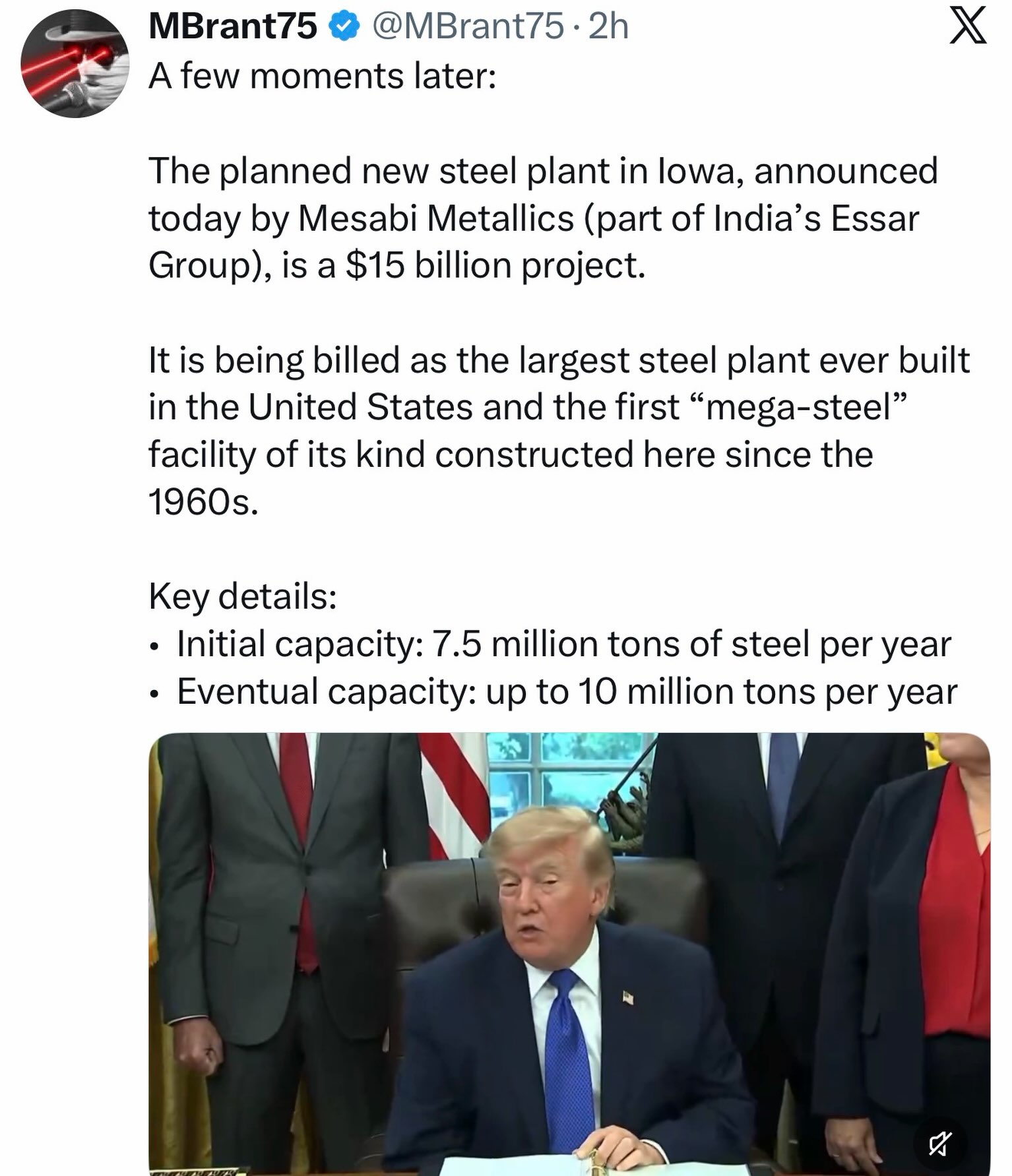
Mesabi Metallics is launching an unprecedented steel initiative in the United States. The Iowa enterprise, backed by part of India's Essar Group, is a $15 billion mega-project. The plant is slated to produce 7.5 million tons of steel annually, with the potential to expand to 10 million tons. This undertaking marks the country’s first major steel plant construction since the 1960s and promises to reshape the domestic steel landscape.
The Mega-Scale of the Steel Initiative
The planned steel plant in Iowa is not just a new industrial facility; it is a monumental venture poised to revitalize the United States' steel production sector. At $15 billion, it is the largest steel plant ever built in the country. The scale of the project makes it significant in a frequently debated area — how to maintain high quality and competitiveness in heavy industries. The plant is designed to produce 7.5 million tons of steel in initial stages, targeting metals' key economic sectors and market demands. In the long term, Mesabi Metallics aims to scale up to 10 million tons annually. It suggests a commitment to meeting the increasing demand for steel. A mega-scale project like this isn’t just about building an efficient steel-making facility; it’s about launching a sophisticated manufacturing hub. The project's scope includes advanced production technologies — and enhanced sustainability measures. These make Mesabi Metallics not only a significant steel producer but also a step forward in innovative manufacturing within the United States.
How Steel Plants are reshaping US Industrial Potential
This project reflects a global and national drive towards modernizing steel production. Industries are increasingly investing in operations that incorporate the latest technologies and ensure high production efficiency and environmental standards. This drive is critical in the face of regional and international competition. India's Essar Group has a reputation for investing in large-scale infrastructure projects. The group’s involvement in Mesabi Metallics underscores its strategic vision in expanding global steel capabilities. The plant is a pivotal development within the broader context of US industrial policy, which aims to regenerate industrial capabilities to compete more effectively in the global economy. The project reflects a commitment to utilizing American natural resources and labor to produce high-grade domestic steel.
MBrant75's unique angle on the essential plant
MBrant75 is a distinct voice who covers steel plant construction and expansion across the industry. He looked specifically at how Mesabi Metallics’ project stands unique against competitors using traditional methods or tech.
The distinctiveness of a private vs Government-funded Plant
Mesabi Metallics highlights a significant departure from the model of government-funded or community-driven initiatives. It represents a new wave of private-sector investment in large-scale industrial projects. This funding structure emphasizes private enterprise and market-driven imperatives. The private funding model allows Mesabi Metallics more flexibility in its production goals and operational strategies. It also underscores a growing trend where private investors are stepping in to revitalize infrastructure and industrial capabilities.
The role of private capital in industrial growth
Private capital is increasingly becoming important in steering industrial growth across sectors. This trend is specifically evident in the steel industry, where large-scale investments are crucial for maintaining competitiveness and innovation. Investors like Essar Group are transforming the industry by providing the capital needed for high-tech and high-efficiency facilities. This project not only ensures the availability of high-grade industrial steel but also promotes economic development in the region. These factors together create a compelling narrative of private sector-led growth.
Exploring the future of steel production for key sectors
The production capabilities of the new plant will have a profound impact on key sectors that rely heavily on steel, such as construction, automotive, and energy sectors. By offering an initial capacity of 7.5 million tons of steel per year, Mesabi Metallics is poised to meet the growing steel demand. In the automotive and energy sectors, steel is vital for constructing durable and efficient vehicles and infrastructure. The availability of a reliable and high-quality steel supply from Mesabi Metallics ensures that these sectors can maintain their production targets and continue to innovate.
For those who want to track the progress
As the project develops, there are several angles to explore to get a comprehensive understanding. For detailed technical insights, residents and stakeholders can examine the construction timeline and specific technologies being used.
- Follow Progress: The company’s website and social media platforms are likely to post regular updates on construction milestones and technological integrations. Set up alerts to follow major updates.
- Understand the Environmental Impact: The project aims to build a sustainable steel production facility. Review any published environmental impact assessments to understand how the plant will mitigate its environmental footprint.
- Industry Reports: Look at industry reports and analyses to understand how this project changes market dynamics and impacts other steel producers in the region.
- Engagement Opportunities: Keep an eye out for any public engagement events or forums where Mesabi Metallics discusses the project. These can provide a direct line to company representatives for questions and concerns. The larger scope and ambition of this project will attract more onlookers within the industrial sphere. It is a testament to how strategic investments can drive industrial growth, and Mesabi Metallics will be poised to influence the trajectory.
Questions readers ask
What makes Mesabi Metallics' Iowa plant so significant in the U.S. steel industry?
The plant is significant because it's the largest steel plant built in the U.S. in decades, with a $15 billion investment. It aims to produce 7.5 million tons of steel annually, with plans to expand to 10 million tons, which is a major boost for domestic steel production.
How does the funding structure of Mesabi Metallics' plant differ from traditional steel plant projects?
Unlike many past steel plants, Mesabi Metallics' project is privately funded, primarily by part of India's Essar Group. This private funding model gives the company more flexibility in its production goals and operational strategies, focusing on market-driven imperatives rather than government directives.
What technologies and sustainability measures are being incorporated into the Mesabi Metallics plant?
The plant is designed to include advanced production technologies and enhanced sustainability measures, positioning it as a step forward in innovative manufacturing within the United States.
How does this project align with broader US industrial policy goals?
The project reflects a commitment to regenerate industrial capabilities in the U.S. to compete more effectively in the global economy. It aims to utilize American natural resources and labor to produce high-grade domestic steel, aligning with the national drive towards modernizing steel production.
Can the plant's production capacity be adjusted based on market demand?
Yes, the plant is designed to start with an annual production of 7.5 million tons of steel, but it has the potential to expand to 10 million tons. This flexibility allows Mesabi Metallics to meet increasing market demands as needed.
What role does the Essar Group play in this project, and why is their involvement notable?
The Essar Group, part of India, is a significant investor in this project. Their involvement is notable because they have a reputation for investing in large-scale infrastructure projects, bringing a strategic vision to expand global steel capabilities.
Recent articles
Fresh deep dives from the latest Reels we unpacked.




Comments
Be the first to comment.