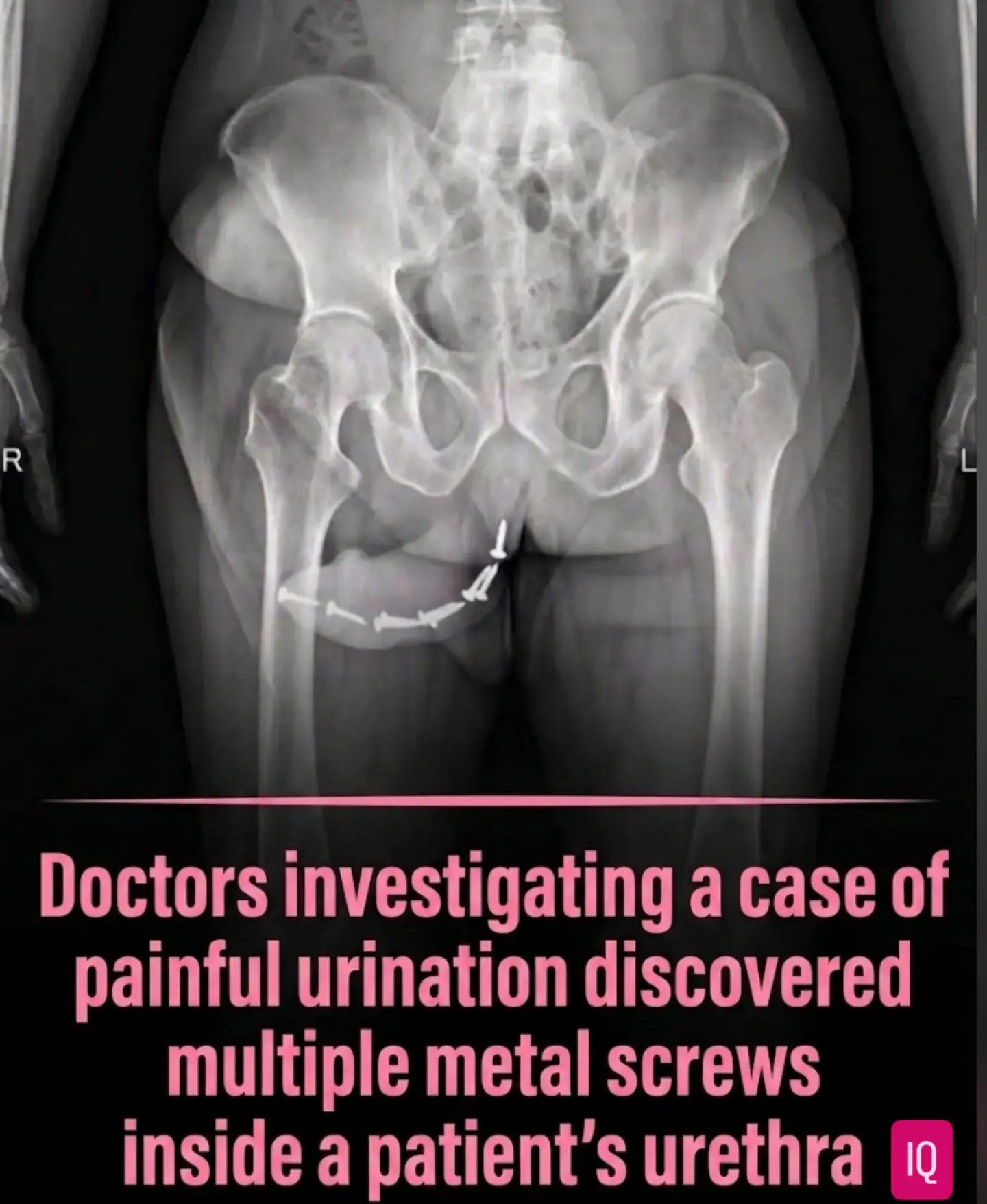
Foreign Objects in the Urinary Tract: The Case of Metallic Screws in the Urethra
Foreign bodies in the urogenital tract, while uncommon, present unique challenges in clinical practice. A recent medical case underscores this complexity, revealing an unusual scenario involving metallic screws lodged within a patient's urethra.
What is a Foreign Object in the Urogenital Tract and Why is it Unusual?
Foreign bodies in the urogenital tract refer to any objects that are not naturally present in the urinary or genital organs. These objects can range from small toys and household items to more unusual items like screws. The presence of foreign bodies in the urinary tract is not common, and when they do occur, they often present unique diagnostic and therapeutic challenges.
Common Causes
In most cases, foreign bodies in the urinary tract are introduced purposefully, often due to psychiatric factors, deliberate self-harm, or sexual experimentation. The external urethral meatus is the most typical entry point for these objects. The decision to investigate this particular case was prompted by the patient reporting severe symptoms, including acute dysuria (painful urination), hematuria (blood in the urine), urinary retention, and localized perineal pain.
Unusual Discovery
The discovery of multiple metallic screws in a patient's urethra is an exceptionally rare finding. These screws were lodged within the anterior and posterior urethra, as revealed by a pelvic X-ray. This finding is unusual due to the nature of the objects, their location, and the potential risks they pose.
The Clinical Presentation and Risks
Severe Symptoms
Patients with foreign bodies in the urinary tract often present with severe symptoms. These can include:
- Acute Dysuria: Painful urination, which can be debilitating for the patient.
- Hematuria: Blood in the urine, indicating trauma or infection.
- Urinary Retention: Inability to empty the bladder completely.
- Localized Perineal Pain: Discomfort or pain in the area between the anus and the scrotum or vagina.
Potential Complications
The presence of foreign bodies in the urinary tract can lead to several complications if left untreated. These include:
- Mucosal Laceration: Tears in the mucous membranes of the urinary tract.
- Stricture Formation: Narrowing of the urethra, which can obstruct urine flow.
- Severe Infection: Bacterial infections that can spread to other parts of the body.
- Long-term Erectile and Urinary Dysfunction: Persistent issues with sexual function and urinary control.
Management and Treatment
Immediate Intervention
Management of foreign bodies in the urogenital tract requires immediate urological intervention. The choice of treatment depends on the size, mobility, and sharp edges of the objects.
Endoscopic Retrieval Techniques
Endoscopic retrieval techniques, such as cystourethroscopy, are often used to remove foreign bodies. This minimally invasive procedure involves inserting a thin tube with a camera and tools through the urethra to retrieve the objects.
Open Surgical Incision
In some cases, open surgical incision (urethrotomy) may be necessary. This procedure involves making an incision in the urethra to remove the foreign body, especially if it is large, sharp, or deeply lodged.
Practical Tips for Healthcare Professionals
Early Diagnosis
Early diagnosis is crucial in managing foreign bodies in the urinary tract. Healthcare professionals should be vigilant in assessing patients presenting with unexplained urinary symptoms and consider the possibility of foreign body insertion.
Patient Education
Educating patients about the risks and potential complications of inserting foreign objects into the urogenital tract is essential. This can help prevent such incidents and reduce the need for invasive procedures.
Specialized Training
Healthcare professionals should undergo specialized training in endoscopic retrieval techniques and open surgical incision procedures to effectively manage these cases.
Important Takeaways
- Foreign bodies in the urogenital tract are rare but can cause severe symptoms and complications.
- Common causes include psychiatric factors, deliberate self-harm, or sexual experimentation.
- Immediate urological intervention is necessary to mitigate risks and complications.
- Early diagnosis, patient education, and specialized training are essential for effective management.
Conclusion
The case of metallic screws lodged within a patient's urethra highlights the complex and challenging nature of managing foreign bodies in the urogenital tract. By understanding the causes, symptoms, and appropriate management techniques, healthcare professionals can better address these issues and improve patient outcomes.
Questions readers ask
What are the most common symptoms of foreign bodies in the urethra?
Symptoms can include severe pain during urination, frequent urination, blood in the urine, and discomfort in the pelvic area. In severe cases, it may lead to urinary tract infections or other complications. Always consult a healthcare professional if you experience these symptoms.
How are foreign bodies like metal screws typically discovered in the urethra?
Foreign bodies in the urethra are often discovered through imaging tests such as X-rays or CT scans. These tests can reveal the presence and location of metallic objects, aiding in diagnosis. Sometimes, the discovery is incidental during an examination for other urinary issues.
What are the potential complications of leaving foreign objects in the urethra untreated?
Leaving foreign objects in the urethra untreated can lead to serious complications, including infections, tissue damage, and even obstruction of the urinary tract. Prompt removal is crucial to prevent long-term issues and to ensure the patient's well-being.
What methods are used to remove foreign bodies from the urethra?
The removal of foreign bodies from the urethra often involves endoscopic procedures, where a small camera and tools are inserted into the urethra to retrieve the object. In some cases, surgical intervention may be necessary, especially if the object is deeply lodged or causing significant damage.
What precautions can be taken to prevent foreign objects from entering the urethra?
While accidents can happen, being cautious with certain activities and avoiding inserting objects into the urethra can help prevent such incidents. If you or someone else is experiencing severe urinary symptoms, seeking medical attention promptly is essential.
How do healthcare professionals diagnose foreign bodies in the urinary tract?
Diagnosis typically involves a combination of medical history, physical examination, and imaging tests. A detailed medical history can provide clues about the potential cause and nature of the foreign body, while imaging tests like X-rays or CT scans can confirm its presence and location.
Why is the case of multiple metal screws in the urethra considered a medical mystery?
The case is considered a medical mystery due to its rarity and the unique challenges it presents in diagnosis and treatment. The unusual nature of the foreign objects and their presence in the urethra make it a complex scenario for healthcare professionals to manage effectively.
Related deep dives
Similar reads based on topic and creator.




Recent articles
Fresh deep dives from the latest Reels we unpacked.




Comments
Be the first to comment.