Colombian City Transformation
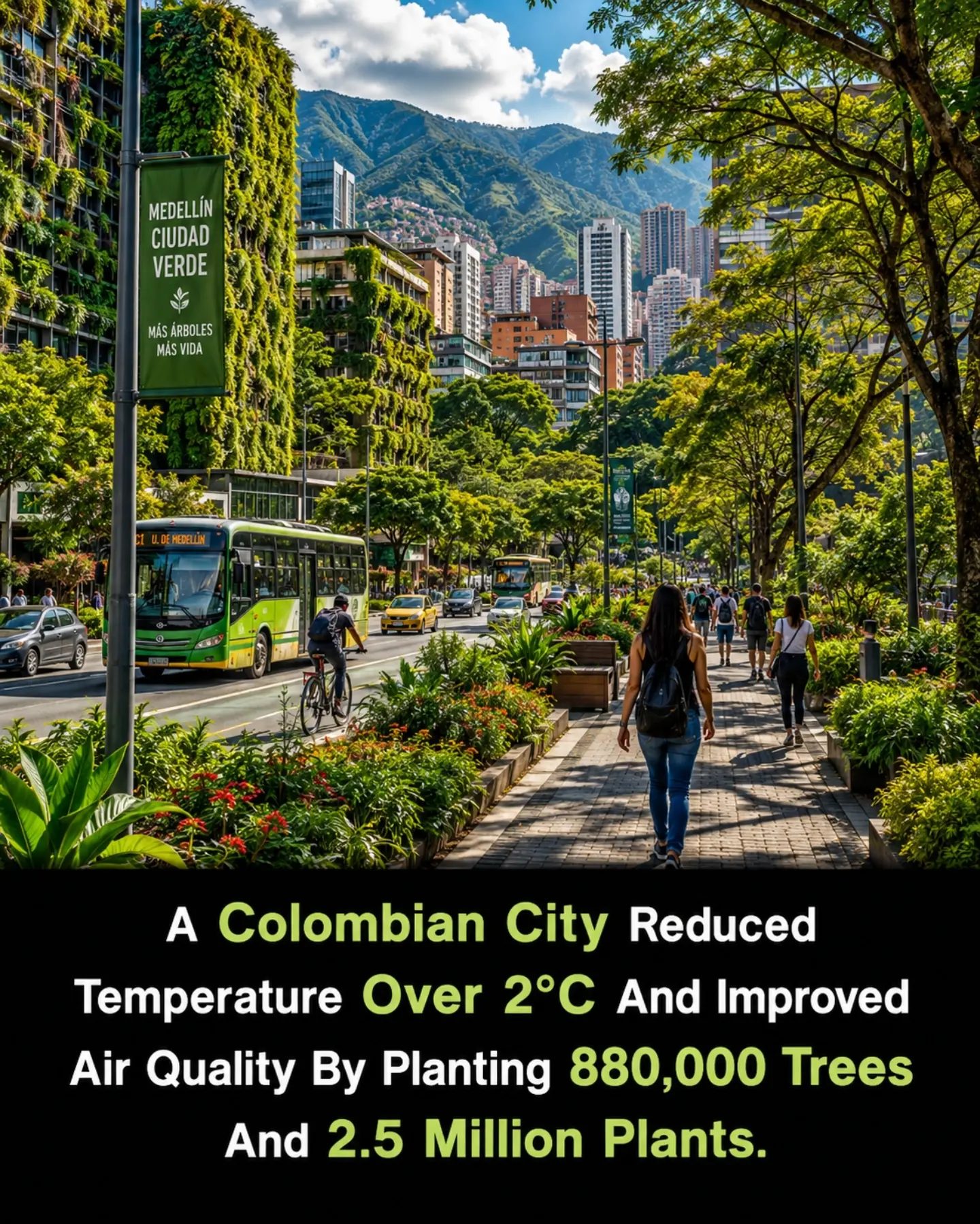
Medellín, Colombia, has been making waves globally with its ambitious environmental initiatives, particularly its transformation into a 'Green City'. The city has strategically employed its urban spaces to plant 880,000 trees and 2.5 million plants, significantly enhancing its urban ecosystem and providing tangible benefits to its residents.
Context / Why this matters
Medellín’s transformation showcases the potential of urban greening initiatives, which are crucial in mitigating the impact of climate change in metropolitan areas. By planting 880,000 trees and 2.5 million plants, Medellín has successfully reduced temperatures and improved air quality. This initiative serves as a model for other cities around the world, demonstrating how urban green spaces can be effectively integrated into city planning to enhance the quality of life and create a sustainable urban ecosystem.
Main Discussion
Urban Greening Benefits
Urban greening initiatives are pivotal in combating climate change and enhancing the quality of life in urban areas. Medellín’s progress has yielded remarkable environmental benefits, including reduced temperatures and improved air quality. These changes not only create a more habitable environment but also foster a sense of community pride and sustainability.
The transformation of Medellín into a 'Green City' underscores the importance of strategic urban planning. By integrating greenery into its infrastructure, the city has managed to:
- Reduce Urban Heat Island Effect: Trees and plants help to lower surface temperatures by providing shade and cooling effects, which are essential in mitigating the urban heat island effect.
- Improve Air Quality: The city's green spaces help to filter out pollutants and absorb carbon dioxide, significantly enhancing air quality and making it healthier for residents.
- Promote Biodiversity: Planting a variety of trees and plants creates a diverse habitat for wildlife, fostering biodiversity within the urban landscape.
Medellin’s Implementation
Medellín’s transformation into a 'Green City' has been a multifaceted approach:
- Large-Scale Planting Initiatives: The city has undertaken large-scale planting initiatives, planting 880,000 trees and 2.5 million plants across its urban areas. These initiatives include urban parks, gardens, and green corridors, which have significantly enhanced the city’s aesthetic appeal and environmental health.
- Public Participation: The city’s success can also be attributed to public participation and community involvement. Residents have actively supported these initiatives, contributing to the city’s greening efforts and fostering a sense of ownership and responsibility.
Future Plans
Medellín’s urban greening initiatives are an ongoing effort, and the city has outlined further plans to expand its green spaces. Future initiatives include:
- Green Roofs and Walls: Implementing green roofs and walls on buildings can further enhance urban greenery while providing insulation and energy efficiency.
- Ecosystem Restoration: The city plans to restore natural ecosystems within its urban boundaries, which will help in conserving biodiversity and creating more sustainable urban landscapes.
- Community Engagement: Future plans also involve increasing community engagement and awareness about the importance of urban greening, encouraging residents to actively participate in these initiatives.
Practical Tips
Embarking on a similar transformation in other cities involves several practical steps:
- Strategic Planning: Developing a comprehensive urban greening plan that includes planting initiatives, ecosystem restoration, and community engagement.
- Community Involvement: Engaging the community in planning and implementation ensures that the initiatives receive widespread support and active participation.
- Monitoring and Evaluation: Regularly monitoring and evaluating the impact of these initiatives helps in making necessary adjustments and ensuring their effectiveness.
Important Takeaways
Medellín’s transformation into a 'Green City' has yielded substantial environmental and social benefits, making it a model for other cities. The initiative’s success can be attributed to strategic urban planning, large-scale planting efforts, and community involvement. The city’s ongoing initiatives, such as green roofs, walls, and ecosystem restoration, underscore the importance of continuous efforts in creating sustainable urban environments. By following Medellín’s example, other cities can similarly enhance their urban ecosystems, improving the quality of life for their residents and promoting environmental sustainability. Armed with practical tips on strategic planning, community involvement, and evaluation, cities worldwide can embark on or enhance their own greening initiatives.
Conclusion
Medellín’s transformation into a 'Green City' is a testament to the power of strategic urban planning and community participation. By planting 880,000 trees and 2.5 million plants, the city has successfully reduced temperatures and improved air quality, creating a healthier and more sustainable urban ecosystem. The city’s ongoing initiatives and future plans highlight the importance of continuous efforts in urban greening. As Medellín continues to lead the way in sustainable urban development, other cities can draw inspiration and practical lessons from its success, fostering similar transformations and promoting environmental sustainability.
Questions readers ask
How many trees and plants have been planted in Medellín as part of the 'Green City' initiative?
Medellín has planted 880,000 trees and 2.5 million plants as part of its 'Green City' initiative. This extensive planting effort has significantly enhanced the city's urban ecosystem and contributed to its sustainability goals.
What are the primary benefits of Medellín's urban greening initiatives?
Medellín's urban greening initiatives have led to reduced temperatures, improved air quality, and enhanced community pride. These benefits showcase the positive impact of strategic tree planting in urban areas.
How does Medellín's 'Green City' initiative combat climate change?
The 'Green City' initiative in Medellín combats climate change by absorbing carbon dioxide, reducing urban heat island effects, and improving air quality. The strategic placement of trees and plants helps mitigate the environmental impact of urbanization.
What role do the trees and plants play in the 'Green City' initiative?
The trees and plants in Medellín's 'Green City' initiative serve to create a healthier urban environment. They help to reduce temperatures through shade, improve air quality by absorbing pollutants, and provide habitats for local wildlife. Additionally, they contribute to the aesthetic appeal of the city, fostering a sense of community pride.
What is the significance of Medellín's transformation into a 'Green City' for other urban areas?
Medellín's transformation into a 'Green City' serves as a model for urban greening efforts worldwide. It demonstrates how strategic tree planting can lead to tangible benefits, such as improved air quality and reduced temperatures, inspiring other cities to adopt similar initiatives.
What kinds of plants were planted in addition to the trees?
The 'Green City' initiative has planted a diverse array of vegetation types in addition to the 880,000 trees. This includes 2.5 million plants that cover a range of species, helping to create a resilient and biodiverse urban ecosystem. These plants play a crucial role in enhancing the overall greenery of the city and supporting local ecosystems.
How does Medellín's community engage with the 'Green City' initiative?
The 'Green City' initiative in Medellín fosters community pride and engagement. Local residents participate in planting events and benefit from the improved quality of life. The transformation of urban spaces encourages community involvement in maintaining and enjoying the green environment, creating a more connected and eco-conscious populace.
Related deep dives
Similar reads based on topic and creator.

Recent articles
Fresh deep dives from the latest Reels we unpacked.


Comments
Be the first to comment.