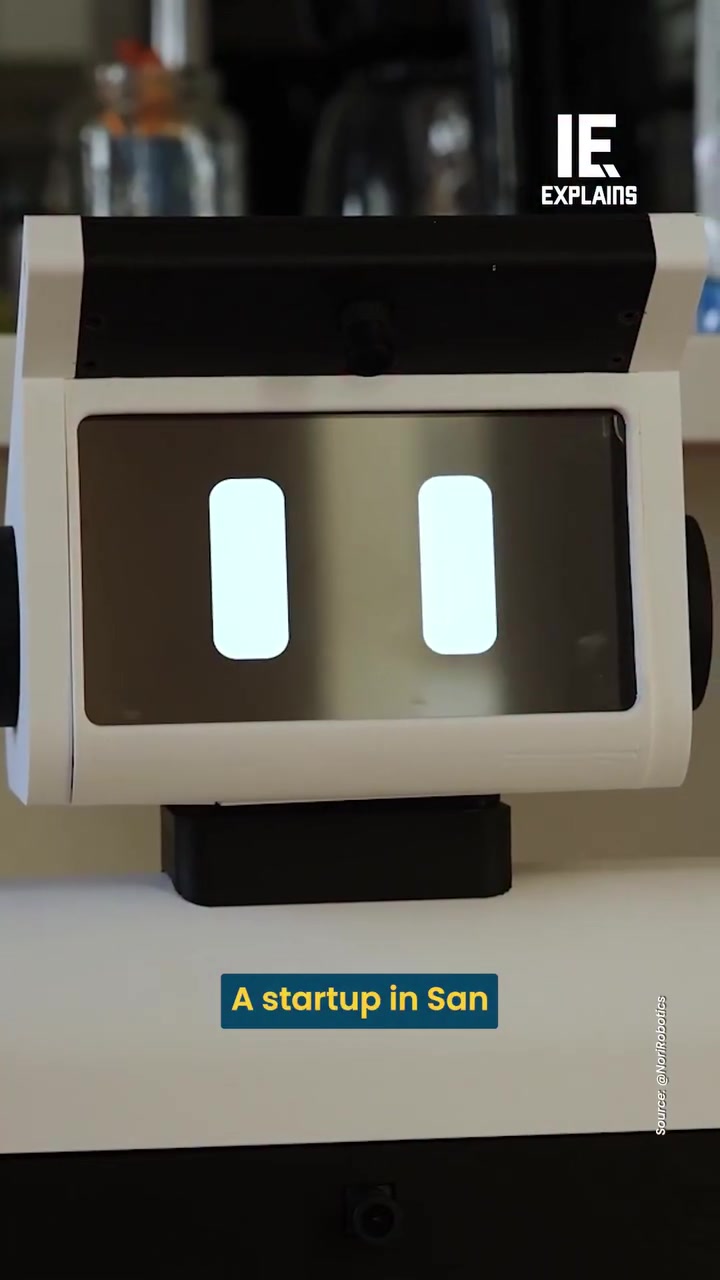
The Nori A3, a $1,688 two-armed robot, has already shipped from Mc/iRobotics, a San Francisco startup. Production began in July, and the eight-hour battery life system on a wheeled base can load a dishwasher, pull food from the fridge, and even offer a drink. Nori A3 is "a cost-disciplined, not an intelligent" robot that can be trained to perform various tasks.
A hardworking duo on wheels
Nori A3 is a two-armed robot designed to tackle domestic chores. The distinctive feature of the A3 is its mobility and manageable size. The robot does not walk but rides on a wheeled base. This design allows it to move around efficiently, navigating the floors, counters, and cabinets of any kitchen. The entire body core lifts and lowers, extending the arms' reach from the floor to at eye level for accessing items in a kitchen. Demos exhibit it pulling food out of the fridge and pouring a drink. The A3 is not just about on-wheeled movement; it is about the functional design of its arms and the coordination between them. The arms can handle about one and a half kilos out at full stretch. Additionally, the lifting column itself is rated for 55 kilograms, showcasing the robot's capability to manage heavier loads when necessary. The Nori A3 is also equipped with 720p cameras on the head, neck, and grippers. This allows the robot to see and interact with its surroundings more effectively. A lidar sensor with a 12-meter range complements the cameras, providing the robot with the ability to map out its environment and navigate obstacles. A speaker and microphone enable voice interaction, allowing users to communicate with the robot.
The learning curve in a home robot
When designing the Nori A3's vision, Mc/iRobotics choice of hardware allowed for a low-cost solution without sacrificing functionality. Requiring a balance between cost and capability. The robot is built for cost discipline, "rather than intelligence." It is built for massive production lines, not personal customization. This approach has enabled Mc/iRobotics to keep the price point of the Nori A3 relatively low, making it more accessible to a broader range of consumers. The clever part is how it learns — You teach it from a laptop app called Nori Lab. Mc/iRobotics is building a skill marketplace where owners can share and download the tasks they have trained the robot to perform. This marketplace allows users to expand the robot's capabilities over time, making it a more versatile tool for domestic tasks. The cost discipline extends to the hardware. The hardware used in the Nori A3 is built to a price that allows for mass production but still needs to be tested hard to ensure reliability and durability. The founder, Antonio Sitong Lee, assembles the robots in San Francisco, but most of the components are sourced overseas. This global sourcing strategy allows Mc/iRobotics to maintain a competitive price point while ensuring the quality and performance of the Nori A3.
The versatility in a compact design
The reach of the robot, i.e., the range of motion, is a crucial aspect of its design. The entire body core lifts and lowers, allowing the arms to reach from the floor up to a kitchen. The robot is designed to interact with various objects and surfaces in a kitchen environment. This range of motion enables the Nori A3 to perform a wide range of tasks, from loading a dishwasher to pulling food out of the fridge. The robot's ability to interact with its surroundings effectively makes it a versatile tool for domestic tasks. The cameras on the head, neck, and grippers provide the Nori A3 with the ability to see its surroundings. This is a crucial aspect of the robot's design, as it enables it to navigate obstacles and interact with objects more effectively. The lidar sensor complements the cameras, providing the robot with a 12-meter range for mapping out its environment. The speaker and microphone allow users to communicate with the robot, making it more interactive and user-friendly.
Where it lives
The Nori A3 is designed to operate in a home environment. The robot's mobility and size make it well-suited for navigating the floors, counters, and cabinets of any kitchen. The eight-hour battery life ensures that the robot can perform tasks for extended periods without needing to be recharged. The robot can be assembled in a real home, showcasing its practicality and ease of use. This is a key differentiator for the Nori A3, as it allows users to integrate the robot into their daily lives more seamlessly.
Owners’ role
An app called Nori Lab allows users to teach the robot new skills. If you are considering purchasing a Nori A3, it is essential to understand the level of interaction and training required to get the most out of the robot. The robot can perform various tasks but requires user input to learn and adapt to new situations. The user is integral to the robot's functionality, and the more time and effort invested in teaching the Nori A3, the more versatile and useful it becomes.
- Understand the Learning Curve: The Nori A3 is designed to learn from user input. Be prepared to spend time training the robot to perform specific tasks.
- Utilize the Skill Marketplace: The Nori Lab app allows users to share and download tasks. Take advantage of the skill marketplace to expand the robot's capabilities.
- Explore Voice Interaction: The robot's speaker and microphone allow for voice interaction. Experiment with voice commands to see how they can be integrated into your daily routine.
Supply chain for a disruptive design
The robot starts assembling in San Francisco. The Mc/iRobotics founder Antonio Sitong Lee oversees much of the assembly. However, a significant portion of the components are sourced overseas. This global sourcing strategy allows Mc/iRobotics to maintain a competitive price point while ensuring the quality and performance of the Nori A3. While the robot's domestic assembly adds a certain level of quality control and customization, its components are sourced from a network of global suppliers.
Questions readers ask
What makes the Nori A3 different from other robots on the market?
The Nori A3 stands out due to its two-armed design, mobility on a wheeled base, and its ability to handle a variety of kitchen tasks. Its distinctive feature is its mobility and manageable size, allowing it to navigate kitchen floors, counters, and cabinets efficiently. The robot can be trained to perform specific tasks, making it versatile for domestic chores.
How does the Nori A3 navigate and interact with its environment?
The Nori A3 is equipped with 720p cameras on the head, neck, and grippers, along with a lidar sensor that has a 12-meter range. These sensors allow the robot to map out its environment, navigate obstacles, and interact more effectively with its surroundings. Additionally, it has a speaker and microphone for voice interaction, enabling users to communicate with the robot.
How does the Nori A3 learn new tasks, and how is it trained?
The Nori A3 learns new tasks through a laptop app called Nori Lab, where users can teach the robot specific actions. Mc/iRobotics is also developing a skill marketplace where owners can share and download tasks they have trained the robot to perform, allowing the robot's capabilities to expand over time.
What is the price of the Nori A3, and what factors contribute to its cost?
The Nori A3 is priced at $1,688. Mc/iRobotics focuses on cost discipline rather than advanced intelligence, using hardware designed for mass production. This approach, along with global sourcing of components, helps keep the price point relatively low while ensuring reliability and durability.
What kind of tasks can the Nori A3 perform in the kitchen?
The Nori A3 can perform a variety of kitchen tasks, such as loading a dishwasher, pulling food from the fridge, and pouring a drink. Its two arms and wheeled base allow it to navigate the kitchen efficiently and handle items with a reach from the floor to eye level.
Related deep dives
Similar reads based on topic and creator.

Recent articles
Fresh deep dives from the latest Reels we unpacked.




Comments
Be the first to comment.