Housing Affordability
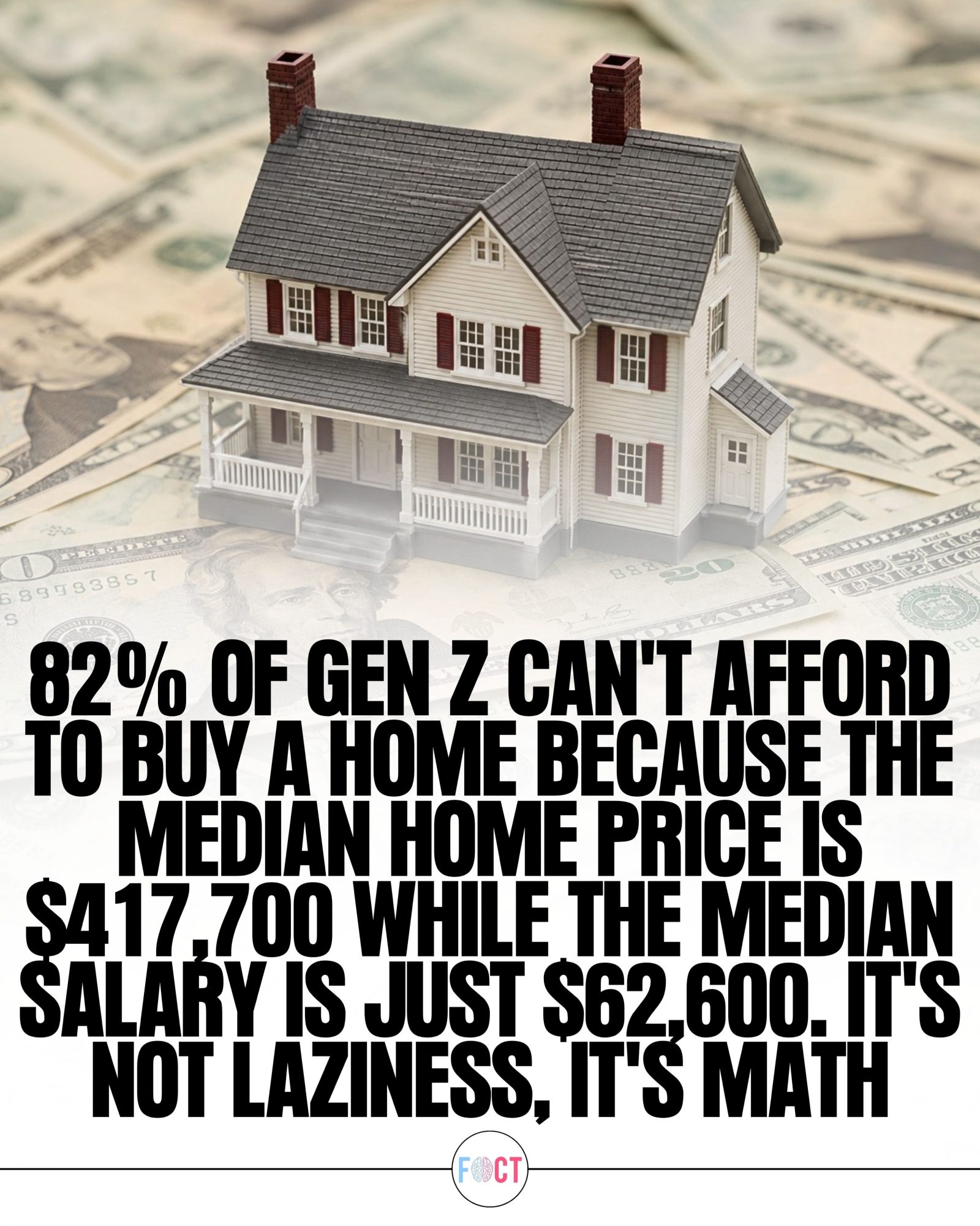
The median home price in the United States now sits at $417,700, while the median annual income is $62,600. This gap highlights a critical issue: the rising cost of housing is outpacing wage growth, making homeownership increasingly unattainable, particularly for younger generations. Gen Z is hit especially hard, with 82% of them unable to afford to buy a home. This disparity is not just an isolated issue; it reflects a broader trend that affects many young Americans.
Why This Matters
Housing affordability is a central concern for economic stability and personal well-being. The ability to own a home has historically been a key marker of financial success and security. However, the rising cost of homes and stagnant wages have made homeownership a distant dream for many.
The median age of first-time homebuyers has risen to 40, a record high. This trend indicates that younger generations are not only struggling to afford homes but are also delaying major life milestones, such as starting a family or settling in a community. The housing affordability crisis is not just an economic issue; it impacts the social fabric of society as well.
The median home price of $417,700 means that buyers need to earn more than $111,000 per year to afford a typical home, according to Redfin. This figure is more than 70% higher than the median annual income of $62,600. The result is a widening gap between incomes and housing costs, making it more difficult for younger generations to achieve the traditional markers of success.
Understanding the Disparity
The Problem of Rising Home Prices
The median home price has seen significant increases over the past decade. Several factors contribute to this trend, including low housing inventory, high demand, and rising construction costs. When the supply of homes is limited and demand remains high, prices naturally rise. This supply-demand imbalance is exacerbated by zoning laws, regulations, and the limited availability of land for new construction.
Stagnant Wages
On the other side of the equation, wages have not kept pace with the rising cost of living. The median annual income of $62,600 has not seen commensurate growth to match the rising cost of housing. Economic policies and labor market trends have contributed to this stagnation, making it harder for younger generations to save for a down payment or afford monthly mortgage payments.
The Impact on Younger Generations
The affordability crisis disproportionately affects younger generations, such as Gen Z and Millennials. According to the data, 82% of Gen Z cannot afford to buy a home. This group, often labeled as lazy by critics, faces a more significant challenge due to rising education costs, student loan debt, and a competitive job market. The traditional advice to work hard, save money, and build a career no longer guarantees the ability to own a home, and Gen Z is finding the path to homeownership much more difficult than previous generations.
Mathematical Imbalance
The situation is more a mathematical problem than anything else. The gap between the median home price and the median salary is so vast that it creates a significant barrier to entry. For a median salary to comfortably afford a home, it would need to be nearly double the current amount. This mathematical imbalance is not a reflection of laziness or lack of effort but a result of structural economic issues.
Practical Tips for Navigating the Housing Market
Savings and Budgeting
Saving for a down payment is one of the biggest obstacles for young buyers. Budgeting and setting aside a portion of your income regularly can help bridge the gap. Consider automation tools to ensure you consistently save a specific percentage of your income. Additionally, exploring first-time homebuyer programs that offer lower down payment requirements or grants can help make homeownership more accessible.
Financial Planning
Financial planning is crucial for navigating the housing market. This includes understanding your credit score, managing debt, and planning for future expenses. A comprehensive financial plan can help you assess your readiness for homeownership and identify areas where you can improve your financial health.
Exploring Different Options
It's essential to explore different housing options and locations. Consider looking at less expensive areas or alternative housing types, such as condos or townhouses. These options may offer more affordable entry points into the housing market. Additionally, renting with the option to buy can be a viable strategy for those unable to save for a down payment immediately.
Important Takeaways
Economic Policies Matter
The housing affordability crisis highlights the need for economic policies that address the imbalance between housing costs and wages. Policies aimed at increasing housing supply, such as zoning reforms and infrastructure investments, can help alleviate the pressure on housing prices. Additionally, policies that promote wage growth and financial security can help young Americans achieve homeownership.
Education and Awareness
Education and awareness about financial literacy and housing market trends are crucial. Understanding the factors that influence housing prices and wages can empower young buyers to make informed decisions. Programs and initiatives aimed at promoting financial education can equip younger generations with the knowledge they need to navigate the housing market successfully.
Conclusion
The housing affordability crisis is a complex issue that requires a multi-faceted approach. Addressing the imbalance between housing costs and wages, promoting financial literacy, and exploring alternative housing options can help young Americans navigate the housing market. The challenge is significant, but with the right strategies and policies, homeownership can become a more achievable goal for future generations.
Recent articles
Fresh deep dives from the latest Reels we unpacked.




Comments
Be the first to comment.