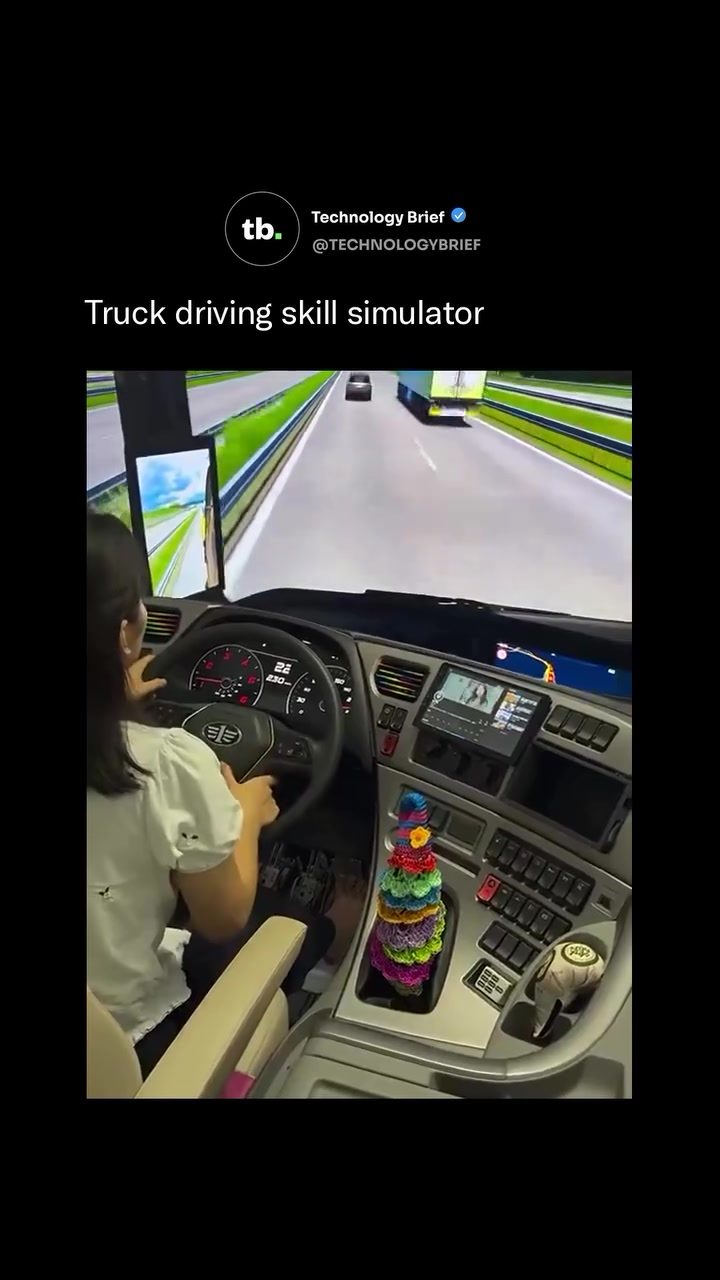
Truck Driving Simulators: A Comprehensive Training Solution
Truck driving simulators offer a unique and critical method for training prospective drivers, delivering a realistic and safe environment to master essential skills. These simulators replicate the full experience of operating a heavy vehicle, allowing trainees to practice steering, gear shifting, horn use, and navigation without ever setting foot on a real road.
Context / Why this matters
The global demand for licensed heavy-vehicle drivers is increasing, and truck driving simulators are becoming a standard component of training programs. These simulators are especially important in vocational schools and commercial driver training programs, where the ability to practice in a controlled environment provides significant advantages.
Cost Efficiency and Safety For the commercial trucking industry, simulator training is a cost-effective solution. It reduces wear and tear on real vehicles and minimizes the risk of accidents during the learning phase. A single simulator can train multiple drivers consecutively without the need for fuel, maintenance, or the risks associated with actual road driving, making it an attractive option for training facilities.
Preparation for Real-World Scenarios The simulators are designed to cover a wide range of driving scenarios, from basic highway driving to more demanding conditions like muddy roads and toll stations. This variety in scenarios ensures that trainees are well-prepared for any situation they might encounter on the job. The detailed feedback provided by the simulator helps build consistent and safe driving habits, which is crucial for truck drivers.
Main discussion
Realistic Experience and Authentic Controls
Truck driving simulators are built with authentic controls to mimic the experience of real driving. The cabins feature detailed dashboards, steering wheels, and multi-screen displays that show virtual highways, creating a near-realistic training environment.
Instant Feedback and Performance Tracking
At the end of each session, the simulator system scores the trainee and logs every mistake. It provides detailed explanations for any deducted points, offering instant, detailed feedback that traditional driving lessons often cannot match. This feature is particularly useful for identifying areas where a trainee needs improvement, allowing for targeted practice and skill development.
Safe and Controlled Environment
The primary advantage of truck driving simulators is the safe and controlled environment they provide. Trainees can practice driving in various conditions without the risk of accidents, making it an ideal solution for training. Additionally, the simulator's ability to simulate different environments and scenarios allows for a comprehensive training experience.
Global Reach and Manufacturing
China is one of the world's largest manufacturers of truck driving simulators, producing models used in vocational schools and commercial driver training programs across many countries. This widespread use underscores the simulator’s effectiveness as a training tool, and increasing global demand for licensed heavy-vehicle drivers is also driving the growth of this industry.
Beyond Basic Driving
Truck driving simulators are designed to cover a wide range of driving scenarios, far beyond basic highway driving. These include handling muddy roads, navigating through toll stations, and other challenging conditions. This variety ensures that trainees are well-prepared for any situation they might encounter in real-world driving, from navigating through different weather conditions to handling complex highway systems.
Practical tips
Choose the Right Simulator
When selecting a truck driving simulator, look for models that offer a wide range of scenarios and realistic controls. The more authentic the experience, the better prepared the trainees will be for real-world driving situations.
Focus on Feedback
Take advantage of the simulator's instant feedback feature. Encourage trainees to review their performance meticulously and focus on the areas where improvement is needed.
Incorporate Varied Scenarios
Ensure that the training program includes a mix of scenarios, from basic highway driving to more complex and challenging conditions. This variety will help build a well-rounded set of driving skills.
Integrate Simulator Training with Real-World Practice
While simulators provide a realistic training environment, combining them with real-world driving practice can enhance learning. The simulator training can serve as a preparatory phase, with real-world practice reinforcing the skills learned in the simulator.
Important takeaways
- Truck driving simulators are crucial for preparing drivers for real-world scenarios without the risks associated with actual road driving.
- Simulator training offers a cost-effective solution by reducing wear and tear on real vehicles and minimizing the risk of accidents.
- The instant and detailed feedback provided by simulators helps trainees improve their skills more effectively than traditional driving lessons.
- Simulators offer a wide range of scenarios, ensuring that trainees are well-prepared for any driving situation they might encounter.
Conclusion
Truck driving simulators are an essential tool in the modern training of heavy-vehicle operators. They provide a safe, controlled, and realistic environment for trainees to practice and improve their skills. With the ability to simulate a variety of driving scenarios and provide instant feedback, these simulators are becoming a standard component of commercial driver training programs worldwide. As the demand for licensed heavy-vehicle drivers continues to grow, the importance of simulator-based training will only increase, making them an indispensable part of the future of trucking.
Questions readers ask
How do truck driving simulators enhance the training process for new drivers?
Truck driving simulators enhance the training process by providing a safe and controlled environment. New drivers can practice essential skills, such as steering, gear shifting, and navigation, without the risks associated with real-world driving. This allows for more focused learning and immediate feedback.
What are the key features of a realistic truck driving simulator?
A realistic truck driving simulator replicates the full experience of operating a heavy vehicle. Key features include accurate steering and gear shifting mechanisms, realistic navigation systems, and scenarios that mimic real-world driving conditions. Some simulators even replicate the sounds, vibrations, and physical sensations of driving a truck.
How do simulators help in mastering commercial driving techniques?
Simulators help in mastering commercial driving techniques by allowing new drivers to practice in various scenarios, including different weather conditions, traffic situations, and road types. This varied exposure helps drivers develop the skills and confidence needed to handle real-world challenges safely and effectively.
Can truck driving simulators reduce the costs associated with training?
Yes, truck driving simulators can significantly reduce training costs by minimizing the need for fuel, vehicle maintenance, and insurance. Since trainees practice in a virtual environment, there is less wear and tear on actual vehicles, and the risks of accidents and related expenses are eliminated.
Are truck driving simulators beneficial for experienced drivers as well?
Absolutely, experienced drivers can also benefit from simulators. They offer a platform to stay updated with new technologies and refine existing skills. Additionally, simulators can be used to practice emergency procedures and advanced techniques in a risk-free environment, thereby enhancing overall driving proficiency.
How do simulators contribute to the safety of new truck drivers?
Simulators contribute to the safety of new truck drivers by allowing them to make mistakes and learn from them without real-world consequences. By practicing in a virtual environment, new drivers can build confidence and gain experience in handling challenging situations, such as hazardous weather conditions and complex traffic scenarios.
What kind of scenarios can be simulated in a truck driving simulator?
Truck driving simulators can simulate a wide range of scenarios, including night driving, adverse weather conditions, heavy traffic, and emergency situations. This variety ensures that drivers are well-prepared for any situation they might encounter on the road, enhancing their overall readiness and competence.
Recent articles
Fresh deep dives from the latest Reels we unpacked.




Comments
Be the first to comment.