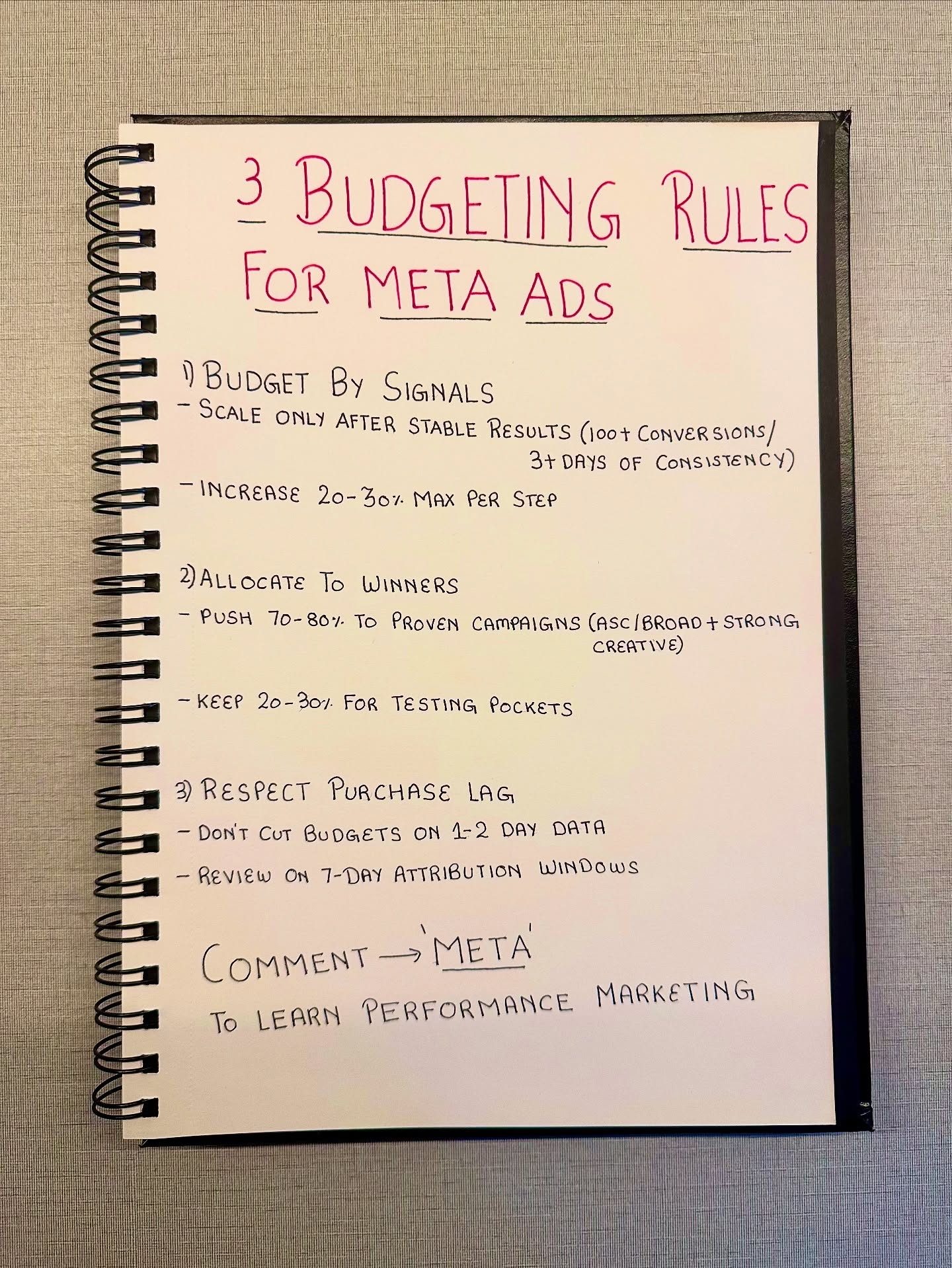
Meta Ads Budgeting
Meta Ads can be a powerful tool for driving sales and leads, but many businesses struggle with budgeting effectively. The common pitfall is treating ad budgets as on-off switches rather than dynamic signals that should guide spending based on performance data.
Why This Matters
Mastering budgeting for Meta Ads is crucial for maximizing return on investment (ROI). Effective budgeting ensures that ad spend is allocated to campaigns that deliver results, rather than wasting money on underperforming ads. Understanding how to scale and allocate budgets based on data-driven insights can significantly improve campaign performance and ROI.
Main Discussion
Budgeting by Signals
Budgeting by signals means using performance data to guide spending decisions. This approach is essential for both e-commerce and lead generation businesses. For e-commerce, the focus should be on conversion density. Push scale only when you see consistent conversion rates—at least 100 orders over 3+ days. Anything less is considered noise and should not influence budget decisions.
Scaling Gradually
Another key aspect is to scale gradually. Increase budgets by no more than 20-30% per step. This measured approach allows you to monitor the impact of additional spending without risking significant losses. By scaling incrementally, you can ensure that each increase in budget is justified by data and not by gut instinct.
Allocating to Winners
Effective budgeting also involves allocating resources to proven campaigns. This means focusing on campaigns that have shown strong performance and delivering consistent results. Allocate 20-30% of your budget to testing new pockets. This helps in identifying new opportunities while ensuring that the majority of your budget is used effectively.
Respecting Purchase Lag
Purchase lag is the delay between when a user sees an ad and when they make a purchase. For lead generation businesses, this lag can be significant, often ranging from 5 to 7 days. Make sure to respect this lag and avoid cutting budgets too soon. Review performance using a 7-day attribution window to get a comprehensive view of campaign effectiveness.
Respecting Purchase Lag
Respecting purchase lag is crucial for accurate performance measurement. Don’t cut budgets based on short-term data points, such as 1-2 day performance. Instead, use a 7-day attribution window to understand the true impact of your ads. By doing so, you ensure that your budgeting decisions are based on a more accurate reflection of ad performance.
Practical Tips
For E-commerce Businesses
- Focus on Conversion Density: Scaling budgets should be based on consistent conversion rates, not sporadic spikes.
- Gradual Scaling: Increase budgets by 20-30% at a time to monitor the impact on performance.
- Test and Validate: Keep 20-30% of your budget for testing new campaigns and creatives to identify future winners.
For Lead Generation Businesses
- Avoid Early Cuts: Don’t cut budgets based on short-term data; leads often convert with a delay.
- Use 7-Day Attribution: Review performance over a 7-day window to get a clearer picture of campaign effectiveness.
Important Takeaways
- Data-Driven Decisions: Budgeting should be guided by performance data, not gut instinct.
- Gradual Scaling: Incremental budget increases allow for better performance monitoring.
- Respect Purchase Lag: Understanding and respecting purchase lag is crucial for accurate performance measurement.
Conclusion
Mastering Meta Ads budgeting is about using data to make informed decisions. By budgeting by signals, allocating to winners, and respecting purchase lag, you can maximize your ROI and ensure that your ad spend is used effectively. Take the time to understand your data, scale gradually, and allocate resources wisely to make Meta work for you, not against you.
Questions readers ask
What does budgeting by signals mean in the context of Meta Ads?
Budgeting by signals in Meta Ads refers to using performance data, such as click-through rates, conversion rates, and cost per acquisition, to inform spending decisions. Instead of evenly distributing your budget, you allocate more funds to the ads and campaigns that are performing well, and reduce spending on those that are underperforming. This approach helps maximize your return on investment (ROI).
How can I determine which Meta Ads campaigns to invest more in?
To determine which Meta Ads campaigns to invest more in, analyze key performance metrics such as return on ad spend (ROAS), cost per click (CPC), and conversion rates. Campaigns with higher ROAS and lower CPC are typically better candidates for increased investment. Additionally, consider the relevance and engagement of the content in these campaigns.
What should I do if my Meta Ads budget is being wasted on underperforming ads?
If your Meta Ads budget is being wasted on underperforming ads, the first step is to pause or reduce spending on those ads. Reallocate the budget to better-performing campaigns. Regularly review and analyze your ad performance data to identify which ads are not delivering results and make data-driven decisions to optimize your spending.
How can I justify increasing my Meta Ads budget?
To justify increasing your Meta Ads budget, you should demonstrate a positive ROI from your current spending. Track and present key performance indicators (KPIs) such as conversion rates, cost per acquisition, and ROAS. Use historical data to show trends of improved performance and how additional budgeting could further enhance these metrics.
What are the benefits of scaling my Meta Ads budget based on performance data?
Scaling your Meta Ads budget based on performance data helps ensure that you are investing in ads that drive results. This approach allows you to optimize your ad spend, reduce waste, and maximize ROI. By continuously monitoring and adjusting your budget, you can identify and capitalize on opportunities for growth while minimizing risks.
How can I optimize the cost of my Meta Ads?
To optimize the cost of your Meta Ads, start by setting clear, measurable goals and using Meta's budgeting tools to allocate resources efficiently. Regularly review and analyze your ad performance, and make adjustments based on the data. Implement strategies like A/B testing to identify which elements of your ads perform best, and use this information to reduce costs and improve effectiveness.
What are some common mistakes to avoid in Meta Ads budgeting?
Some common mistakes to avoid in Meta Ads budgeting include setting a fixed budget without considering performance, failing to monitor and adjust spending regularly, and not using performance data to guide budget allocation. Additionally, it's crucial to avoid spreading your budget too thinly across many underperforming ads, as this can dilute the effectiveness of your overall campaign.
Recent articles
Fresh deep dives from the latest Reels we unpacked.




Comments
Be the first to comment.