Madagascar's Unique Wildlife
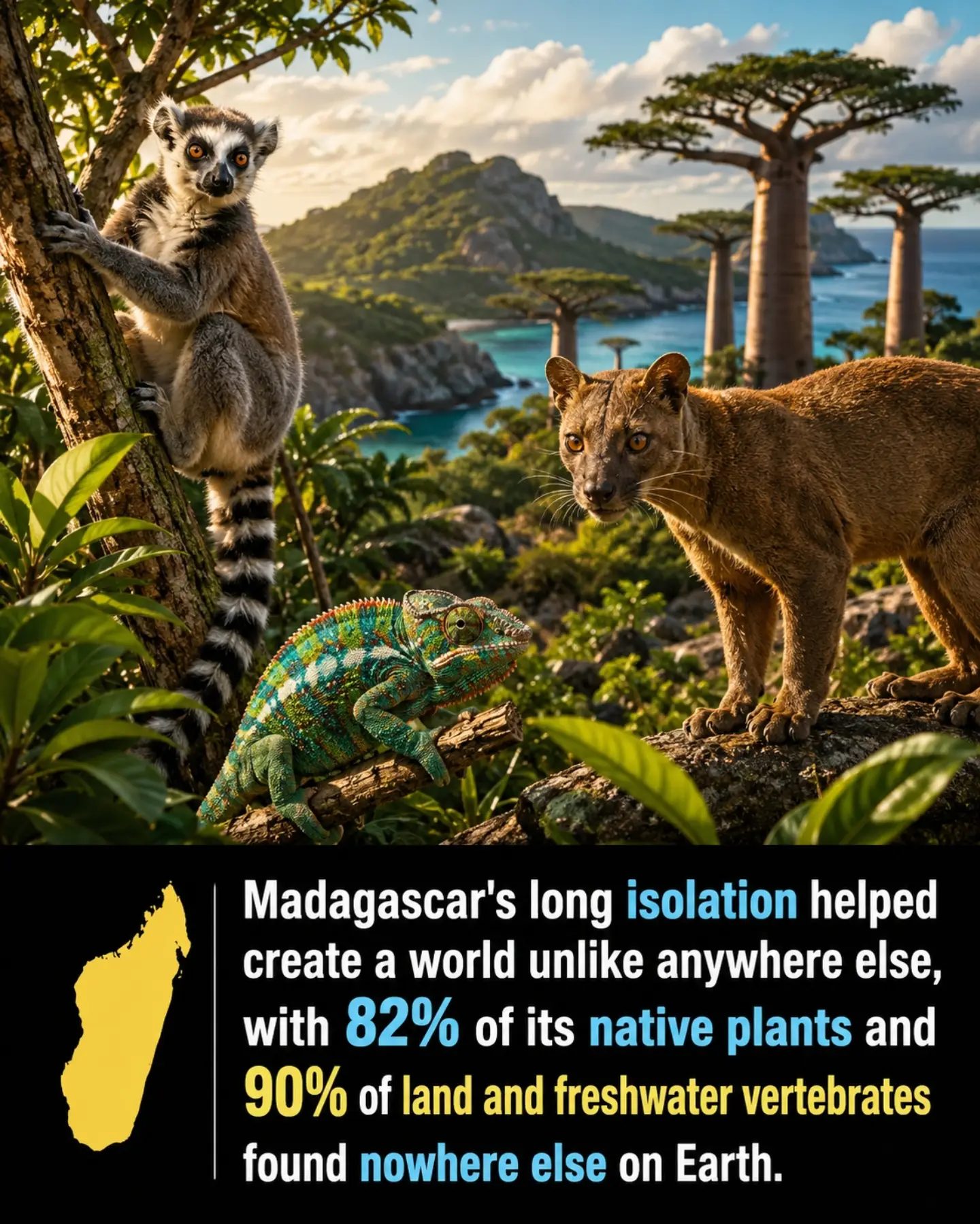
Madagascar, the world's fourth largest island, is renowned for its extraordinary biodiversity. Its long geological isolation from other landmasses has allowed for the evolution of unique and diverse ecosystems. The island's landscapes are home to a vast array of plants and animals, many of which are found nowhere else on Earth.
Why This Matters
Madagascar's geographical isolation has made it a natural laboratory for evolution. The island is home to 82% of its native plants and 90% of land and freshwater vertebrates found exclusively in Madagascar. This high level of endemism makes Madagascar a critical region for biodiversity conservation.
Main Discussion
The Role of Isolation
Madagascar's separation from other landmasses approximately 88 million years ago has been pivotal in shaping its unique flora and fauna. This isolation has allowed species to evolve independently, leading to the development of unique adaptations and characteristics. Consequently, the island's ecosystems have become a treasure trove of biological diversity.
Endemic Species
Native Plants
Madagascar is home to over 12,000 plant species, and over 82% of them are endemic. These include iconic species like the baobab trees, which are some of the oldest and largest trees in the world. The island's diverse microclimates support a variety of ecosystems, from dense rainforests to arid deserts, each with its unique plant life.
Land and Freshwater Vertebrates
Nine out of ten vertebrates found in Madagascar are endemic. The most iconic of these are the lemurs, a group of primates found only on this island. There are over 100 species and subspecies of lemurs, each with unique behaviors and adaptations. Other notable endemic animals include the fossa, a cat-like predator, and the tenrec, a hedgehog-like mammal.
Distinctive Landscapes
Madagascar's landscapes are as diverse as its wildlife. The island's terrain ranges from lush rainforests and dense mangroves to the striking limestone formations of Tsingy de Bemaraha and the rugged peaks of the Tsiribihina River. Each of these unique ecosystems supports a distinct array of plant and animal species.
Rainforests
Madagascar's rainforests, such as the Andasibe-Mantadia National Park, are rich in biodiversity. These forests are home to a variety of endemic plants, amphibians, and reptiles. They also serve as crucial habitats for many lemur species, including the Indri, the largest living lemur.
Dry Deciduous Forests
The dry deciduous forests, found in the western and southern parts of Madagascar, are dominated by drought-resistant plants. These forests are home to unique species like the ring-tailed lemur and the radiated tortoise, which have adapted to the arid conditions.
Desert and Savannah
Madagascar's arid regions, including the Spiny Forest in the southwest, exhibit a unique blend of plants and animals. The drought-resistant flora, such as the octopus tree, supports a variety of reptiles and small mammals. The southern region of Madagascar, characterized by its savannahs and dry forests, is home to the iconic ring-tailed lemur and the verreaux's sifaka.
Practical Tips
Best Places to Experience Madagascar's Wildlife
-
Andasibe-Mantadia National Park: This is one of the most biodiverse areas in Madagascar, home to 11 lemur species, including the Indri and the aye-aye. The park offers guided night walks, allowing visitors to spot nocturnal lemurs.
-
Tsingy de Bemaraha Strict Nature Reserve: This UNESCO World Heritage site features unique limestone formations known as Tsingy, which are home to a variety of endemic species, including the Decken's snouted sifaka and the Tsingy chameleon.
-
Ranomafana National Park: This park, known for its thermal springs and cloud forests, is home to 12 lemur species, including the rare golden bamboo lemur. The park offers guided treks and boat rides through the rainforests.
-
Nosi Be: This small island off the northwest coast of Madagascar is known for its beautiful beaches and coral reefs. It is home to a variety of marine life, including sea turtles and whales.
Important Takeaways
Madagascar's unique wildlife and ecosystems offer a glimpse into the wonders of biodiversity and evolution. The isolation of Madagascar has created a world unlike any other, with a high number of endemic species. Conservation efforts are crucial to preserve these unique ecosystems for future generations. The island’s distinctive landscapes, from dense rainforests to arid deserts, support a vast array of plants and animals, making it a critical region for biodiversity conservation.
Conclusion
Madagascar's unique wildlife and landscapes are a testament to the power of isolation in shaping biodiversity. The island's high level of endemism makes it a crucial region for conservation efforts. Whether you are exploring the dense rainforests of Andasibe-Mantadia or the striking limestone formations of Tsingy de Bemaraha, Madagascar offers an unparalleled opportunity to experience the wonders of the natural world.
Questions readers ask
What makes Madagascar's wildlife so unique?
Madagascar's wildlife is unique due to the island's long-standing isolation from other landmasses. This geographical separation has led to the evolution of distinctive species and habitats, with 90% of its wildlife found nowhere else on Earth. The island's diverse ecosystems provide homes to a vast array of endemic plants and animals.
Why are lemurs significant to Madagascar's biodiversity?
Lemurs are significant to Madagascar's biodiversity because they are found only on this island, representing a unique branch of primate evolution. There are over 100 different species of lemurs, each playing a crucial role in the island’s ecosystems, making them a key focus for conservation efforts.
What are some of the most notable endemic species in Madagascar?
Madagascar is home to a variety of notable endemic species, including various lemurs, chameleons, and baobab trees. The island's unique ecosystems also support a range of endemic birds, reptiles, and amphibians, many of which are critically endangered.
Why is Madagascar considered a global hotspot for conservation efforts?
Madagascar is considered a global hotspot for conservation due to its exceptional level of biodiversity and the high percentage of endemic species. The island's unique wildlife and ecosystems face significant threats from habitat loss and climate change, making conservation efforts crucial for preserving its natural heritage.
What role does geographical isolation play in Madagascar's biodiversity?
Geographical isolation has played a pivotal role in Madagascar's biodiversity by allowing species to evolve in unique ways without competition or interference from other landmasses. This has resulted in a remarkable diversity of life forms, with many species evolving traits and adaptations found nowhere else.
How does the high level of endemism in Madagascar benefit conservation?
The high level of endemism in Madagascar benefits conservation by highlighting the island's unique and irreplaceable biodiversity. This focus helps prioritize resources and efforts towards preserving species and habitats that are found only in Madagascar, ensuring their survival for future generations.
Related deep dives
Similar reads based on topic and creator.

Recent articles
Fresh deep dives from the latest Reels we unpacked.

Comments
Be the first to comment.