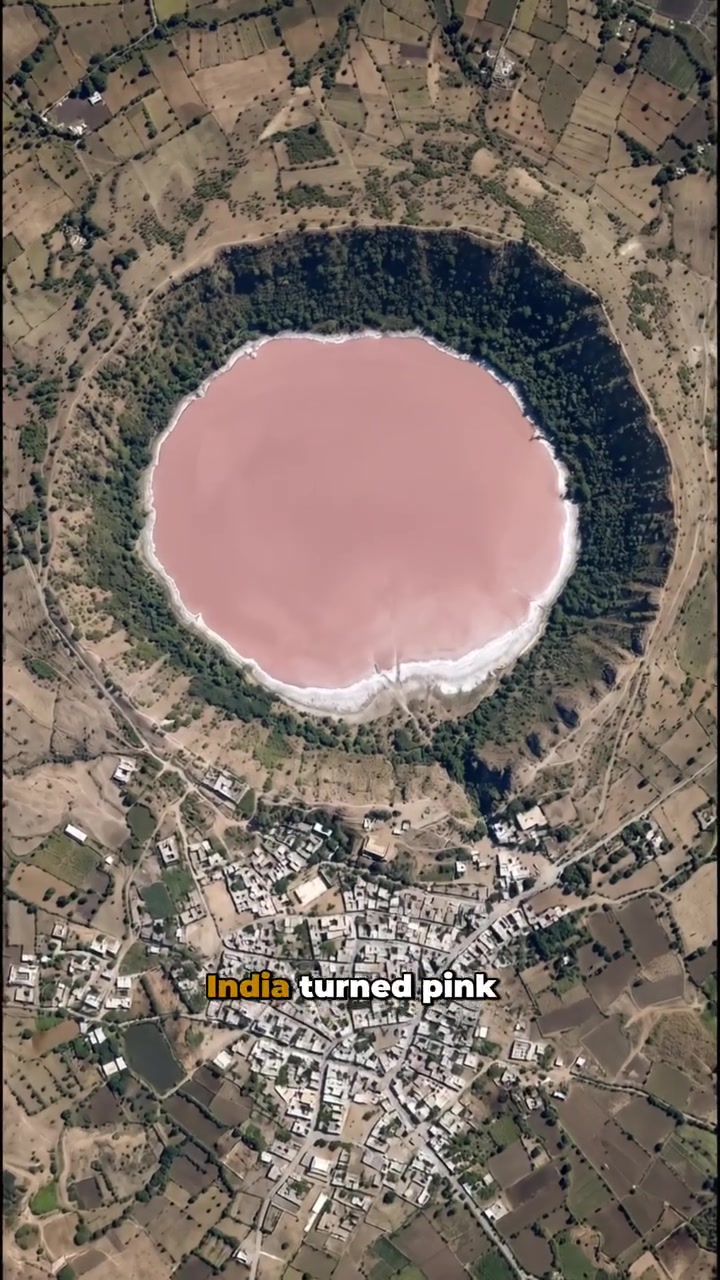
Vital details from a lake so pink it stopped traffic
For centuries explorers have been drawn to the unique natural beauty of the Lonar Lake, or "Lonar Crater," in central India, but a strange occurrence in 2020 brought even more attention; this lake, which normally is a deep blue, turned a shocking pink, almost overnight. But the lake’s appearance isn’t the only odd detail; locals have farmed the edge of this almost-perfect circle for over 100 years, and only recently was it discovered that this formation was created by a meteorite more than 50,000 years ago.
An ancient scar, reborn
The Lonar Lake is the only confirmed impact crater on Earth carved into basalt. Impact craters are formed when a meteorite falls to the Earth’s surface and strikes with immense force, the black basalt around Lonar Lake is one of the main rocks covering Mars, making this geological formation valuable. Initially thought to be a volcanic crater, it was mistakenly classified for more than a century. In fact, the entire region of Mahastra, India, is made up of hundreds of feet of black basalt, much like the surface of Mars. The sudden appearance of pink specifically sparked a lot of talk in 2020. Scientists believe it may be due either to a rise in salt content in the water or an increase in algae. The actual reason is less clear, but it is certain that the change has had a positive effect: the lake itself has become one of the most popular tourist destinations in the region. Both the blue and pink versions lend it a unique beauty, and visitors are eager to see the crater that they have been hearing about for years. The importance of this geological formation cannot be overstated, and it has been compared to Jezero Crater, the site of the Perseverance Rover’s landing on Mars. In fact, the Lonar Crater is used to train scientists for their missions to Mars.
Geology got a glow-up
The drama of a meteorite strike
The Lonar crater was formed around 50,000 years ago. While it was mistakenly thought to be a volcanic crater for a long time, the discovery of rocks that were crushed by a pressure that no volcano on Earth could produce, has shed light on its origins. Rocks like these are known as “impact rocks” and were found when deep drilling was done around the crater. The next time you see a basalt-covered region, you might be looking at the remnants of impact rock from a meteorite.
Surprising destinations for Mars research
Mars on Earth
These impact rocks have been compared to the rocks found in the Jezero crater on Mars. When the Perseverance rover landed, researchers began a more in-depth study of this site. Researchers visit the Lonar Lake as well as the Jezero Crater to train for missions on Mars. “The whole region is old lava, hundreds of feet of black basalt,” scientists studying the site confirmed. These same rocks cover Mars. But many surprises were found near the crater: farmers lived and worked on the edge of an impact crater — one that was formed when a meteorite hit the Earth.
What makes a crater special?
This impact crater is distinctive in several ways, but the most surprising is its water. Lake Lonar is a soda lake, or alkaline lake, which means that the salinity and alkalinity are high. The lake is rich in sodium carbonate and sodium bicarbonate salts, making it alkaline. Because it looks so distinctive, and because it’s not a typical volcanic crater, the lake almost always draws attention. This lake has one of the highest salinity concentrations and alkalinity levels, a natural beauty that has drawn scientists and visitors from around the world, though they have not discovered its true beauty until a few years ago.
Heed the call of the crater
The Lonar Lake’s dramatic appearance is just waiting for visitors. Whether you want to see the pink water, study the crater, or experience the unique surroundings, such as the algae that serve as a food for the local birds and fish, this is a unique place to spend a day in the beauty of nature.
- A drone ride: View the crater from above, just as those who first discovered the pink lake did. Some tours are available to see the entire crater from the sky and really give you a good look at the land.
- Hiking and exploring: Walk and explore around the Ancient Lake Lonar. It is a popular destination for tourists who want to see the crater up close. There are also trails and other natural beauty in the area that you can discover.
- Nature photography: This is a perfect area to capture the best shots of nature. The uniqueness of the geological formation and the beauty of the lake are special to capture and remember.
Questions readers ask
What caused the Lonar Lake to turn pink in 2020?
The exact cause of the pink color is still debated, but scientists suggest it might be due to a rise in salt content or an increase in algae. The change definitely made the lake more popular among tourists, and locals have been taking advantage of the unique phenomenon.
What makes the Lonar Crater unique geologically?
The Lonar Crater is unique because it is the only confirmed impact crater on Earth carved into basalt, a type of rock that also covers much of Mars. This makes it a valuable site for geologists and astrobiologists. The crater was initially thought to be volcanic, but rock samples revealed that it was formed by a meteorite strike, making it a distinctive and important geological feature.
How do scientists use the Lonar Crater to prepare for Mars missions?
Scientists use the Lonar Crater as a training site for Mars missions because the basalt rocks found there are similar to those on Mars. The crater's unique composition and history make it an excellent analog for studying potential Martian environments, and it has been compared to the Jezero Crater, where the Perseverance Rover is currently exploring.
Is it possible to visit the Lonar Crater, and what can visitors expect to see?
Yes, the Lonar Crater is a popular tourist destination, especially since the lake turned pink. Visitors can see the unique geological features of the crater, as well as the striking blue or pink waters of the lake, depending on the time of year. The surrounding area is also home to local farms, adding to the overall experience.
What is the significance of the Lonar Crater's basalt composition?
The basalt composition of the Lonar Crater is significant because it is the same type of rock that covers much of Mars. This makes the crater a valuable site for studying potential Martian environments and preparing for future missions to the red planet. The basalt also provides clues about the crater's origins and the history of the region.
What are impact rocks, and how were they discovered at the Lonar Crater?
Impact rocks are rocks that have been crushed by the immense pressure of a meteorite strike. They were discovered at the Lonar Crater through deep drilling, which revealed rocks that could not have been formed by a volcano. These rocks provided evidence that the crater was formed by a meteorite strike, not volcanic activity.
Related deep dives
Similar reads based on topic and creator.



Recent articles
Fresh deep dives from the latest Reels we unpacked.




Comments
Be the first to comment.