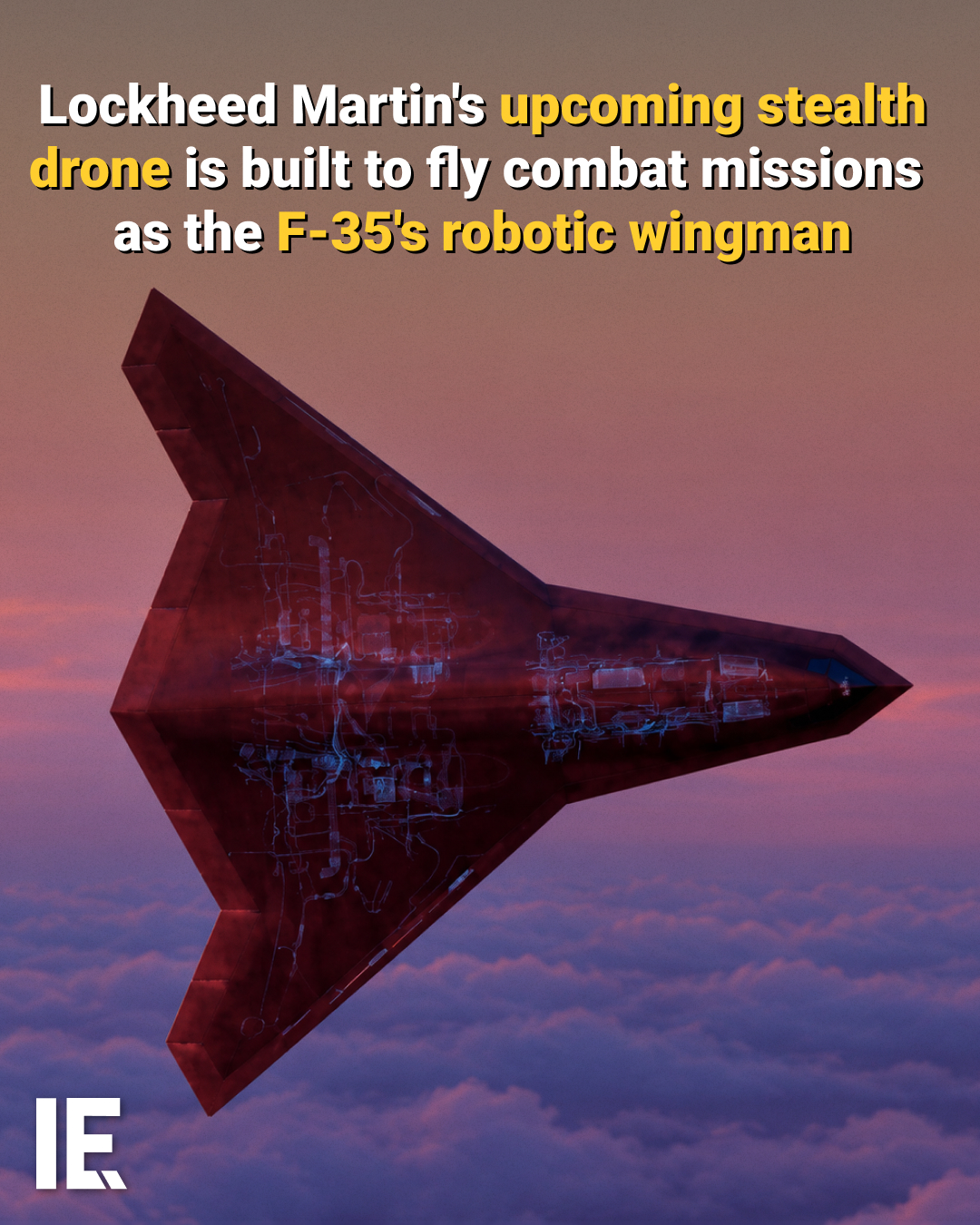
Lockheed Martin's New Stealth Drone
Lockheed Martin is unveiling their latest military technological innovation, the stealth drone. Designed for combat missions, the drone will serve as a "robotic wingman" for the U.S. military's F-35 fighter jet. This new piece of technology marks a significant development in military aircraft technology and promises to revolutionize modern warfare.
The Rise of Drone Technology in Military Strategy
The introduction of the Stealth Drone marks another step in the ongoing evolution of military technology. The drone is a clear manifestation of the trend toward advancing automation in defense, which is driven by the need for enhanced capabilities and reduced crew exposure. Although the F-35 has numerous capabilities of its own, the drone targets plays into automation and reduces the need for human beings to be present in dangerous situations. Drone technology is increasingly integral to military strategy, offering both reconnaissance and combat abilities. Over the past decade, the United States has invested heavily in drone technology to enhance its military capabilities, with projects like the F-23 & F-35 Jet already in action. This drone, the robotic wingman, represents significant potential in the F-35's capabilities. As military technology advances, drones like this stealth drone will become even more integral to combat strategy. The military is significantly investing in drone technology to enhance reconnaissance and combat abilities. Drone technology is a game-changer in how military operations are undertaken. Autonomous flying robots equipped with sophisticated weaponry can infiltrate enemy territory and strike targets with precision. Stealth drones are designed to avoid detection, enabling them to carry out covert missions and avoid the problems that come from traditional flying capabilities.
The Fusion of stealth and Automation
The Robotic Wingman's Form and Function
Stealth and automation are the core principles underpinning Lockheed Martin’s new drone, developed for the purpose of serving as the F-35 fighter jet's robotic wingman. The drone is designed to provide assistance and support to the F-35 jet in combat missions. The drone serves as a silent companion, carrying out tasks such as suppression and reconnaissance missions. The addition of this drone will enhance the F-35's capabilities and extend its range as well as its functionality.
Engineering a Silent and Cloaked Weapon
Lockheed Martin's innovative engineering has resulted in a drone that combines stealth and advanced combat capabilities. The drone's design allows it to go undetected during missions, thanks to its stealth properties. These qualities are essential for avoiding enemy radar and completing missions discreetly. The drone is equipped with a variety of sensors and communication devices that enable it to carry out its tasks autonomously.
Drone Performance and Results
The drone's subtle form and abilities give it incredible precision and versatility. It is an essential tool for upcoming combat which adds to the F-35's existing capabilities. It can be employed in both tactical and strategic missions, ranging from reconnaissance to ground attack. This drone is aimed to be the ultimate weapon. The stealth drone is a significant advancement in military technology as it is designed to be undetectable during combat missions. This feature enables the drone to carry out its tasks without being detected by enemy radar or other detection systems. The drone is equipped with a variety of sensors and communication devices that enable it to carry out its tasks autonomously. The drone provides support for multiple functions, including reconnaissance and suppressive fire against enemy forces. The drone's superior stealth technology makes it effective in carrying out covert missions.
The Versatile Drone for Combat
The drone is designed to conduct a range of missions, from reconnaissance to direct combat support. These aircraft are currently in development and are scheduled to be extensively tested before being deployed. It can fly alongside a manned fighter jet, making it a useful wingman. The drone is designed to be a versatile tool for combat. The stealth drone is designed to be undetectable during combat missions. The drone's superior stealth technology makes it effective in carrying out covert missions.
The Practicality of combating drone technology
If you are a Lockheed Martin employee, or eager to see advancements in military technology, acquiring this stealth drone is a no brainer. This drone unlocks countless possibilities to achieve more sophisticated combative practices. There is little information available on the drone's current uses. 15–20% of the drone’s use is already being utilized for military purposes.
- The stealth mission: This drone is engineered to be undetectable, making it perfect for covert operations. Its sensors and communication devices are state-of-the-art, providing precise data and real-time information to the F-35 jet.
- Combat preparedness: The drone's autonomous capabilities enable it to carry out a range of missions, from reconnaissance to direct combat support. The drone can fly alongside manned fighter jets, providing additional firepower and tactical support.
- Versatility: The drone can be employed in a variety of missions, from reconnaissance to ground attack. Its stealth capabilities make it an ideal tool for covert operations, while its advanced sensors and communication devices provide real-time information and tactical support to the F-35 jet.
The Future of Military Power
Stealth drones represent the cutting edge of military technology, with Lockheed Martin at the forefront of innovation. This drone is a testament to the company’s commitment to advancing military capabilities and enhancing the safety and effectiveness of combat operations. The new drone will serve as an essential tool for future military operations, enhancing the capabilities of the F-35 and other military assets. The technology showcased in the drone will be critical in shaping the future to reduce human involvement in the battlefield. This will allow the drones to handle most of the combat responsibility.
Questions readers ask
How exactly does the stealth drone enhance the F-35's capabilities?
The stealth drone serves as a robotic wingman, providing additional support during combat missions. It can handle tasks like suppression and reconnaissance, effectively extending the F-35's range and functionality. Additionally, its stealth capabilities allow it to operate undetected, adding a layer of covertness to missions.
What kind of sensors and communication devices does the drone have for autonomous operations?
The drone is equipped with a variety of sensors and communication devices, although the article does not specify which ones. These technologies allow it to carry out its tasks autonomously, including navigating, detecting targets, and maintaining communication with the F-35. The exact details of these systems are likely proprietary and not publicly disclosed.
How does the drone's stealth technology work to avoid detection?
The drone's stealth technology is designed to minimize its radar signature, making it difficult for enemy detection systems to spot. This involves a combination of advanced materials, aerodynamic design, and potentially active countermeasures that can disrupt or confuse enemy radar signals.
How does the drone's design contribute to its stealth capabilities?
The drone's design incorporates elements that reduce its radar cross-section, such as smooth surfaces and specific shapes that deflect radar waves. Additionally, its materials may absorb or scatter radar signals, further enhancing its stealth properties. The exact design specifics are likely classified, but the overall effect is a drone that can operate undetected in hostile environments.
What kind of missions can the stealth drone undertake to support the F-35?
The stealth drone can perform a range of missions, including suppression of enemy air defenses (SEAD) and reconnaissance. Its stealth capabilities allow it to infiltrate enemy territory undetected, providing valuable intelligence and disrupting enemy communications or defenses without putting human pilots at risk.
What is the drone's expected impact on future military operations?
The stealth drone is expected to significantly enhance military capabilities by providing covert support to combat missions. Its ability to operate autonomously and undetected will allow for more precise and less risky operations, potentially reducing casualties and increasing mission success rates.
Are there any potential drawbacks or limitations to using this stealth drone?
While the drone offers numerous advantages, potential drawbacks could include reliance on advanced technology that might be vulnerable to cyber threats or electronic warfare. Additionally, the drone's effectiveness could be limited by its dependency on communication with the F-35, as any disruption in this link could compromise its operational capabilities.
Related deep dives
Similar reads based on topic and creator.




Recent articles
Fresh deep dives from the latest Reels we unpacked.

Comments
Be the first to comment.