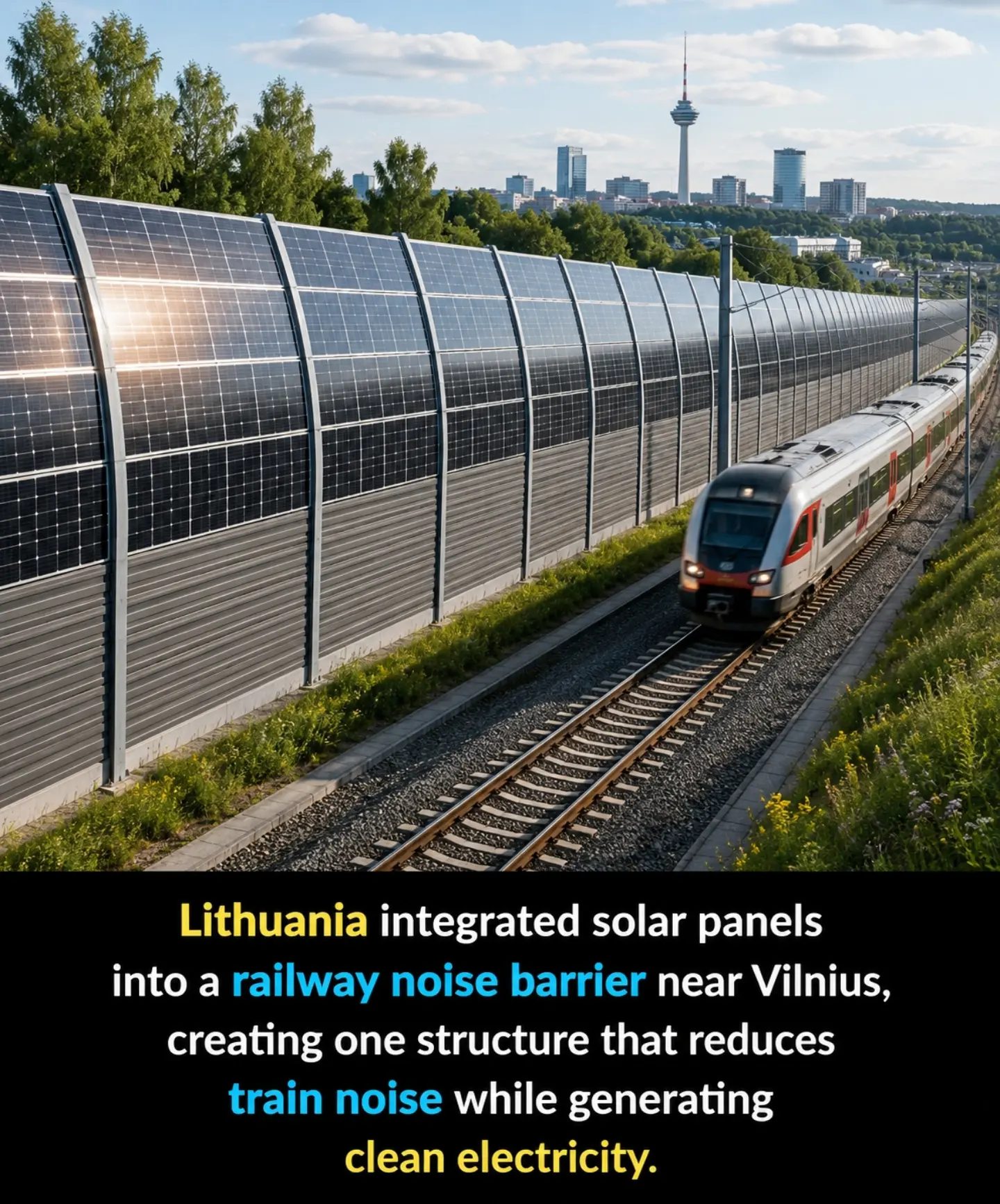
Sustainable Solutions: Solar Powered Noise Barriers
In the heart of Lithuania, a remarkable infrastructure project has seamlessly integrated solar panels into a railway noise barrier, creating a dual-functioning structure that not only reduces train noise but also generates clean electricity. This innovation is a testament to how modern engineering can address multiple challenges with a single, efficient solution.
Why This Matters
The integration of solar panels into noise barriers represents a significant leap forward in urban planning and environmental sustainability. As cities grow denser and transportation networks expand, managing noise pollution and energy consumption becomes increasingly important. This project near Vilnius demonstrates a practical approach to tackling these issues head-on, setting a precedent for other urban centers around the world.
The Dual Functionality of Solar Powered Noise Barriers
Noise Reduction
Noise pollution from trains is a long-standing issue in urban areas, affecting the quality of life for residents living near railway lines. Traditional noise barriers are effective but serve a single purpose. By integrating solar panels into these structures, Lithuania's project enhances their functionality, creating a more efficient use of urban space.
Clean Energy Generation
The solar panels installed on the noise barriers harness the power of the sun to generate clean, renewable electricity. This not only reduces the carbon footprint of the railway infrastructure but also contributes to the overall energy grid, providing a sustainable source of power for local communities. The panels are designed to optimize solar capture, ensuring maximum efficiency in energy production.
Design and Implementation
The design of these integrated structures is meticulously planned to ensure both noise reduction and energy generation are optimized. The panels are positioned to maximize solar exposure while maintaining the barrier's effectiveness in blocking noise. The overall design is sleek and modern, blending seamlessly into the urban landscape.
Practical Tips for Implementing Solar Powered Noise Barriers
Site Selection
Choosing the right location for these barriers is crucial. Areas with high noise levels and ample sunlight are ideal. Conducting a thorough environmental impact assessment will help identify suitable sites and ensure that the installation does not negatively affect local ecosystems.
Engineering Considerations
The structural integrity of the noise barriers must be maintained to support the weight and stress of the solar panels. This may require specialized engineering solutions and the use of high-quality materials to ensure durability and longevity.
Maintenance and Upkeep
Regular maintenance is essential to keep the solar panels and noise barriers functioning optimally. This includes cleaning the panels to maximize solar absorption and regular inspections to address any structural issues. Local authorities should develop a maintenance plan to ensure the longevity and effectiveness of the project.
Important Takeaways
The integration of solar panels into railway noise barriers is a pioneering approach to addressing urban noise pollution and energy needs simultaneously. This project in Lithuania showcases the potential for sustainable urban development and serves as a model for other cities facing similar challenges. By combining noise reduction with clean energy generation, these structures offer a multifunctional solution that benefits both the environment and the community.
Conclusion
The innovative use of solar-powered noise barriers in Lithuania is a shining example of how modern technology can be harnessed to create sustainable and efficient infrastructure. By addressing both noise pollution and energy consumption, these dual-functioning structures provide a practical and eco-friendly solution for urban environments. As more cities adopt similar initiatives, the path toward cleaner, quieter, and more sustainable urban living becomes clearer. This project near Vilnius, Lithuania, is a testament to the power of innovation in creating a better future for urban areas.
Questions readers ask
How do solar-powered noise barriers in Lithuania reduce train noise?
The solar-powered noise barriers in Lithuania are designed to absorb and deflect sound waves, effectively reducing the noise pollution generated by passing trains. The integration of solar panels into these barriers does not compromise their noise-reducing capabilities, making them an efficient dual-purpose solution.
What are the benefits of using solar panels in railway noise barriers?
By embedding solar panels into railway noise barriers, Lithuania generates clean energy while mitigating train noise. This approach not only supports sustainability goals but also optimizes land use in urban areas, as the barriers serve two critical functions simultaneously.
Can solar-powered noise barriers generate enough energy to be useful?
Yes, these barriers can generate a significant amount of clean energy. The exact output depends on various factors such as the size of the solar panels and the amount of sunlight received, but they contribute meaningfully to the local energy grid, especially in areas with high solar exposure.
Where in Lithuania can I find these solar-powered noise barriers?
One of the notable locations for these solar-powered noise barriers is near Vilnius. This area showcases the innovative integration of solar panels into railway infrastructure, highlighting the practical benefits of this dual-purpose design.
What makes Lithuania's solar-powered noise barriers a model for sustainable urban planning?
Lithuania's solar-powered noise barriers demonstrate a forward-thinking approach to urban planning by addressing both noise pollution and energy generation. This innovative solution can serve as a model for other cities looking to enhance their sustainability efforts and improve the quality of life in urban environments.
How do the solar panels in these noise barriers contribute to the local community?
The solar panels generate clean energy that can be used to power local infrastructure, reducing reliance on fossil fuels and lowering carbon emissions. This contributes to a cleaner, greener environment for the community, while also providing a tangible example of how renewable energy can be integrated into everyday infrastructure.
What are the maintenance requirements for solar-powered noise barriers?
Solar-powered noise barriers generally require minimal maintenance, similar to traditional solar panels. Regular cleaning to remove dust and debris, along with periodic inspections to ensure the integrity of the panels and the noise barrier structure, are typically sufficient to keep them functioning optimally.
Recent articles
Fresh deep dives from the latest Reels we unpacked.




Comments
Be the first to comment.