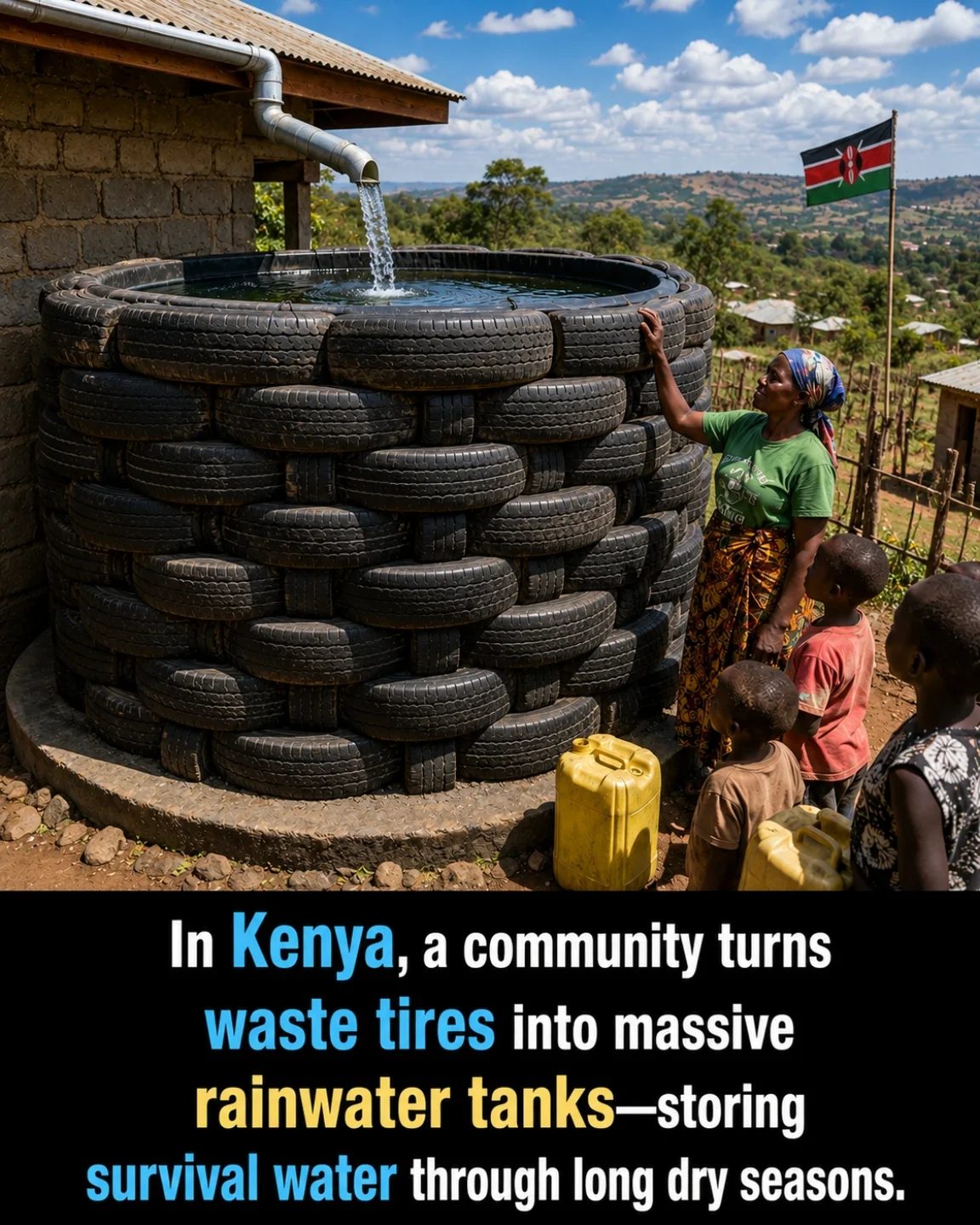
Rainwater Harvesting with Recycled Tires in Kenya
In Kenya, a community has developed an innovative solution for water storage during prolonged dry seasons by repurposing waste tires into massive rainwater tanks. This sustainable approach not only addresses water scarcity but also provides a practical use for discarded tires.
Why This Matters
Water scarcity is a significant challenge, particularly in regions with extended dry seasons. By harnessing rainwater, communities can ensure a steady water supply for various needs, from drinking to agriculture. Additionally, repurposing waste tires helps reduce environmental pollution, turning a problem into a valuable resource.
Harvesting Rainwater with Recycled Tires
The Process of Repurposing Tires
The community in Kenya converts waste tires into large storage tanks for rainwater. This process involves several steps:
- Collection and Preparation: Waste tires are collected and cleaned to remove any debris or contaminants.
- Assembly: The tires are stacked and fitted together to form a tank. This can be done in various sizes depending on the available space and water storage needs.
- Sealing: The gaps between the tires are sealed to prevent water leakage. This can be done using a variety of materials, including concrete, tar, and rubber sealants.
- Installation: The assembled tank is placed in an area where it can efficiently collect rainwater, often near roofs or other elevated structures.
Benefits of Using Recycled Tires
Recycled tire rainwater tanks offer several benefits:
- Sustainability: By repurposing waste tires, the community reduces environmental pollution and conserves resources.
- Durability: Tires are durable and can withstand harsh weather conditions, making them ideal for rainwater storage.
- Cost-Effective: Repurposing tires is a cost-effective solution compared to purchasing new water storage containers.
- Scalability: The size of the tank can be adjusted based on the community's needs, making it a flexible solution.
Community Impact
The impact of this initiative extends beyond water storage. It empowers the community by providing a sustainable solution to water scarcity and encouraging environmental stewardship.
Practical Tips for Implementing a Recycled Tire Rainwater System
If you're inspired to implement a similar system in your community, consider the following tips:
- Assess Your Needs: Determine the water storage requirements of your community. Consider factors such as population size, rainfall patterns, and water usage.
- Gather Resources: Collect waste tires from local sources. Ensure they are cleaned and prepared for use.
- Seek Expertise: If possible, consult with experts in water management or environmental sustainability to help with the design and implementation of your system.
- Engage the Community: Involve community members in the process. This can foster a sense of ownership and responsibility, ensuring the system's long-term success.
- Monitor and Maintain: Regularly inspect and maintain the tanks to ensure they remain functional and safe. This includes checking for leaks, cleaning the tanks, and ensuring the sealants are in good condition.
Important Takeaways
- Sustainable Solutions Exist: Communities can address water scarcity and environmental pollution by repurposing waste materials.
- Innovation and Adaptability: Innovative solutions can be adapted to various contexts, from urban to rural areas.
- Community Engagement: Engaging the community in sustainability initiatives fosters ownership and responsibility, leading to long-term success.
Conclusion
Rainwater harvesting with recycled tires offers a sustainable and practical solution to water scarcity, particularly in regions with prolonged dry seasons. This innovative approach not only ensures a reliable water supply but also addresses environmental pollution by repurposing waste tires.
By adopting similar practices, communities worldwide can enhance their resilience to water scarcity and contribute to a more sustainable future.
Questions readers ask
How did the community in Kenya start using recycled tires for rainwater harvesting?
The community in Kenya began repurposing discarded tires into large-scale rainwater tanks as a response to water scarcity during prolonged dry seasons. This initiative not only provided a solution for water storage but also addressed environmental pollution caused by waste tires.
What are the benefits of using recycled tires for rainwater harvesting?
Using recycled tires for rainwater harvesting offers multiple benefits. It provides a durable and large-scale water storage solution, helps reduce environmental pollution by repurposing waste tires, and ensures a steady water supply for various needs, including drinking and agriculture.
How are the recycled tire tanks constructed in Kenya?
The construction process involves collecting discarded tires, cleaning them, and then layering them to form the walls of the tank. The tires are typically filled with soil or sand for stability, and a waterproof lining is added to prevent leaks, creating a robust and efficient rainwater collection system.
Can this method be replicated in other regions facing water scarcity?
Yes, the method can be adapted to other regions with similar challenges. Communities in areas with water scarcity and access to discarded tires can benefit from this approach. The key is to have the right resources and community support to construct and maintain the tire tanks effectively.
What are the environmental benefits of using recycled tires for water storage?
Repurposing tires for water storage significantly reduces waste tire pollution. By converting a potential environmental hazard into a useful resource, the community contributes to environmental sustainability and promotes a circular economy.
How does rainwater harvesting from recycled tires benefit local agriculture?
Rainwater harvesting from recycled tires provides a reliable water source for local agriculture, especially during dry seasons. Farmers can use the collected water for irrigation, enhancing crop yields and ensuring food security.
What challenges might a community face when implementing this water storage solution?
Challenges may include the initial collection and preparation of discarded tires, ensuring proper construction techniques to avoid leaks, and maintaining the tanks over time. Additionally, community coordination and access to necessary materials are crucial for the successful implementation of this solution.
Related deep dives
Similar reads based on topic and creator.




Recent articles
Fresh deep dives from the latest Reels we unpacked.




Comments
Be the first to comment.