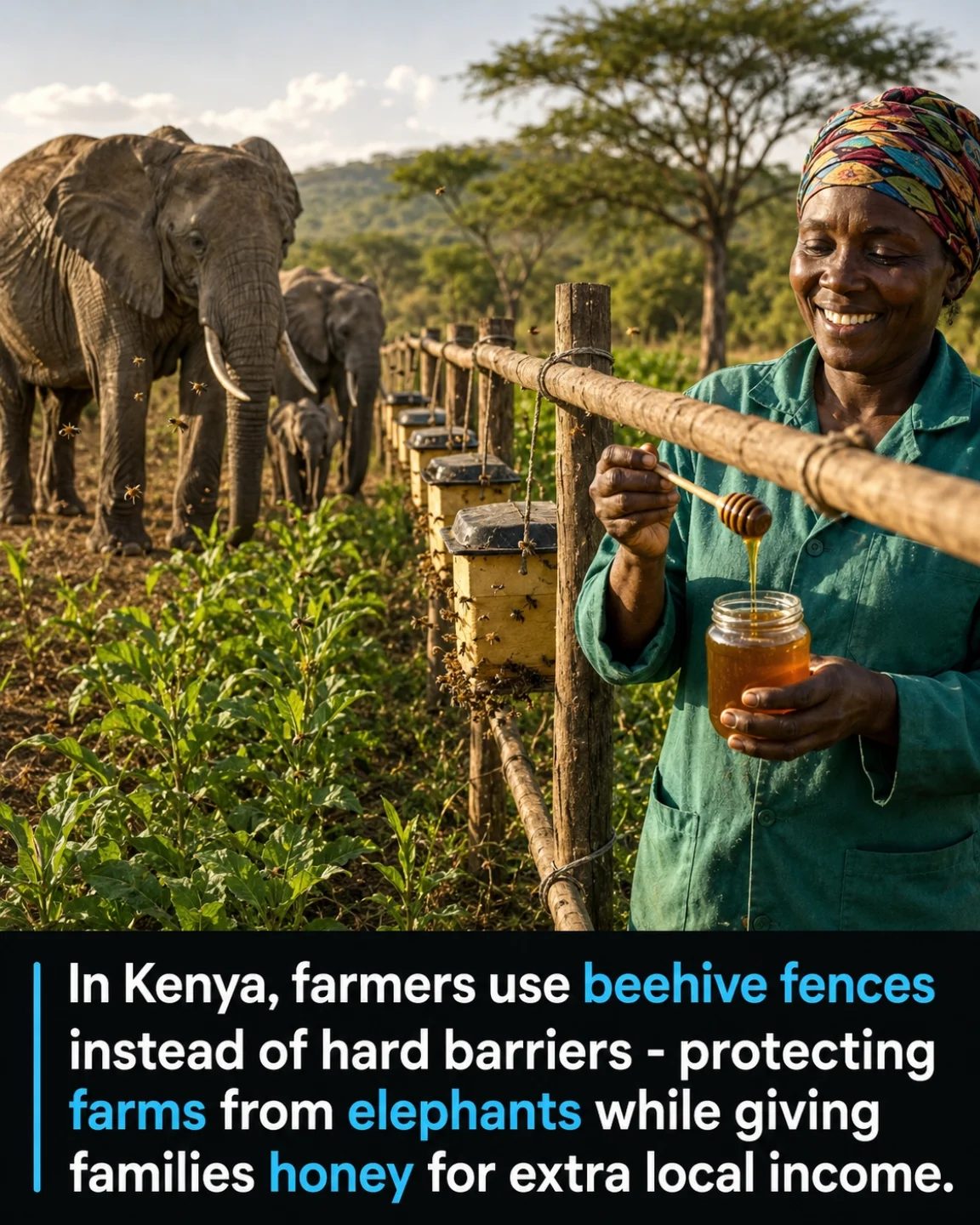
Beehive Fences and Elephant Protection
Beehive fences are an innovative and sustainable solution to a longstanding problem in Kenya: protecting farms from elephant encounters while providing additional income for local families.
Context / Why This Matters
Kenya's diverse ecosystems support a wide range of wildlife, including elephants, but this coexistence often leads to conflicts, particularly between elephants and farmers. Elephants, in their search for food and water, frequently raid crops, causing significant damage to farms and financial losses for families. Traditional methods of protection, such as hard barriers like fences and walls, can be costly and often ineffective, as elephants are powerful and resourceful.
This is where beehive fences come into play. These fences are an alternative to hard barriers, offering a more sustainable and economically viable solution. They not only protect farms but also provide additional income through honey production, making them a win-win for local communities.
Main Discussion
The Science Behind Beehive Fences
Beehive fences are constructed using bamboo poles with beehives attached at regular intervals. The concept is rooted in the fact that elephants are naturally wary of bees. When elephants approach the fence, the disturbed bees emerge from the hives, deterring the elephants from crossing the barrier. This natural repellent system is not only effective but also environmentally friendly, as it doesn't involve chemicals or harmful substances.
Construction and Maintenance
Constructing a beehive fence involves simple, readily available materials. The primary components are bamboo poles, which are durable and cost-effective, and beehives, which can be made from various materials. The hives are placed between the poles, creating a line of defense around the farm. The maintenance of these fences is relatively straightforward, involving regular checks to ensure the hives are in good condition and the bees are thriving.
Additional Income Through Honey Production
One of the most significant benefits of beehive fences is the additional income they provide through honey production. The bees in the hives produce honey, which can be harvested and sold, providing a steady source of revenue for local families. This not only enhances their financial stability but also encourages their participation in conservation efforts.
Community Engagement and Sustainability
The success of beehive fences relies heavily on community engagement. Local families are trained in the construction, maintenance, and management of the fences, ensuring that the initiative is sustainable and self-sufficient. This approach empowers communities to take ownership of the conservation efforts, promoting a sense of responsibility and stewardship towards their environment.
Practical Tips
-
Choose the Right Location: When installing beehive fences, it is crucial to place them strategically around the perimeter of the farm. Ensure that the fences cover all potential entry points for elephants, creating a complete barrier.
-
Maintain the Hives: Regular maintenance of the beehives is essential to keep the bees healthy and productive. This involves checking the hives for pests, providing adequate food and water for the bees, and ensuring that the hives are secure.
-
Harvesting Honey: To maximize the income from beekeeping, it is important to harvest the honey at the right time. Typically, honey can be harvested twice a year, but this may vary depending on the local climate and the health of the bees.
-
Community Involvement: Engage the local community in the installation and maintenance of the fences. Training and supporting community members ensure that the initiative remains sustainable and that the benefits are shared equally among all involved.
Important Takeaways
-
Sustainable Protection: Beehive fences offer a sustainable and effective way to protect farms from elephant raids, reducing crop damage and financial losses.
-
Economic Benefits: The additional income generated from honey production provides financial stability for local families, making the initiative economically viable.
-
Community Engagement: Involving the local community in the construction and maintenance of beehive fences ensures that the initiative is sustainable and that the benefits are widely shared.
-
Environmentally Friendly: Beehive fences use natural repellents, making them an environmentally friendly solution to human-wildlife conflicts.
Conclusion
Beehive fences represent a practical and sustainable solution to the challenges faced by farmers in Kenya. By protecting farms from elephant raids and providing additional income through honey production, these fences offer a holistic approach to conservation and economic development. This innovative method not only safeguards the livelihoods of local communities but also promotes harmony between humans and wildlife, ensuring a more sustainable future for all.
Questions readers ask
How do beehive fences help in preventing elephant damage to farms?
Beehive fences act as a natural elephant deterrent using the innate fear of elephants towards bees. The fences are strategically placed and designed to create a barrier around farms, allowing bees to protect the area from these powerful herbivores.
What are beehive fences made of?
Beehive fences are typically constructed using bamboo or similar materials, which are both sustainable and cost-effective. These materials ensure that the fences are sturdy enough to support the beehives and withstand environmental conditions, while being gentle on the environment.
How do Kenyan farmers benefit from beehive fences?
Kenyan farmers see twofold benefits from beehive fences. First, the fences protect their crops from elephant damage. Second, the honey produced by the bees provides additional income. This income boost can significantly improve the financial stability of local families.
Can beehive fences be constructed by local communities?
Yes, beehive fences can be constructed by local communities. The construction process involves simple materials and techniques, making it accessible for community members. This not only helps in protecting the farms but also creates opportunities for local employment.
Are beehive fences effective in all types of terrain?
Beehive fences are versatile and can be adapted to various types of terrain. Whether it's hilly, flat, or near water bodies, the fences can be designed to suit the specific landscape, ensuring that they remain effective in deterring elephants.
How does honey production from beehive fences contribute to local economies?
The honey produced from beehive fences is not only a valuable product but also a unique selling point for local economies. Farmers can sell the honey to local markets or even export it, thereby diversifying their income streams and contributing to the local economy.
Related deep dives
Similar reads based on topic and creator.




Recent articles
Fresh deep dives from the latest Reels we unpacked.




Comments
Be the first to comment.