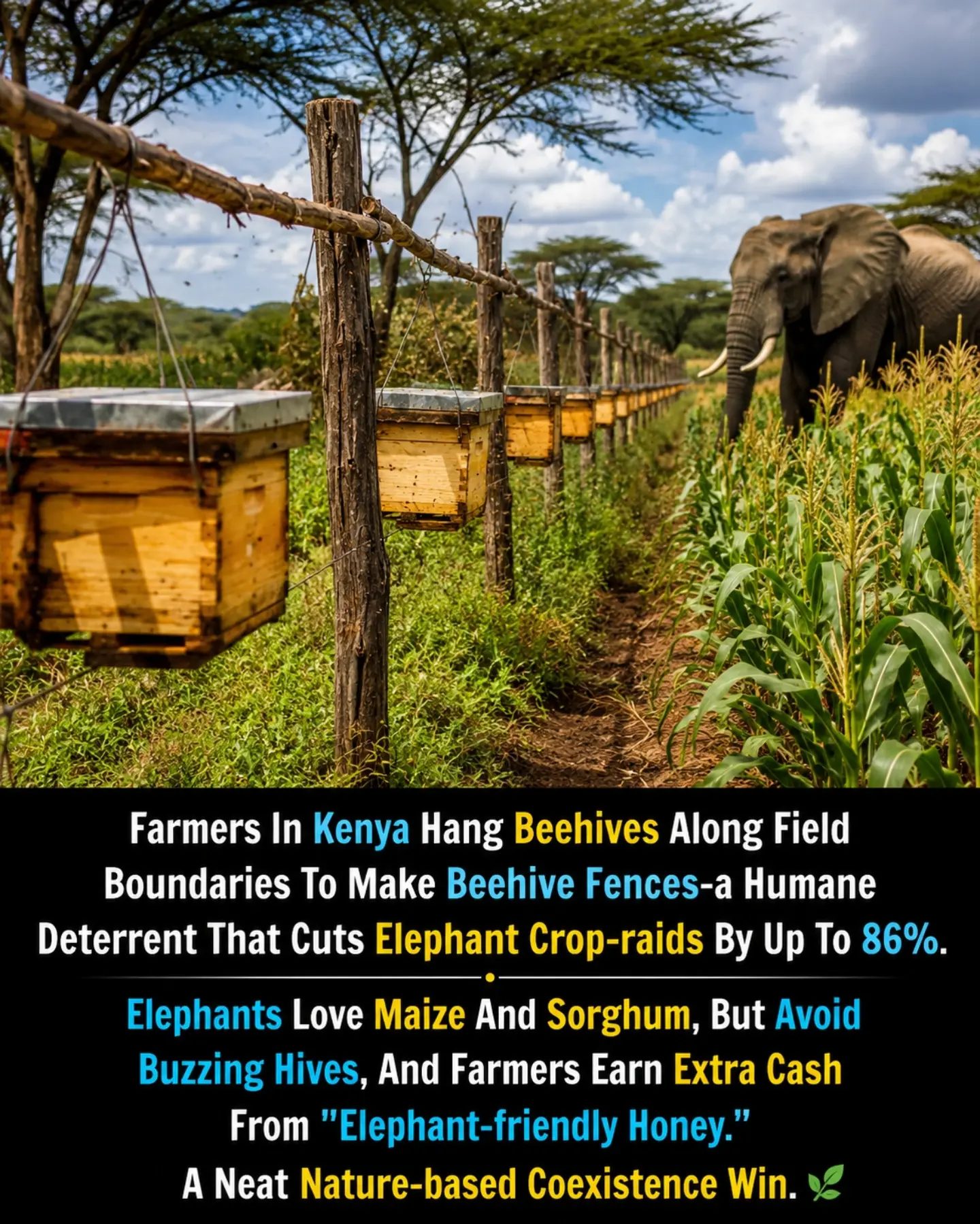
Elephant-Friendly Beehive Fences
Beehive fences are an innovative and effective solution to protect crops from elephants in Kenya. Farmers in the region have discovered that by hanging beehives along field boundaries, they can create a natural, humane deterrent that significantly reduces crop raids by elephants.
Why This Matters
In many parts of Kenya, elephants are known to frequent agricultural areas, often causing significant damage to crops. This can lead to substantial economic losses for farmers and create conflict between humans and elephants. Traditional methods of deterring elephants, such as electric fences or lethal measures, are not only harmful to the animals but also costly and sometimes ineffective. Beehive fences offer a sustainable and non-lethal alternative that benefits both farmers and elephants.
Main Discussion
The Concept of Beehive Fences
Beehive fences function on a simple yet effective principle: elephants are naturally wary of bees. By strategically placing beehives along field boundaries, farmers create a living barrier that deters elephants from approaching crops. The buzzing sound produced by the beehives is enough to keep elephants at bay, as they understand the potential threat of bees without needing to encounter any directly.
How Beehive Fences Work
The installation of beehive fences involves suspending beehives on wires that stretch across farm boundaries. This setup is designed to be both effective and easy to maintain. The wires are typically spanned between posts, with beehives attached at regular intervals. The bees within the hives provide a natural alarm system, deterring elephants with their buzzing. This natural deterrent works seamlessly without causing harm to either the elephants or the bees.
Effectiveness and Benefits
Beehive fences have proven to be highly effective in reducing crop raids by up to 86%. This significant reduction in crop damage not only saves farmers from economic losses but also promotes peaceful coexistence between humans and elephants.
Beyond the primary benefit of protecting crops, beehive fences also support local bee populations, which are essential for pollination and environmental health. In Kenya, the honey produced by these beehives can be a valuable additional income source for farmers. This dual benefit makes beehive fences a win-win solution for conservation and agriculture.
Practical Tips
Installation Tips
When installing beehive fences, it's crucial to choose the right location. The fences should be placed along the natural boundaries of the field, where they are most likely to intercept elephants. Additionally, the spacing between beehives should be consistent to ensure an even distribution of the deterrent effect.
Maintaining the health of the beehives is equally important. Regular checks should be conducted to ensure the bees are thriving and to replace any damaged or empty hives. This maintenance not only ensures the effectiveness of the fence but also supports the local bee population.
Community Involvement
Collaboration among farmers and local communities can enhance the effectiveness of beehive fences. Sharing knowledge and resources can help in maintaining the fences and ensuring they are installed correctly. Community involvement also promotes a sense of collective responsibility and can lead to more widespread adoption of this humane method.
Important Takeaways
Beehive fences are a sustainable and effective solution for protecting crops from elephants. They offer multiple benefits, including reducing crop damage, supporting local bee populations, and promoting peaceful coexistence between humans and elephants. Implementing this method can lead to significant economic and environmental gains for farmers and communities in Kenya.
Conclusion
Beehive fences represent a unique and practical approach to mitigating human-elephant conflict. By leveraging the natural behavior of elephants and the protective instincts of bees, farmers in Kenya have found a way to safeguard their crops while preserving the local ecosystem. This innovative solution underscores the potential of nature-based strategies in addressing complex conservation challenges.
Questions readers ask
How do beehives act as a deterrent for elephants?
Elephants are naturally wary of bees due to their loud buzzing and the potential for stings. When beehives are strategically installed along field boundaries, the consistent buzzing creates a barrier that elephants avoid, effectively keeping them away from crops.
Are beehive fences harmful to elephants?
No, beehive fences are designed to be a humane deterrent. Elephants are not harmed by the fences, they simply choose to avoid the buzzing sound and potential stings.
How effective are beehive fences in preventing elephant crop damage?
Beehive fences have shown significant success in reducing crop damage. Farmers in Kenya have reported a substantial decrease in crop raids by elephants, making this method a reliable solution for protecting their livelihoods.
Can beehive fences be used in all areas with elephant conflicts?
Beehive fences are most effective in areas where elephants frequently interact with human settlements. However, the effectiveness can depend on local conditions and the behavior of the elephants. It is best to consult with local experts to determine the suitability of beehive fences for specific regions.
What are the benefits of using beehive fences over traditional methods?
Beehive fences offer a sustainable and non-lethal alternative to traditional methods like electric fences or lethal measures. They are cost-effective in the long run, as they do not require ongoing maintenance like electric fences, and they provide additional income through honey production.
How can farmers set up beehive fences along their field boundaries?
Farmers can set up beehive fences by hanging beehives at regular intervals along their field boundaries. The beehives should be placed at a height that is easily accessible for maintenance and that effectively creates a buzzing barrier. Local experts and organizations can provide guidance on the best practices for installation and maintenance.
Do beehive fences help in reducing human-elephant conflict?
Yes, by creating a natural barrier that elephants avoid, beehive fences help in reducing human-elephant conflict. This not only protects crops but also minimizes the risk of harmful encounters between humans and elephants, promoting a more harmonious coexistence.
Recent articles
Fresh deep dives from the latest Reels we unpacked.



Comments
Be the first to comment.