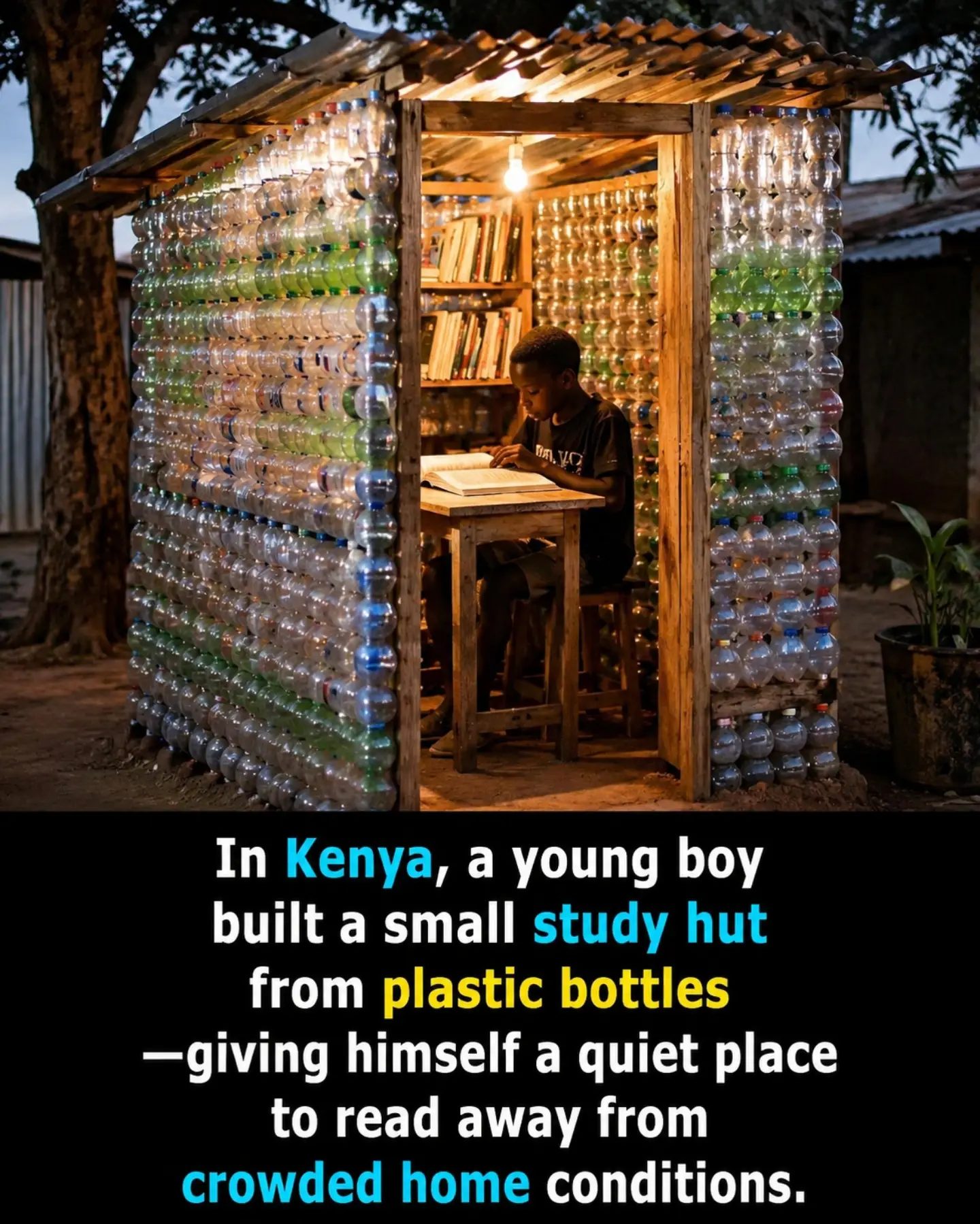
Sustainable Study Hut
In Kenya, a young boy has made an impressive contribution to environmental sustainability and personal development. Using recycled plastic bottles, he has built a small study hut. This initiative not only addresses the issue of plastic waste but also creates a quiet space for reading away from crowded living conditions.
Why This Matters
In many parts of the world, particularly in developing countries, the availability of clean water, sanitation, and waste management is far from ideal. The same goes for living conditions. The work of this young boy in Kenya highlights the importance of sustainable practices at a local level. It offers a solution to waste management while also addressing the need for personal space.
Main Discussion
The Birth of a Sustainable Initiative
The idea of building a study hut from plastic bottles is both innovative and practical. The boy's initiative underscores the importance of finding creative solutions to environmental challenges. The recycled plastic bottles used for construction not only reduce plastic waste but also provide a durable and cost-effective building material.
The Construction
The study hut is a testament to the use of readily available materials. The walls are constructed from plastic bottles, which are not only environmentally friendly but also surprisingly sturdy. This method can be replicated in various settings, making it a versatile solution for those looking to build with limited resources.
The Impact
The study hut provides a quiet and dedicated space for reading and studying, which is crucial for academic success. In crowded living conditions, the ability to focus on studies can be a challenge. This boy’s initiative offers a solution to this problem, providing a space where he can concentrate on his schoolwork without distractions.
Practical Tips
Building Your Own Study Hut
If you are inspired by this initiative, here are some practical tips for building your own study hut using recycled materials:
- Gather Your Materials: Collect plenty of plastic bottles. Ensure they are clean and dry before use.
- Foundation and Walls: Construct the foundation and walls using the plastic bottles. You can fill the bottles with sand or soil to add weight and stability.
- Roofing: Use a waterproof material for the roof to protect the interior from the elements.
- Furnishings: Add a small table and chair made from recycled materials. Ensure they are stable and comfortable.
- Ventilation: Make sure to include small openings or vents for proper airflow.
Repurposing Plastic Waste
Plastic waste is a global issue, and finding ways to repurpose it is essential. Here are a few more ideas for repurposing plastic waste:
- Plastic Bottle Planters: Cut the bottom off a plastic bottle and use it as a planter for small plants.
- Recycled Art: Use plastic bottles to create art pieces like sculptures or mobiles.
- Water Storage: Collect and store rainwater in plastic bottles for gardening or other uses.
Important Takeaways
This initiative by a young boy in Kenya shows that sustainable living and innovative solutions can come from the most unexpected places. The use of recycled materials not only helps the environment but also provides a practical solution to personal needs. It serves as a reminder that everyone, regardless of age or resources, can contribute to a sustainable future.
Conclusion
The story of a young boy in Kenya building a study hut from plastic bottles is a poignant example of how sustainable practices can be integrated into everyday life. The sustainability initiative showcases a creative solution to environmental challenges and living conditions. By creating a dedicated study space, the boy has improved his own living conditions and set an example for others to follow. This DIY project is a valuable contribution to environmental sustainability and personal development.
Questions readers ask
How did the Kenyan boy's study hut address two significant issues in his community?
The study hut addressed plastic waste management by recycling plastic bottles and alleviated crowded living conditions by providing a quiet personal space for study and reading. The project shows the impact of creative solutions by a young environmentalist.
What materials were used to construct the study hut in Kenya?
The study hut was constructed using recycled plastic bottles. This initiative showcases the potential of repurposing waste materials for practical and sustainable purposes.
How does the study hut contribute to sustainable living in Kenya?
The study hut promotes sustainable living by repurposing plastic waste and creating a functional space. This initiative encourages sustainable practices and eco-friendly solutions for waste management in Kenya.
What inspired the Kenyan boy to create the study hut?
The Kenyan boy was inspired to create the study hut by the need to manage plastic waste and improve his living conditions by having a quiet study space. This initiative highlights the importance of addressing local issues through innovative solutions.
What can be learned from the Kenyan boy's approach to recycling?
The Kenyan boy's approach to recycling demonstrates the effectiveness of local initiatives in waste management. It also shows that small-scale projects can have a significant impact on sustainability and personal development.
How can similar initiatives be adopted in other communities?
Similar initiatives can be adopted by encouraging recycling and creative reuse of waste materials, and promoting the construction of small, functional spaces for personal use, such as a study hut. This can be done through community projects and collaborations.
Related deep dives
Similar reads based on topic and creator.


Recent articles
Fresh deep dives from the latest Reels we unpacked.



Comments
Be the first to comment.