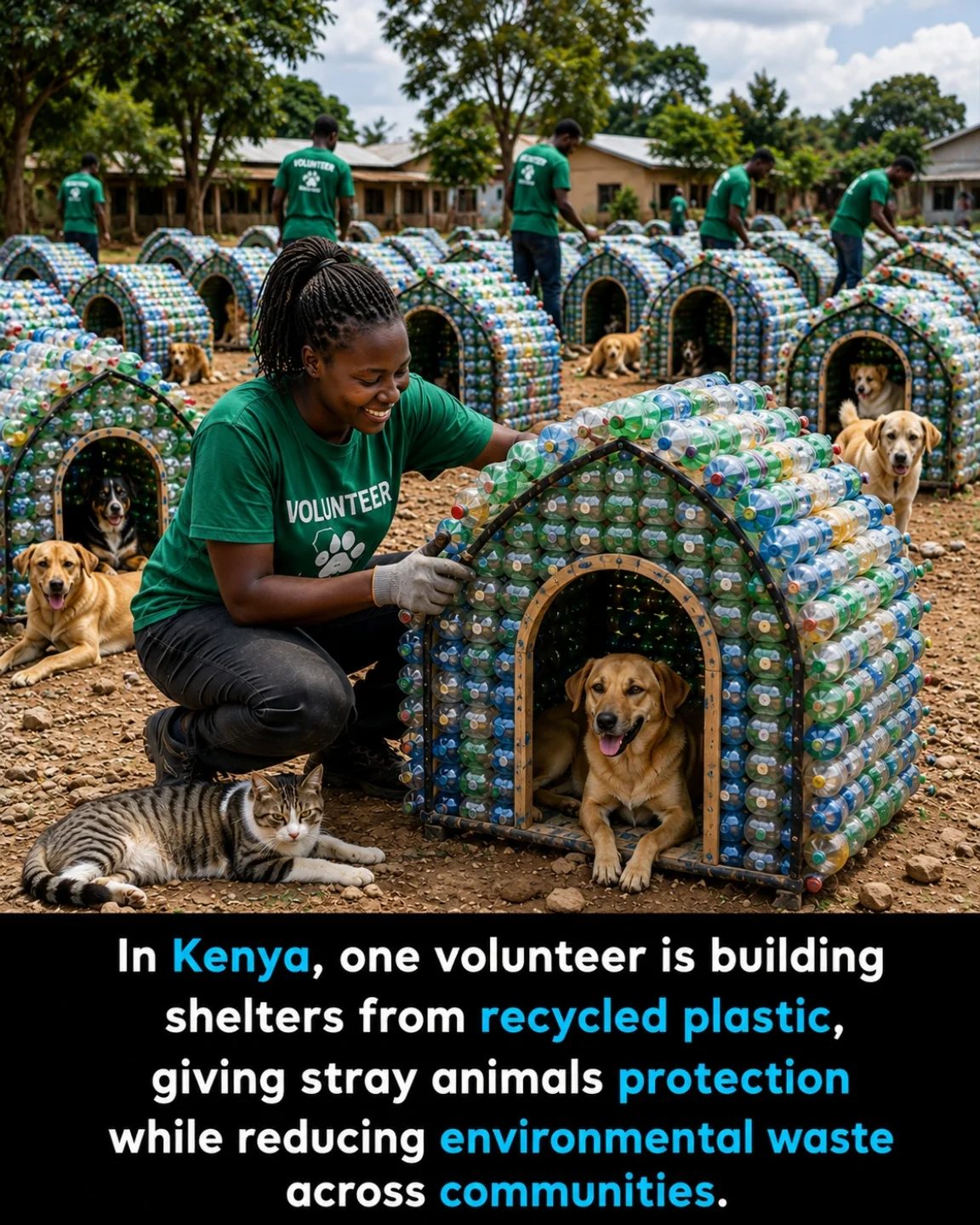
Recycled Plastic Dog Shelters
In Kenya, a dedicated volunteer is making a difference in the lives of stray animals and the environment by constructing dog shelters from recycled plastic bottles. This initiative not only provides essential protection for stray animals but also helps reduce environmental waste in communities.
Why This Matters
The issue of stray animals and environmental waste are pressing concerns in many communities. By addressing both problems simultaneously, initiatives like this one offer a practical and sustainable solution. Stray animals often face harsh conditions, and providing them with shelters can significantly improve their quality of life. Additionally, reducing plastic waste is crucial for maintaining a clean and healthy environment.
Main Discussion
The Dual Benefit of Recycled Plastic Shelters
The shelters built from recycled plastic bottles serve a dual purpose. They provide a safe and comfortable space for stray animals, protecting them from the elements and potential hazards. At the same time, the use of recycled materials helps to reduce the amount of plastic waste that would otherwise end up in landfills or polluting the environment.
The Construction Process
The construction of these shelters involves collecting and cleaning recycled plastic bottles, which are then repurposed into sturdy and durable structures. The volunteer uses simple tools and techniques to assemble the shelters, making the process accessible and replicable for others who might want to contribute.
Community Impact
This initiative has a positive impact on the community in multiple ways. It addresses the issue of stray animals, which can be a nuisance and a health concern if not managed properly. By providing shelters, the volunteer helps to control the stray animal population and improves the overall well-being of the animals. Additionally, the use of recycled materials encourages environmental responsibility and community engagement, fostering a sense of shared purpose and sustainability.
Environmental Benefits
The environmental benefits of using recycled plastic bottles for construction are significant. Plastic waste is a major environmental concern, contributing to pollution and harming wildlife. By repurposing plastic bottles into shelters, the volunteer helps to divert waste from landfills and reduces the need for new plastic production, which is energy-intensive and environmentally damaging.
Community Engagement
The initiative also serves as a model for community engagement and environmental stewardship. By demonstrating how recycled materials can be used in innovative and practical ways, the volunteer inspires others to think differently about waste and sustainability. This can lead to more community-driven projects and a collective effort to address environmental issues.
Practical Tips
Collecting and Preparing Recycled Plastic Bottles
To start a similar project, the first step is to collect and prepare recycled plastic bottles. Encourage community members to donate their used plastic bottles and organize a collection drive. The bottles should be cleaned thoroughly to remove any contaminants and dried before use.
Design and Construction
Consider the design of the shelters to ensure they are sturdy and provide adequate protection for the animals. Simple, modular designs can be easily constructed and replicated. Use non-toxic adhesives and materials to ensure the safety of the animals.
Community Involvement
Engage the community in the construction process to foster a sense of shared responsibility and ownership. This can include workshops and volunteer days where community members can learn about the project and contribute to its success.
Maintenance and Monitoring
Regular maintenance and monitoring of the shelters are essential to ensure their longevity and the safety of the animals. Inspect the shelters periodically for any signs of wear and tear, and make repairs as needed. Monitor the animals to ensure they are using the shelters and benefiting from the protection they provide.
Important Takeaways
- Sustainable Solutions: Recycled plastic dog shelters offer a sustainable solution to both animal welfare and environmental concerns.
- Community Engagement: Community-driven projects have a significant impact on fostering environmental responsibility and collective action.
- Repurposing Waste: Repurposing plastic waste into useful items reduces environmental pollution and promotes sustainable living.
- Practical Benefits: Providing shelters for stray animals improves their quality of life and helps manage stray animal populations.
Conclusion
The initiative of building dog shelters from recycled plastic bottles in Kenya serves as a powerful example of how community-driven projects can address multiple challenges. By providing protection for stray animals and reducing environmental waste, this initiative demonstrates the potential for practical and sustainable solutions. Whether you're a volunteer or a community member, engaging in similar projects can contribute to a healthier and more sustainable environment for both animals and people.
Questions readers ask
How does using recycled plastic benefit the environment in Kenya?
Recycling plastic bottles reduces the amount of waste in landfills, which contributes to lower pollution. This improves the community's environment and reduces the risk of plastic ending up in rivers and oceans, which can harm local wildlife.
What kind of plastic is typically used to build these dog shelters?
Recycled plastic bottles are the primary material. These are often collected from local communities, cleaned, and then cut into strips to be woven into mats, which are formed into sturdy shelters.
How do these shelters improve the lives of stray animals in Kenya?
The shelters provide protection from harsh weather conditions, predators, and other hazards. They offer a safe space for stray animals to rest, which can improve their overall well-being. This can be especially important during the rainy season and cold nights.
Can volunteers from outside Kenya participate in this initiative?
Yes, many volunteer programs welcome international participants. Volunteers from outside Kenya can often join by contacting local organizations that manage these projects. They may need to cover their travel and accommodation costs.
What other materials are commonly used alongside recycled plastic in building these shelters?
Other materials that are often used include locally sourced wood, metal frames, and sometimes even recycled fabric for insulation. The exact materials can vary based on availability and the specific design of the shelter.
How can local communities support this initiative?
Local communities can support this initiative by collecting and donating plastic bottles, assisting in the construction of shelters, or even adopting stray animals that have been sheltered. Additionally, spreading awareness about the benefits of recycling and animal welfare can encourage more participation.
Recent articles
Fresh deep dives from the latest Reels we unpacked.




Comments
Be the first to comment.