The Mystery of the Steppe Geoglyphs
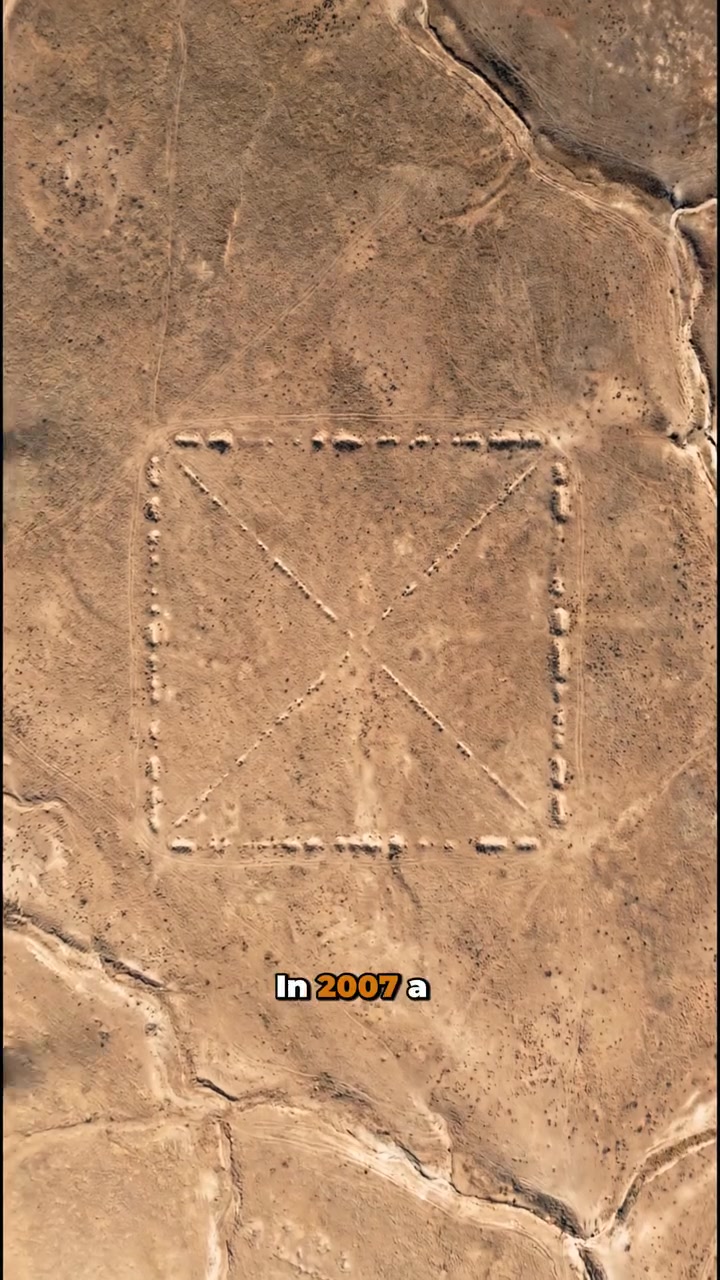
Hidden beneath the vast steppes of Kazakhstan are over 260 giant shapes — rings, crosses, and squares — that appear only from an aerial view. Discovered in 2007 by a man browsing on Google Earth, these geoglyphs have baffled researchers since then.
Messengers to the heavens
The Steppe Geoglyphs are a collection of mysterious, earthen figures spread across the remote Kazakhstan steppes. Created from mounds of earth, they are made of up to 260 various shapes like rings, crosses, and squares. The shapes are massive in scale — each one comparable to several football fields. Despite their enormity, the geoglyphs are invisible from the ground, only revealing themselves when viewed from above. These ancient mounds have been dated to be at least 8,000 years old. The reason for their creation, however, remains a mystery. The nomadic peoples who inhabited the region at the time did not create permanent structures; hence, who created these massive earthen figures, and why, remains unknown.
The mystery of acknowledgement
These enigmatic figures are part of a larger trend of ancient sites that challenge our understanding of early human societies. It raises questions about how ancient cultures communicated, traded, and viewed the world around them. While there are many theories, the lack of concrete evidence or a “Rosetta Stone” to unlock these geoglyphs’ meanings has left scientists puzzling. The discovery of the geoglyphs in the 21st century also highlights the pivotal role that modern technology plays in uncovering ancient history. The use of advanced satellite imagery and remote sensing technologies, such as Google Earth, has allowed researchers to uncover and document hidden archaeological sites that would have otherwise gone unnoticed. This intersection of ancient mysteries and modern tech symbolizes a unique phase of archaeological discovery. These geoglyphs are not the only such examples. The well-known Nazca Lines in Peru are another striking example of ancient, large-scale geoglyphs. Like the Kazakhstani examples, they are only visible from above. The Nazca Lines depict various animals, plants, and geometric figures, created by the Nazca culture between 500 BC and 500 AD. Their purpose and creators remain debated. But unlike the Nazca Lines, the Kazakhstani geoglyphs are less well-known. Due to their remote location and lack of visual documentation, people often mistakenly refer to the Kazakhstani geoglyphs as the "Nazca Lines of Kazakhstan." This name is not only incorrect, it also contributes to the erasure of the geoglyphs’ unique identity.
What we see on the ground
The geoglyphs are visible from the sky in aerial and satellite imagery. These massive figures are created with mounds of earth, shaped into rings, crosses and squares. The shapes vary in dimensions, but most of them are several football fields in size. On the ground, the figures are invisible due to their size and the flat steppes, with no clear color contrast between the geoglyphs and the surrounding landscape.
Aerial evidence
The geoglyphs were first spotted in 2007. The initial discovery was made by a man using Google Earth; he noticed the unusual shapes on the ground from the satellite's aerial viewpoint. Since there were no clear indications of their existence on the ground, it took the satellite imagery to reveal the ground markings. This event underscores the importance of advanced satellite imagery, modern technology, and human curiosity in making archaeological discoveries.
Why the mystery persists
The geoglyphs have left researchers perplexed. One of the key challenges is the lack of historical records or archaeological documentation to provide any context to the figures. Ancient nomadic culture in the region did not have permanent settlements. This makes it hard to pinpoint which group of people was responsible for the geoglyphs’ creation. Processing the geoglyphs through modern technology is a formidable task. The earthen surface becomes indistinguishable from the surrounding landscape, especially without a clear satellite image. As a result, it’s hard to determine the exact scale or intricacies of the geoglyphs, which in turn makes it difficult to understand the rationale behind their creation. Despite the visual enigma, NASA conducted a study using aerial and satellite imagery to gather more clues. Even their cutting-edge technology could not decipher the mystery of the geoglyphs. This shows that unlocking the mystery of these ancient shapes will be a long and difficult process. Even though NASA couldn’t explain them, it did provide one interesting clue — the geoglyphs appear to align with celestial formations, suggesting they could have been used to mark celestial events. This theory, however, remains speculative.
Unearthing the geoglyphs
For a visitor interested in the geoglyphs, an aerial perspective is crucial. Travelers seeking to experience the geoglyphs will have to rely on flight tourism or, if available, specialized tours that offer a bird's-eye view of the landscape.
- Plan ahead: Since the geoglyphs are not visible from the ground, planning a trip that incorporates aerial or satellite views in advance is necessary. Options could include helicopter tours, hot air balloons, or small aircraft flights.
- Make use of maps: Utilize satellite imagery to identify the geoglyphs and pinpoint their exact locations. Online mapping tools and apps such as Google Earth can be very useful in this regard.
- Local experts: Collaborate with local archaeologists or historians who specialize in the region's history and can provide valuable insights. They can offer context, and potentially even guides, that help visitors understand the significance of the geoglyphs.
Questions readers ask
What exactly are these geoglyphs and why are they so hard to see?
The geoglyphs are massive shapes — rings, crosses, and squares — created from mounds of earth in the Kazakh steppes. They're invisible from the ground because of their size and the flat landscape, but they appear clearly in aerial and satellite views. They're comparable to several football fields, so they blend in with the surroundings when you're on the ground.
How were the Steppe Geoglyphs discovered if they're invisible from the ground?
The geoglyphs were first spotted in 2007 by a man using Google Earth. Their discovery highlights the power of modern technology in uncovering ancient sites. Without aerial or satellite imagery, these massive figures might still be hidden today.
How do the Steppe Geoglyphs compare to the Nazca Lines?
Both the Steppe Geoglyphs and the Nazca Lines are ancient, large-scale geoglyphs only visible from above. However, the Nazca Lines are more well-known and depict various animals, plants, and geometric figures. The Kazakhstani geoglyphs, on the other hand, are less documented and often mistakenly referred to as the 'Nazca Lines of Kazakhstan,' which can overshadow their unique identity.
What theories exist about the purpose of the Steppe Geoglyphs?
There are many theories about the purpose of the Steppe Geoglyphs, but no concrete evidence to support any of them. Some theories suggest they were used for ritual or astronomical purposes, while others propose they might have been markers for trade routes or territorial boundaries. The lack of a 'Rosetta Stone' to decode their meaning has left scientists puzzling over their true purpose.
Why is it so hard to understand the purpose of the Steppe Geoglyphs?
The difficulty in understanding the purpose of the Steppe Geoglyphs stems from the lack of concrete evidence and the absence of a 'Rosetta Stone' to unlock their meaning. Additionally, the nomadic peoples who inhabited the region at the time did not create permanent structures, making it challenging to attribute the geoglyphs to a specific culture or purpose.
Related deep dives
Similar reads based on topic and creator.



Recent articles
Fresh deep dives from the latest Reels we unpacked.




Comments
Be the first to comment.