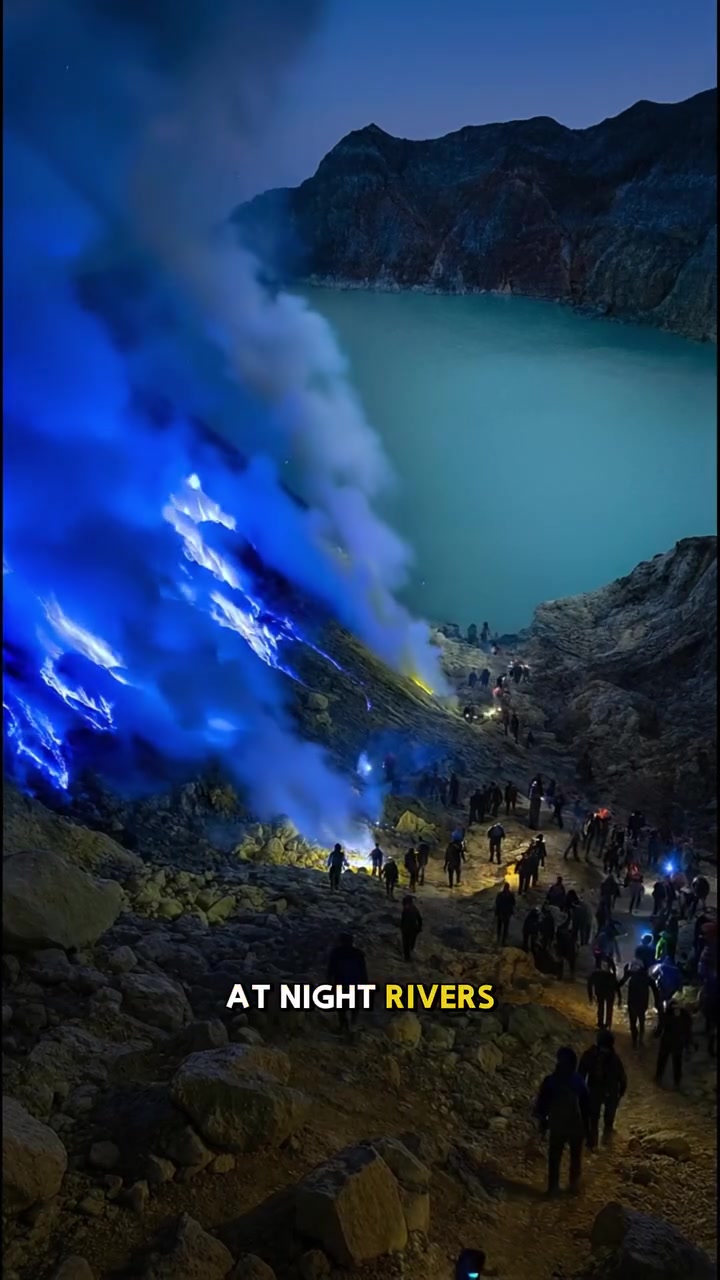
At night, rivers of glowing electric blue fire flow down the slopes of Kawa Ijen, a volcano in Indonesia. This is not lava, but sulfuric gas bursting into flames and creating an eerie electric blue glow that seeps down the mountain. The initial few seconds of the video paints a lush, surreal scene that immediately diverts us from common pools of fire. But this is just the surface. For, "it isn't lava at all," we are told. As if that revelation isn't enough, the video dives deeper.
Kawah Ijen's Blue Flames
Blue fire. The words conjure up the sort of mystical image that movies are made of. Kawa Ijen, however, forms a blue fire that is as real as it is rare. The blue flames happen when the volcano releases a cascade of sulfuric gas, which is created under intense pressure and heat and escapes through the surface of the volcano. When this gas escapes, it ignites as it touches the air and sets into an uncanny, electric-blue glow. If that weren't atmospheric enough, some of the gas melts down into liquid sulfur, still burning and glowing blue in the dark. Significantly, this unique phenomenon is exclusive to Kawa Ijen. Being witnessed nightly, the blue fire could be described as a novelty feature, but its source is rather sobering. When we see the blue fire, we're also observing a system that allows miners to extract sulfur to make a living with their bare hands. The miners can carry up to 90 kilos of sulfur on their backs, breathing fumes that burn their lungs without a protective mask, for just a few dollars a day. Also, the blue fire serves miners as a natural safety beacon to help them navigate the dangerous terrains in the dark. So, if you're imagining something like the blue fairy and romance, let's not forget the harsh reality that makes this happen.
Why ecotourists are flocking to volcanic landscapes
Kawa Ijen is not just a geological anomaly; it's a canvas painting the raw battle between man and harsh natural forces. When it comes to Indonesia, it is one of the most unique and thrilling volcanic landscapes, geologically-speaking. If tourists thought all volcanoes were basically hot lava in place, Kawa Ijen sets the record straight. The volcano offers the spotlight to the miners who offer us a stark reminder of how the beauty can be as deadly as it is enrapturing.
What you see is what you get
The day-time view of Kawah Ijen is equally sensational and thus equally misleading as the night view. The blue fire is only the beginning of the mystery as it is the tip of the iceberg when it comes to the deadly traits of the volcano. The summit is home to the largest acid lake on earth, turquoise and beautiful—at first glance, but strong enough to dissolve metal. From afar, its turquoise waters look majestic and flawless, but they conceal a sinister reality. Sulfate lakes like the one here have been known to cause acid rain. And it illustrates that the beauty of the natural world is often skin-deep. While acidic lakes are rare, some can be found in volcanic regions with a high risk of sulfuric gas emissions like Kawa Ijen. Notably, one of the most dangerous volcanic hazards is the process of a rock fall as the slopes are channeled through the crater lake. The risk of falling into it is exacerbated by the density of the crater’s sulfuric acid, which can cause severe burns, erosion, and corrosion to the metals. Moreover, it can cause respiratory problems, eye irritation, and decreased water quality if the winds are blowing in from its direction.
The dual life of miners
Every night, after dark, miners descend into the crater of the largest acid lake on earth. The most hazardous part of the job, the descent itself, is a risky one—the miners don't have harnesses or ropes to climb down, and they do the climb with only headlamps. To make matters worse, they carry up to 90 kilos of sulfur back up with them. The sulfur miners at Kawa Ijen are at risk of respiratory problems, skin diseases, and even blindness from being exposed to the flames and fumes of the blue fire. The addition of the acid lake means the miners could also be exposed to sulfuric acid, which can cause severe burns, respiratory issues, and, if inhaled, even death. Yet, they continue to take the risk of traveling down into the crater, breathing fumes that burn their lungs, often without a protective mask. For them, the blue flames, while beautiful, are a threat. Some of the difficulties they endure are the distance they travel on the steep slopes while carrying the sulfur as well as the lack of protective gear. Even the protective gear they do use is only “sometimes” worn. While they might avoid immediate danger with gloves and masks, they have no protection against the crater itself.
Visiting Kawa Ijen
Indonesia's volcanic activity features a strong tradition of tourism to the country's vast range of volcanic landscapes. So, the night hike to Kawa Ijen is a must-do for adventure seekers. But the cost of visiting a landscape this formidable is high, and visitors can expect to pay a high price. Still, when it comes to action items, it's essential to heed the warning that the breathtaking beauty of Kawah Ijen hides deadly forces. The risks of visiting the volcano are high, but you can find joy in observing the landscape from a safe distance. For locals, these risks are magnified due to their poverty but it comes with a silver lining. Like the miners' journey to the lake, the journey to Kawah Ijen is also transformative in more ways than one.
Dive into one of nature's most dangerous landscapes
Kawah Ijen stands as a unique place deep in Indonesia's volcanic devastation. The extreme fire and the acid lake form a nightmarish view, yet at the same time, they form a delicate balance of natural beauty that is jaw-dropping. While it may be best to appreciate it from afar, the devotion and the silent endurance of the miners that occur nightly serve a reminder of the world's balance. Their sacrifice brings out such a feeling of accomplishment from nature's surplus.
Questions readers ask
What causes the blue fire at Kawah Ijen?
The blue fire at Kawah Ijen is caused by sulfuric gas released from the volcano, which ignites upon contact with the air, creating an electric-blue glow. This gas is produced under intense heat and pressure and is unique to this location.
How do the miners at Kawah Ijen use the blue fire?
The blue fire serves as a natural safety beacon for the miners, helping them navigate the hazardous terrain in the dark. They extract sulfur to make a living, carrying heavy loads and often breathing toxic fumes without proper protective gear.
Is Kawah Ijen's acid lake as dangerous as it looks?
Yes, the acid lake at Kawah Ijen is extremely dangerous. It is the largest acid lake in the world and is strong enough to dissolve metal. Its turquoise waters can cause acid rain and are a reminder of the deadly forces at work beneath the surface.
Are there other places in the world where you can see blue fire like at Kawah Ijen?
The blue fire phenomenon is quite rare and is exclusive to Kawah Ijen. While other volcanoes may have sulfuric gas emissions, the specific conditions that create the electric-blue glow seen at Kawah Ijen are unique to this location.
Why is Kawah Ijen considered a unique volcanic landscape?
Kawah Ijen is unique because it showcases both the beauty and the harsh reality of volcanic activity. The blue fire and acid lake make it a geological anomaly, and the presence of miners working in dangerous conditions adds a human element to the landscape.
Can tourists visit Kawah Ijen and see the blue fire?
Yes, ecotourists can visit Kawah Ijen and witness the blue fire, especially at night. The volcano offers a rare and thrilling experience, but visitors should be aware of the dangerous conditions and the hardships faced by the miners who work there.
Related deep dives
Similar reads based on topic and creator.

Recent articles
Fresh deep dives from the latest Reels we unpacked.




Comments
Be the first to comment.