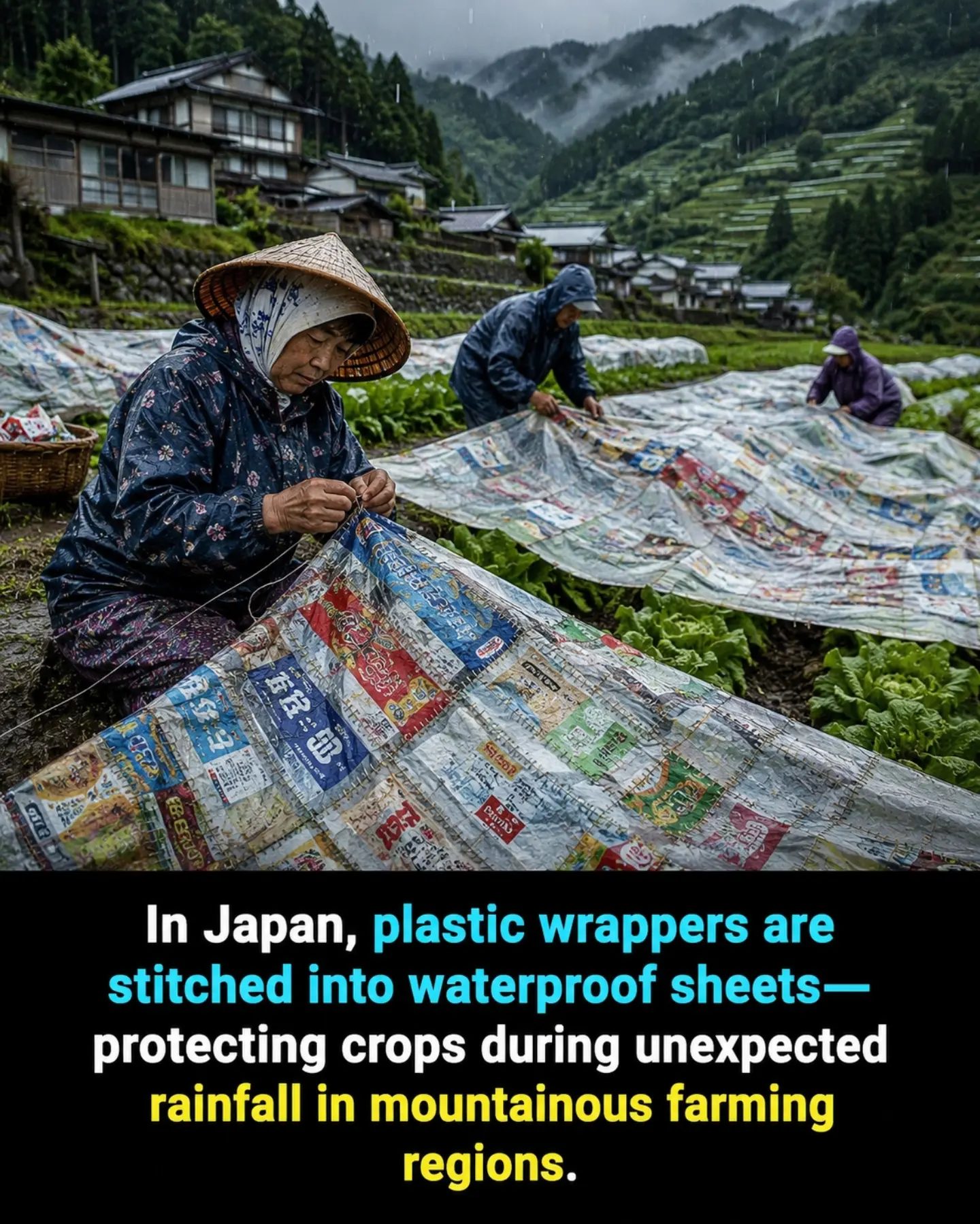
Innovative Farming Technique
In Japan, farmers are finding a unique and effective way to protect their crops from unexpected rainfall by stitching together recycled plastic wrappers to create large, waterproof sheets. This innovative approach is particularly beneficial in mountainous regions where rainfall can be unpredictable and damaging to crops.
Context / Why This Matters
Farming in mountainous regions presents unique challenges, especially when it comes to protecting crops from sudden downpours. Traditional methods of covering crops may not always be practical or durable enough to withstand the elements. The use of recycled plastic wrappers as waterproof sheets offers a sustainable and cost-effective solution, addressing both environmental and agricultural concerns.
Main Discussion
The Process of Creating Waterproof Sheets
Farmers in Japan are utilizing plastic wrappers that are typically discarded as waste. By stitching these wrappers together, they create durable, waterproof sheets. These sheets are then carefully placed over crops to shield them from rain. The sheets are designed to be lightweight and easy to handle, making them an ideal solution for farmers who need to protect their crops quickly and efficiently.
Benefits for Mountainous Farming Regions
Mountainous farming regions are particularly vulnerable to sudden changes in weather. The steep terrain and often unpredictable weather patterns can make it difficult to predict when rainfall will occur. The use of these waterproof sheets allows farmers to be prepared for such events. The sheets are effective in keeping crops dry, reducing the risk of water damage and ensuring that the harvest remains healthy and productive.
Environmental Impact
The use of recycled plastic wrappers is not only practical but also environmentally friendly. Recycling otherwise discarded materials reduces waste and contributes to a more sustainable farming practice. By repurposing these wrappers, farmers are helping to minimize environmental impact while protecting their crops. This approach aligns with the growing trend towards sustainable agriculture, which emphasizes the use of resources in a way that minimizes harm to the environment.
Adaptability and Flexibility
The waterproof sheets made from recycled plastic wrappers are highly adaptable. They can be used to cover a variety of crops and can be easily adjusted to fit different shapes and sizes. This flexibility makes them a versatile tool for farmers, allowing them to protect different areas of their farms as needed. The sheets can also be reused, further reducing the need for new materials and enhancing their sustainability.
Community and Knowledge Sharing
The innovative use of recycled plastic wrappers in Japanese farming has gained attention for its effectiveness and sustainability. Farmers across the country are adopting this method, sharing knowledge and experiences with one another. This community-driven approach to sustainable farming helps to spread best practices and encourages more farmers to consider environmentally friendly methods.
Practical Tips
Sourcing Materials
One of the key benefits of this method is the use of readily available materials. Farmers can collect plastic wrappers from local shops and households. By partnering with local businesses and communities, farmers can ensure a steady supply of materials without having to invest in expensive equipment or resources. This not only reduces costs but also fosters a sense of community and collaboration.
Stitching Techniques
The process of stitching the plastic wrappers together requires some skill and patience. Farmers can learn basic sewing techniques to create strong and durable sheets. There are many resources available online, including tutorials and videos, that can guide farmers through the process. Additionally, community workshops and training sessions can be organized to share knowledge and skills among local farmers.
Important Takeaways
- Sustainability: Using recycled materials helps in minimizing waste and protecting the environment.
- Effectiveness: The waterproof sheets are highly effective in protecting crops from unexpected rainfall, ensuring a healthy harvest.
- Adaptability: The sheets are versatile and can be used to cover a variety of crops and areas.
- Community: Sharing knowledge and resources within the farming community enhances the adoption of sustainable practices.
- Cost-Effective: The use of readily available materials and simple techniques makes this method affordable and accessible.
Conclusion
The innovative practice of using recycled plastic wrappers to create waterproof sheets is a testament to the ingenuity and resourcefulness of Japanese farmers. This method not only addresses the challenges posed by unpredictable weather in mountainous regions but also promotes sustainable farming practices. By repurposing waste materials, farmers are contributing to a cleaner environment while protecting their crops. The adaptability and flexibility of this method make it a valuable tool for farmers, ensuring that their agricultural endeavors remain productive and sustainable.
Questions readers ask
Why do Japanese farmers in mountainous areas use plastic wrapper sheets to protect their crops?
Japanese farmers in mountainous regions use recycled plastic sheets to protect crops from heavy rainfall. The unpredictable weather can severely damage crops, making these waterproof sheets an essential tool. This method not only helps shield the crops but also offers a sustainable and cost-effective solution for farmers.
How do farmers in Japan create waterproof sheets from plastic wrappers?
Farmers stitch together discarded plastic wrappers to craft large, waterproof sheets. This process involves carefully cutting the plastic wrappers and sewing them together to create a durable covering for their crops.
What are the benefits of using recycled plastic wrappers for crop protection in Japan?
Using recycled plastic wrappers for crop protection in Japan is both eco-friendly and cost-effective. This method reduces waste and lowers the need to buy new materials for covering crops. Additionally, it addresses the specific challenges of farming in mountainous regions, where traditional methods may fall short.
How does this technique help farmers in mountainous regions of Japan?
The technique helps by providing a durable and reliable shield against unexpected rainfall, which is common in mountainous areas. The recycled plastic sheets are flexible and can cover a wide range of crops, making them a versatile tool for farmers.
What kinds of plastic wrappers are typically used to create these waterproof sheets?
A variety of discarded plastic wrappers can be used, including those from shipping materials, packaging, and other everyday items. Farmers choose sturdy, waterproof plastics that can be easily stitched together to form large, protective sheets.
How do these waterproof sheets compare to traditional crop protection methods in Japan?
Unlike traditional methods that might use tarps or other materials, these waterproof sheets are more sustainable and cost-effective. Traditional methods may not always be durable enough to withstand the elements in mountainous regions, whereas recycled plastic sheets offer a robust and eco-friendly alternative.
Can this technique be applied in other farming regions besides mountainous areas in Japan?
While this technique is particularly beneficial in mountainous regions due to unpredictable rainfall, it can also be applied in other areas with similar weather challenges. Farmers in different regions can adapt this method to protect their crops from heavy rain and other environmental factors.
Related deep dives
Similar reads based on topic and creator.



Recent articles
Fresh deep dives from the latest Reels we unpacked.



Comments
Be the first to comment.