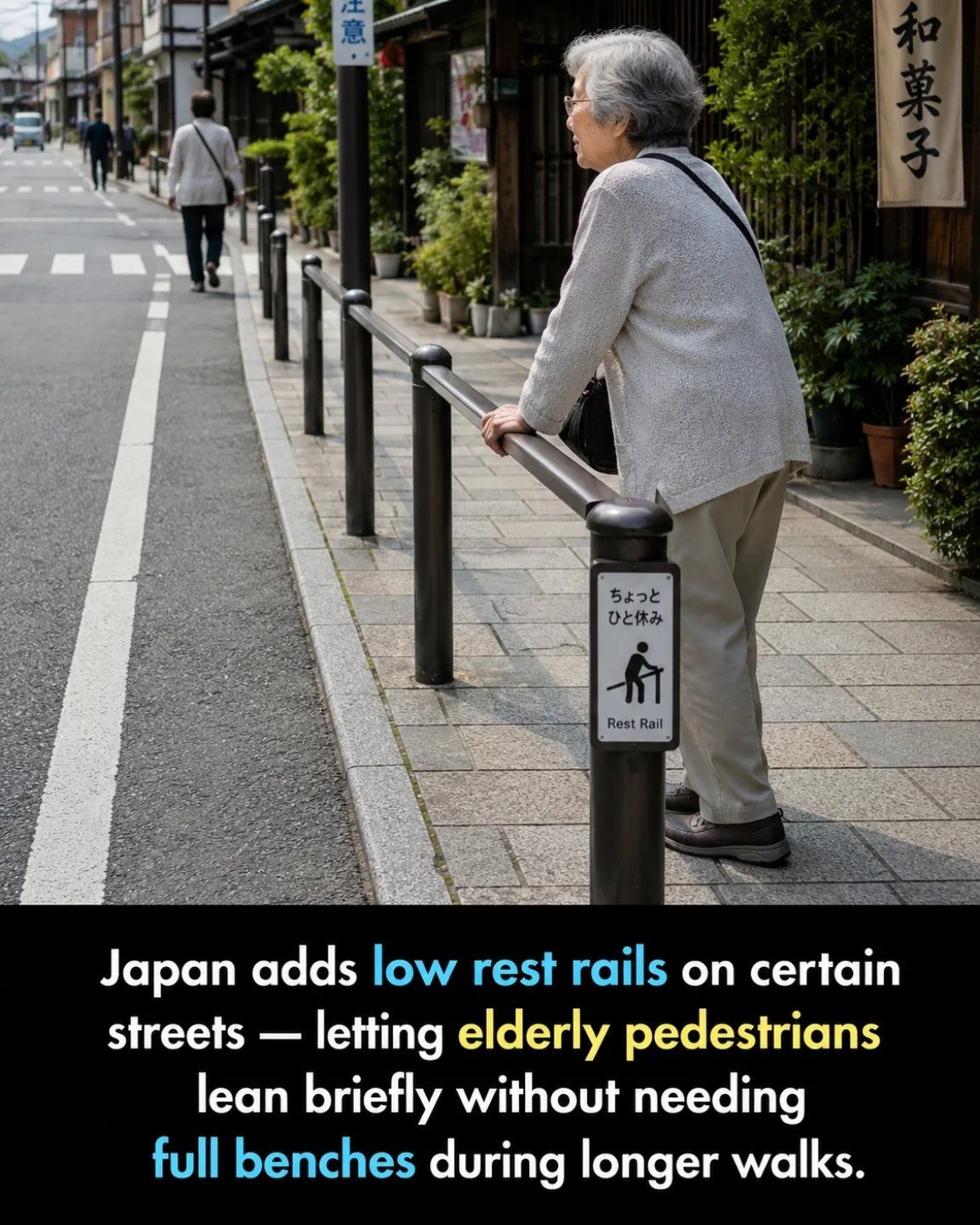
Rest Rails for Elderly Pedestrians in Japan
Elderly pedestrians often face challenges while navigating urban environments, particularly on longer walks. To address this, Japan has introduced a simple yet effective solution: rest rails. These low-to-the-ground installations provide a convenient resting point for elderly pedestrians, allowing them to lean briefly without the need for full benches. This innovation is a thoughtful addition to urban infrastructure, designed to enhance the mobility and comfort of the elderly population.
Why This Matters
As populations age, cities around the world are looking for ways to make their infrastructure more accessible and comfortable for elderly residents. Japan, with one of the fastest-aging populations, is at the forefront of these efforts. By implementing rest rails, Japan is not only improving the quality of life for its elderly citizens but also setting an example for other urban planners and developers.
The Design and Function of Rest Rails
Low-to-the-Ground Installation
One of the key features of rest rails is their low-to-the-ground design. This makes them easily accessible for elderly pedestrians who may have mobility issues or need to rest frequently. Unlike traditional benches, which can be bulky and occupy more space, rest rails are compact and unobtrusive, fitting seamlessly into the urban landscape.
Purpose and Signage
The purpose of these rails is clearly indicated by signage, ensuring that pedestrians understand their function. This clarity is crucial for encouraging usage and ensuring that the rails serve their intended purpose effectively. The design is simple yet effective, providing a resting point without requiring a full bench installation.
Benefits for Elderly Pedestrians
Even a brief rest can make a significant difference in the comfort and safety of elderly pedestrians. Rest rails allow them to take a moment to lean and catch their breath, preventing fatigue and reducing the risk of falls. This small but important addition to urban infrastructure can greatly enhance the walking experience for elderly individuals, making it more manageable and enjoyable.
Practical Tips for Implementing Rest Rails
Placement and Accessibility
When installing rest rails, it's important to consider their placement. They should be located along walking paths, near intersections, and at intervals that make them easily accessible. Additionally, ensuring that the rails are installed in well-lit and safe areas can enhance their usability and safety.
Materials and Durability
The choice of materials is also crucial. Rest rails should be made from durable, weather-resistant materials that can withstand regular use and exposure to the elements. Common materials include stainless steel or reinforced plastic, which are both durable and easy to maintain.
Community Engagement
Engaging the community in the planning and implementation process can also be beneficial. Gathering input from elderly residents and community leaders can provide valuable insights into where rest rails are most needed and how they can be best designed to meet the specific needs of the community.
Important Takeaways
Rest rails are a practical and effective solution for enhancing the walking experience of elderly pedestrians. Their low-to-the-ground design, clear signage, and unobtrusive nature make them a valuable addition to urban infrastructure. By providing a convenient resting point, rest rails can help reduce fatigue and prevent falls, making cities more accessible and comfortable for elderly residents.
Conclusion
The introduction of rest rails in Japan is a thoughtful and practical response to the needs of an aging population. This simple yet effective solution highlights the importance of urban planning that considers the unique needs of different age groups. As more cities around the world face the challenges of an aging population, the example set by Japan can serve as a valuable model for enhancing urban accessibility and comfort for elderly pedestrians.
Questions readers ask
What are rest rails and where can they be found in Japan?
Rest rails are low-to-the-ground installations designed for elderly pedestrians to take quick breaks while walking. They are commonly found in urban environments across Japan, particularly in areas with high foot traffic where longer walks can be challenging.
Who benefits most from the use of rest rails in Japan?
The primary beneficiaries of rest rails are elderly individuals who may struggle with mobility or fatigue during extended walks. These rails provide a convenient, low-effort way for elderly pedestrians to rest without needing to sit down.
Why are rest rails a preferred option for elderly pedestrians rather than traditional benches?
Rest rails are preferred because they are easily accessible for quick breaks and do not require the same level of physical exertion to use as benches. They allow elderly pedestrians to lean and rest briefly, making them a more convenient and less time-consuming option.
How do rest rails contribute to Japan's urban design for elderly pedestrians?
Rest rails enhance the overall mobility and comfort of elderly pedestrians. By providing frequent resting points, they help to reduce fatigue and make urban spaces more navigable, aligning with Japan's broader goal of creating age-friendly cities.
What other urban design features complement the use of rest rails in Japan?
In Japan, rest rails are part of a comprehensive approach to supporting elderly pedestrians. Other urban design features that complement these rails include well-maintained sidewalks, clear signage, and pedestrian-friendly crosswalks, all working together to create a more accessible urban environment.
Related deep dives
Similar reads based on topic and creator.

Recent articles
Fresh deep dives from the latest Reels we unpacked.




Comments
Be the first to comment.