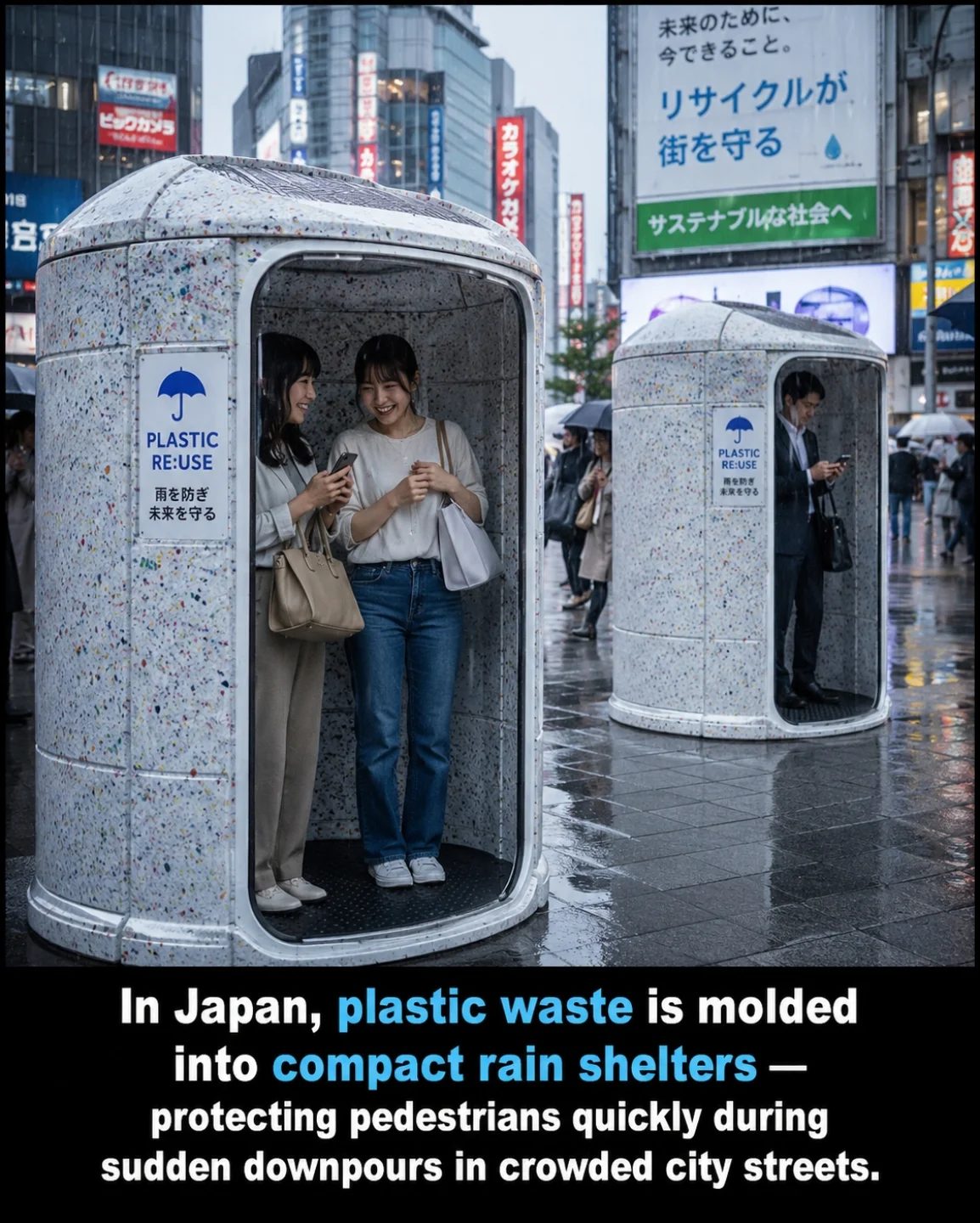
Rain Shelter Innovation: A Biodegradable Solution for Urban Infrastructure
Urban areas frequently face challenges such as sudden downpours and pedestrian traffic congestion. Rain shelters, therefore, have long been a staple in cities to ensure safety and convenience for pedestrians. A fascinating innovation has emerged in Japan, where plastic waste is transformed into compact, efficient rain shelters. These shelters not only address the issue of urban crowding but also present a sustainable solution to plastic waste management.
Context
In densely populated cities, the unpredictability of weather and the need for protection from sudden downpours are critical considerations for urban design. Traditional shelters are often bulky and lack the aesthetic appeal that integrates well with modern cityscapes. Moreover, the environmental impact of urban development has become a growing concern.
Design and Sustainability
The innovative design of these shelters sets them apart from conventional models. They are crafted from recycled plastic, making them an eco-friendly choice. These shelters are not only aesthetically pleasing but also functional. The use of recycled plastic is a significant step towards sustainable urban infrastructure. This material choice reduces the environmental footprint and contributes to waste management.
Environmental Impact
One of the most impressive aspects of these shelters is their positive environmental impact. By reusing plastic waste, cities can significantly reduce the amount of plastic that ends up in landfills or oceans. This approach not only mitigates environmental pollution but also promotes a circular economy, where waste is transformed into valuable resources.
Urban Design Integration
The shelters are designed to be compact and easily accessible. They blend seamlessly into the urban landscape, ensuring that they do not disrupt the aesthetic appeal of the city. In crowded streets, where space is a premium, these shelters offer a space-efficient solution. Their design allows for quick protection, ensuring pedestrians can avoid sudden downpours without causing congestion.
Practical Tips for Implementation
Implementing these shelters in urban areas can present several challenges, but with the right strategies, these can be effectively managed. Here are some practical tips for successful implementation:
Location Selection
Choosing the right location for these shelters is crucial. Identifying high-traffic areas and places where pedestrians are most likely to be caught in sudden downpours is essential. This ensures that the shelters are utilized effectively and provide maximum benefit to the public.
Maintenance and Durability
Regular maintenance is necessary to keep these shelters in good condition. While the recycled plastic material is durable, it is essential to conduct periodic inspections and repairs to ensure the shelters remain functional and safe for use.
Public Awareness
Creating awareness among the public about the benefits of these shelters can encourage greater usage. Informative signage and community engagement can help in educating the public about the environmental advantages of using these shelters.
Important Takeaways
The innovation of transforming plastic waste into rain shelters in Japan offers multiple benefits. It addresses the need for urban infrastructure that can protect pedestrians from sudden downpours while also promoting sustainable practices. By reducing plastic waste and integrating these shelters into the urban landscape, cities can enhance their livability and sustainability.
Conclusion
The integration of recycled plastic rain shelters in urban infrastructure is a significant step towards sustainable urban development. These shelters provide quick and efficient protection from rain while also addressing the environmental issue of plastic waste. By embracing innovative solutions like these, cities can enhance their resilience and create a more livable environment for their residents.
Questions readers ask
How are Japan's recycled plastic rain shelters beneficial for the environment?
These shelters are created from recycled plastic, which helps reduce plastic waste in landfills and oceans. By repurposing plastic waste, Japan lessens its environmental footprint and promotes a circular economy. Furthermore, these shelters can be recycled again at the end of their lifespan, making them a sustainable solution.
What materials are used to make these rain shelters?
The primary material used in these shelters is recycled plastic. This recycled plastic is sourced from various waste streams, making it a practical and sustainable choice for urban infrastructure solutions.
How do these shelters address the issue of urban crowding?
The compact design of these rain shelters allows them to be installed in densely populated areas without adding to overcrowding. Their aesthetic appeal ensures that they blend well with urban environments, making them a practical solution for crowded cityscapes.
What makes Japan's rain shelters a sustainable solution for urban infrastructure?
Japan's rain shelters are a sustainable solution because they are made from recycled plastic, reducing the amount of plastic waste. Additionally, their design is compact and efficient, making them an excellent fit for urban environments while providing a practical solution for waste management.
How do these shelters contribute to Japan's waste management system?
By transforming plastic waste into functional and durable shelters, Japan reduces the amount of waste in its landfills and oceans. This innovative approach to recycling plastic waste ensures that Japan continues to decrease the amount of plastic waste in the environment.
What are the benefits of using recycled plastic for urban rain shelters?
Using recycled plastic for urban rain shelters reduces the demand for new plastic production, decreases plastic waste in landfills and oceans, and promotes a sustainable and circular economy. These shelters are also durable, easy to maintain, and contribute to a greener urban environment.
Recent articles
Fresh deep dives from the latest Reels we unpacked.



Comments
Be the first to comment.